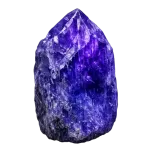
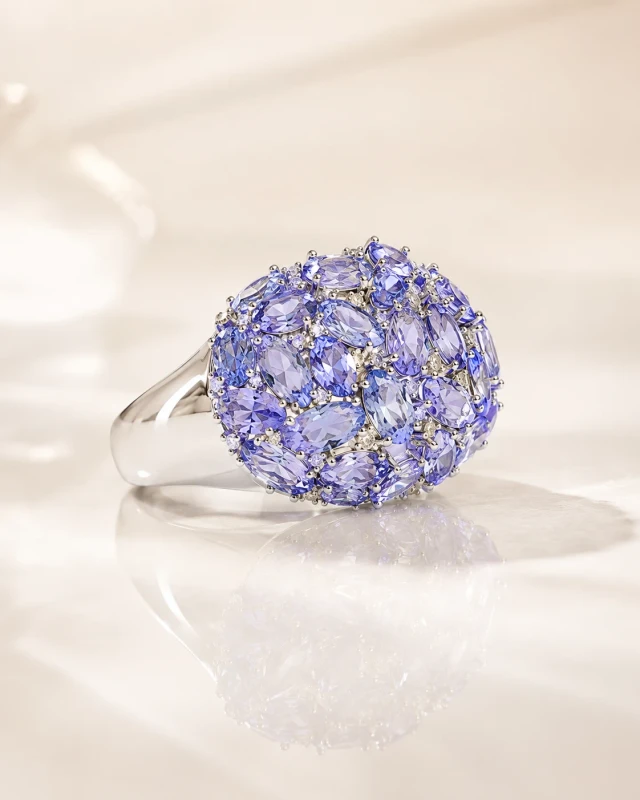
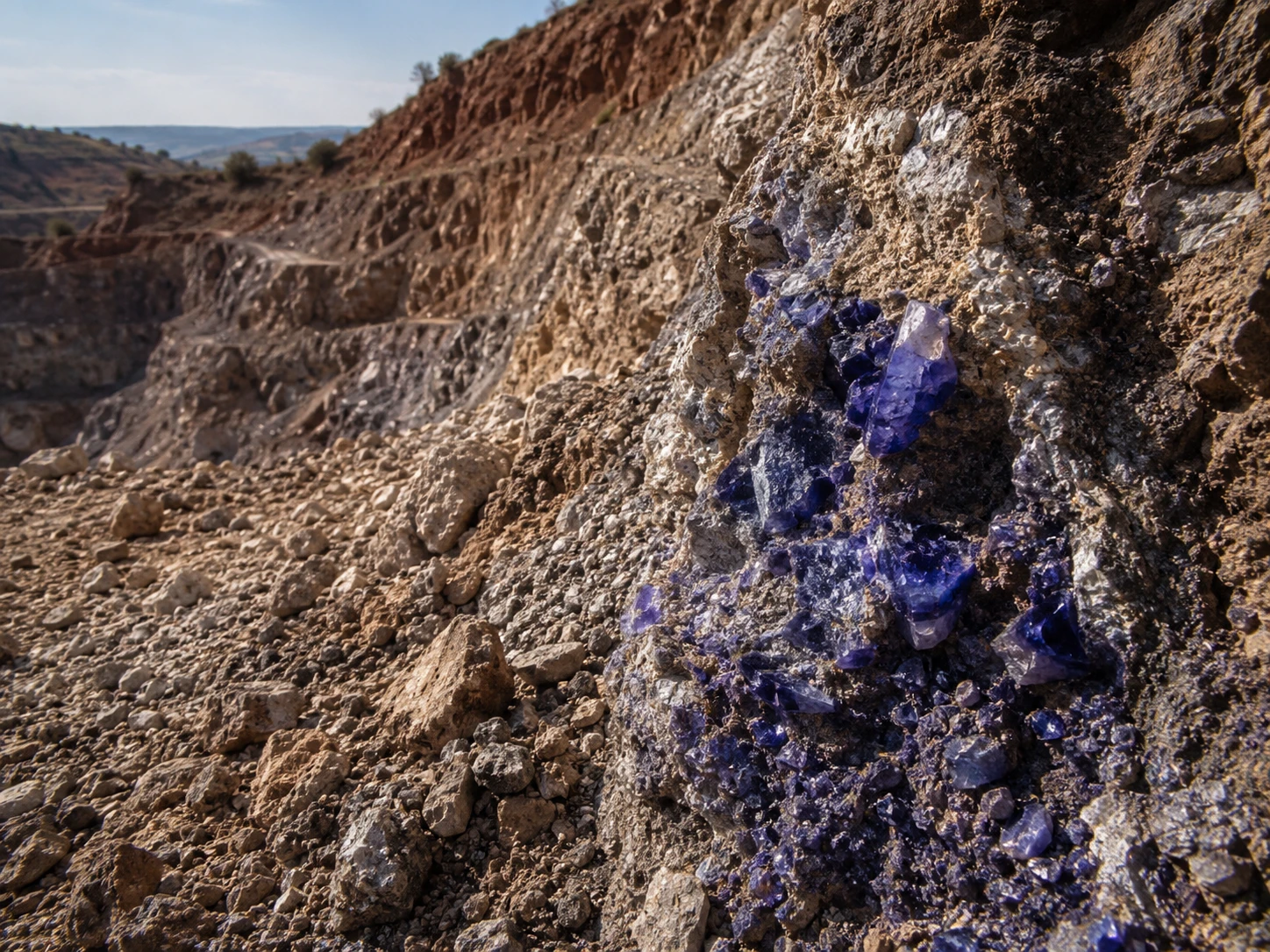

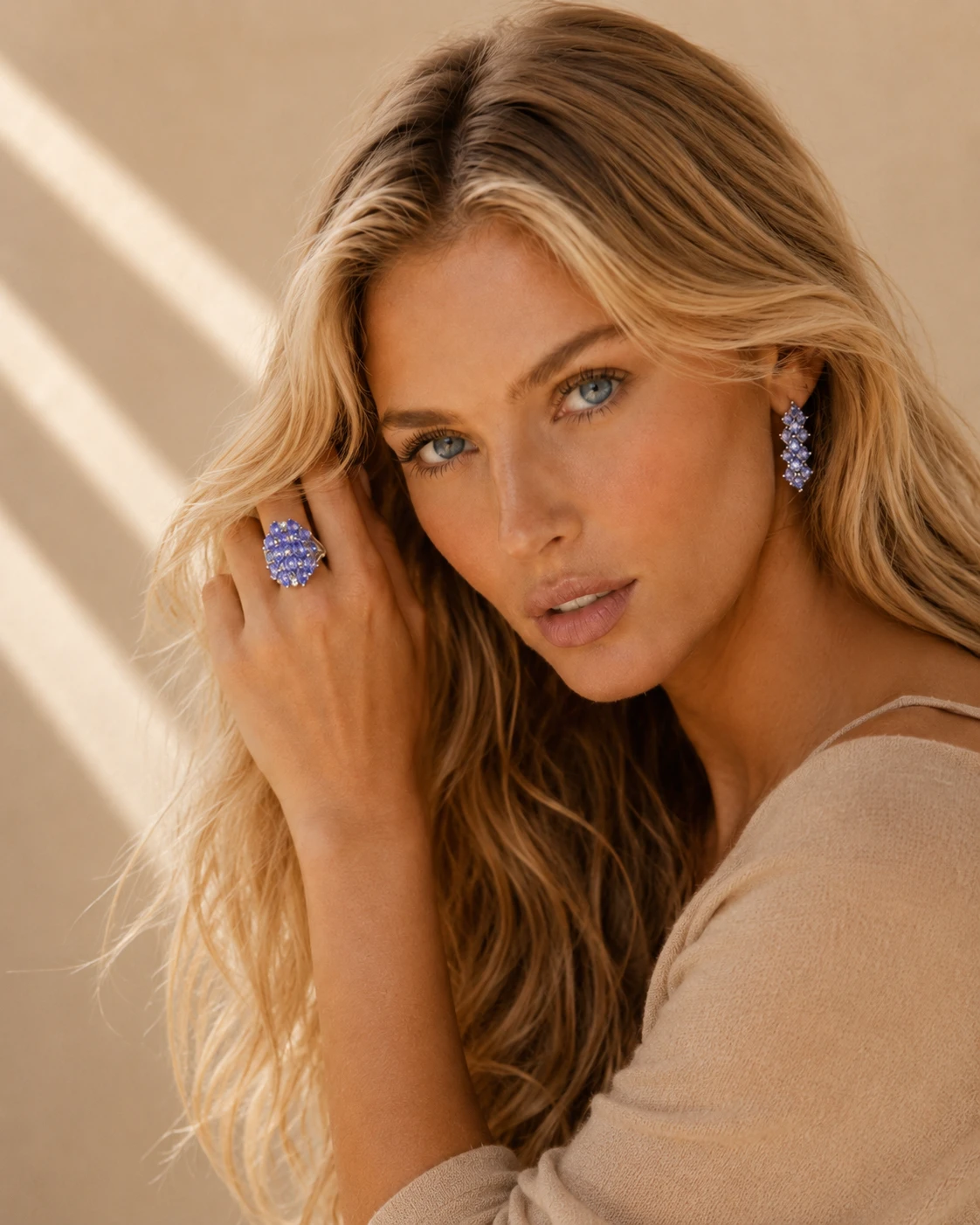
Tanzanite suits men’s jewellery well, as long as the piece keeps it out of harm’s way. The stone sits at 6 to 7 on the Mohs scale and has one direction of perfect cleavage, which means it scratches more easily than sapphire or diamond and can split if struck hard at the wrong angle. Cufflinks, tie pins, pendants and rings kept for occasions wear it comfortably for decades. A ring worn every day through work, sport and travel needs a protective setting and a habit of taking it off.
That is not a reason to avoid it. It is a reason to choose the piece, the setting and the colour with the same care as the stone.
Why men’s jewellery tests a stone differently
Most men’s jewellery is worn on the hands and at the wrists, and hands are where stones get hurt. Rings meet door frames, gym bars, steering wheels, desks and tools. Men’s rings are also often wider and heavier than women’s, which puts the stone higher above the finger and further into the path of whatever the hand is doing.
Two properties decide how a stone copes. Hardness is resistance to scratching; hardness measures scratch resistance, not toughness, and anything harder than the stone will mark it given contact and time. Toughness is resistance to breaking, and tanzanite’s cleavage makes it less tough than its hardness alone suggests: a cleavage plane is a direction along which a crystal can split cleanly when struck. A sharp knock on an exposed edge can open a cleavage plane in a way it would not in a stone without one.
For comparison, sapphire sits at 9 on the Mohs scale with no cleavage, which is why it has long been the default coloured stone for hard-wearing rings. Tanzanite offers a colour sapphire rarely matches, at the cost of more care.
Which pieces suit tanzanite best?
The safest pieces are the ones that rarely meet a hard surface.
| Piece | Exposure to knocks | Typical wear | How well tanzanite suits it |
|---|---|---|---|
| Cufflinks | Low | Occasions, shirt cuffs | Very well |
| Tie pin or tie bar | Very low | Occasions, office | Very well |
| Lapel pin | Very low | Occasions | Very well |
| Pendant | Low | Daily or occasional | Well |
| Occasion ring | Moderate | Evenings, events | Well with a protective setting |
| Everyday ring | High | Work, sport, travel | Only with a bezel and care |
| Bracelet with set stones | High | Daily | Poorly, wrists meet desks and doors |
Cufflinks deserve particular mention. They show colour clearly against a white shirt, sit away from the hands, and are worn for hours rather than days at a time. A pair of matched tanzanites in cufflinks is one of the most practical ways to wear the stone, and the pairing itself matters: two stones that differ in tone are noticeable every time the hands come together.
Choosing a ring that will last
If the piece is a ring, the setting does most of the work.
Bezel and low settings
A bezel surrounds the stone with a continuous rim of metal, so the girdle and the edges are protected on every side. A low setting keeps the stone close to the finger, reducing the leverage a knock can apply. Together they make a tanzanite ring far more practical for regular wear than a high, open prong setting, which leaves the edges exposed and lifts the stone into the path of everything.
Flush and gypsy settings
In a flush setting the stone sits in a hole drilled into the metal, with its table level with the surface of the ring. Very little of the stone is exposed, which suits a wide men’s band. The trade-off is that less light enters the stone, so colour can look slightly darker, which often suits tanzanite’s deeper tones anyway.
How the settings compare
| Setting | How it protects the stone | What it costs you | Best use in men’s pieces |
|---|---|---|---|
| Full bezel | Metal rim around the whole girdle | Slightly less light, a little more metal visible | Everyday rings, signets |
| Flush or gypsy | Stone sunk level with the surface | Darker look, smaller visible stone | Wide bands, signets |
| Half bezel | Metal on two sides | Two edges still exposed | Occasion rings |
| Low four or six prongs | Holds the stone close to the finger | Edges partly exposed | Occasion rings, pendants |
| High prongs | Very little | Maximum exposure to knocks | Pendants and cufflinks only |
What to avoid for daily wear
High prongs, thin claws, a large stone standing proud of a narrow shank, and designs where the stone faces the palm side when the hand closes. Those are the shapes most likely to put tanzanite’s edges into contact with hard surfaces.
The general principles of settings and metals are covered in the guide to tanzanite settings and metals, and the buying guide explains what to check in the stone itself.
Signet rings and tanzanite
The signet ring is the classic men’s ring, and a coloured stone set into its face is a long tradition. It is also the most exposed position a stone can take: the face of a signet sits on top of the finger, where every handshake, every grip and every knock lands.
A tanzanite signet is perfectly possible, with two conditions. The stone should sit flush with, or slightly below, the metal surface, held in a bezel. And the ring should come off for anything involving force or abrasive surfaces. If the wearer will not take it off, a solid metal signet engraved with a crest or initials, with tanzanite reserved for cufflinks, is the more honest design.
What colour reads best in men’s pieces?
Tanzanite ranges from pale lilac through violet to deep, saturated blue, and it shows different colours depending on the direction you look through it. For most men’s pieces, the deeper, more saturated stones tend to work best: they read clearly at conversational distance, hold their colour against dark suiting and white shirts, and look substantial in heavier settings.
Paler stones can look delicate in a wide band or a chunky cufflink, where the metal dominates. They can work beautifully in a fine tie pin or a slim pendant. The question is proportion: the stone’s colour should carry the piece rather than disappear inside it. The trade-off between depth of colour and size is set out in carat versus colour.
Metals and tanzanite in men’s jewellery
White metals emphasise the blue in tanzanite and give a cooler, more contemporary look. Yellow gold warms the stone toward violet and suits more traditional designs, especially signets and cufflinks. Neither is wrong; it depends on the colour the wearer wants to see and the other metals they wear, such as a watch case.
For rings meant for regular wear, a harder alloy and a substantial shank are worth more than any particular colour of metal, because they protect the setting that protects the stone.
How should men’s tanzanite jewellery be cared for?
The care rules are the same as for any tanzanite, with a few habits that matter more for men’s pieces:
- Take rings off for the gym, sport, gardening and tools. These are the activities that break or scratch stones.
- Store pieces separately. Cufflinks thrown into a dish with other metal and stones get scratched. A lined box or individual pouches prevent it; the guide to storing tanzanite covers the details.
- Clean gently. Warm water, mild soap and a soft brush. No ultrasonic or steam cleaners.
- Check the setting. A loose stone in a ring that is worn often is a lost stone waiting to happen. Have prongs and bezels checked periodically.
What to check before buying a men’s tanzanite piece
A handful of checks separate a piece that will last from one that will disappoint.
Look at the stone’s edges first. In a ring meant for regular wear, the girdle should be enclosed by metal or sit below it, with no corner of the stone standing proud. Run a finger over the setting: if the stone catches, so will doorframes and pockets. Look at the prongs or bezel under magnification if you can, checking that they are even, smooth and tight against the stone.
Then look at the stone itself. A tanzanite with visible chips at the girdle or abraded facet edges has already been worn hard, a common sight in pre-owned tanzanite jewellery, which matters more for a stone that will keep facing the same conditions. Colour should be even across the face, without a large window or dark extinction area, which the guide to how tanzanite is graded explains in detail.
Finally, ask about the metal weight and shank thickness. A substantial shank resists bending, and a ring that bends can loosen the stone. For cufflinks and tie pins, check that the fittings close firmly, since a lost cufflink takes its stone with it.
Repairs, resizing and long-term ownership
Men’s rings are often resized over the years, and resizing a ring with a tanzanite in it needs care. The stone is sensitive to heat and sudden temperature change, so a jeweller will usually remove it before soldering the shank and reset it afterwards. That is routine work, but it is work, and it is worth knowing before choosing a design that will need adjusting.
Wear shows first on facet edges, which gradually soften after years of contact with harder materials, including the quartz in household dust. A light repolish by a skilled cutter restores them, with a small loss of weight. The guide to damage and repair covers what can be fixed and what cannot. For a piece meant to be handed down, a protective setting from the start does more for its future than any later repair.
Gifts for men
Tanzanite is a December birthstone, which makes it a natural gift for men born in that month, and its colour stands out from the more familiar blue of sapphire. For a gift, the low-risk pieces are the safest choices: cufflinks, a tie pin or a pendant are hard to get wrong on size and hard to damage. A ring is best chosen with the wearer, since fit, width and setting height matter and are personal. The guide to giving tanzanite as a gift covers the practical side.
How does tanzanite compare with other blue stones for men?
Sapphire is the obvious alternative, and for a ring that must survive anything it is the stronger choice: harder, with no cleavage, and long proven in hard-wearing jewellery. What sapphire rarely offers is tanzanite’s particular colour, a blue that shifts toward violet as the stone moves, which is why tanzanite appeals to men who want something less expected. The comparison of tanzanite with other gemstones sets out the differences in hardness, colour and price in more detail.
The honest summary is that sapphire is the practical choice and tanzanite the expressive one. Many men end up with both: a sapphire or plain metal ring for every day, and tanzanite in cufflinks or an evening ring, where its colour can be enjoyed without daily risk.
Wearing tanzanite alongside a watch and other pieces
Men who wear a watch on one wrist and a ring on the same hand should think about contact. A steel watch case or bracelet is hard enough to scratch a tanzanite that knocks against it, and rings and watches meet more often than people expect, when the hands are clasped or resting on a desk. Wearing the ring on the other hand, or choosing a protective setting, avoids most of it.
The same applies to stacking. A tanzanite ring worn next to a band set with harder stones will slowly abrade, a problem covered in detail in the guide to wearing tanzanite with a wedding band. A plain metal band beside it is the safe pairing.
Proportion: how large should the stone be?
Men’s pieces are often larger overall, but a larger tanzanite is not automatically better. In a ring, a big stone raises the setting and increases exposure, while a moderate stone set low in a wide band gives presence without the risk. In cufflinks, stones of a few millimetres across read clearly at a cuff’s distance; much larger stones can look heavy and swing the cufflink. The aim is a stone in proportion to the piece and the hand, with colour doing the work that size alone cannot.
When is tanzanite the wrong choice?
When the piece will take daily impact and the wearer will not take it off. A man who works with his hands, trains with weights or climbs, and wants one ring worn through all of it, is better served by a harder stone or a solid metal ring. Sapphire, with its higher hardness and no cleavage, is the usual alternative for a coloured stone that must survive hard daily wear. Tanzanite earns its place where its colour can be enjoyed without asking it to be something it is not.
The short version
Tanzanite suits men’s jewellery that keeps it away from knocks: cufflinks, tie pins, pendants and occasion rings. For an everyday ring, choose a bezel, flush or low setting with the stone below the metal edge, and take it off for work and sport. Deeper, saturated colours read best in men’s pieces, white metals cool the stone toward blue and yellow gold warms it toward violet, and good storage and gentle cleaning keep it looking as it should for decades.
COMMON QUESTIONS
Is tanzanite a good stone for a man's ring?
It can be, with the right setting and the right expectations. At 6 to 7 on the Mohs scale and with one direction of perfect cleavage, tanzanite dislikes hard knocks, which men's rings often take. A bezel or low, protective setting and taking the ring off for manual work make it practical; a high prong setting worn every day at the gym does not.
Which men's jewellery is safest for tanzanite?
Pieces that rarely meet a hard surface: cufflinks, tie pins and tie bars, lapel pins and pendants. They are worn for shorter periods and sit away from the hands, so the stone's modest hardness and cleavage matter far less. An occasion ring worn for evenings and events is the next safest.
What colour of tanzanite suits men's jewellery?
Most men's pieces favour the deeper, more saturated violet-blues, which read clearly at a distance and hold their colour in mixed light. Paler lilac stones can look delicate in a heavy setting. Colour is personal, though, and a medium tone in a clean cut often looks more refined than the darkest stone available.
Can a tanzanite signet ring be worn every day?
A signet face set with a tanzanite is exposed in exactly the place a ring takes knocks. If it is worn daily, the stone should sit flush or below the metal surface in a bezel, and the ring should come off for sport, tools and heavy lifting. Otherwise, a solid metal signet with a tanzanite elsewhere is the safer design.
SOURCES
- Cleavage and Parting in Gemstones — International Gem Society How cleavage planes make a stone vulnerable to splitting from a sharp blow, used for the toughness explanation.
- Tanzanite (Zoisite) Value, Price, and Jewelry Information — International Gem Society Tanzanite at 6 to 7 on the Mohs scale, its cleavage and its sensitivity to knocks and heat, used for the durability advice.
- Gemstone Hardness and Wearability — International Gem Society Hardness as scratch resistance rather than toughness, and why harder materials abrade softer ones.
- Sapphire Value, Price, and Jewelry Information — International Gem Society Sapphire at hardness 9 with no cleavage, used as the comparison for a harder stone in men's rings.
- Signet ring — Wikipedia Background on the signet ring as a traditional men's ring form.