

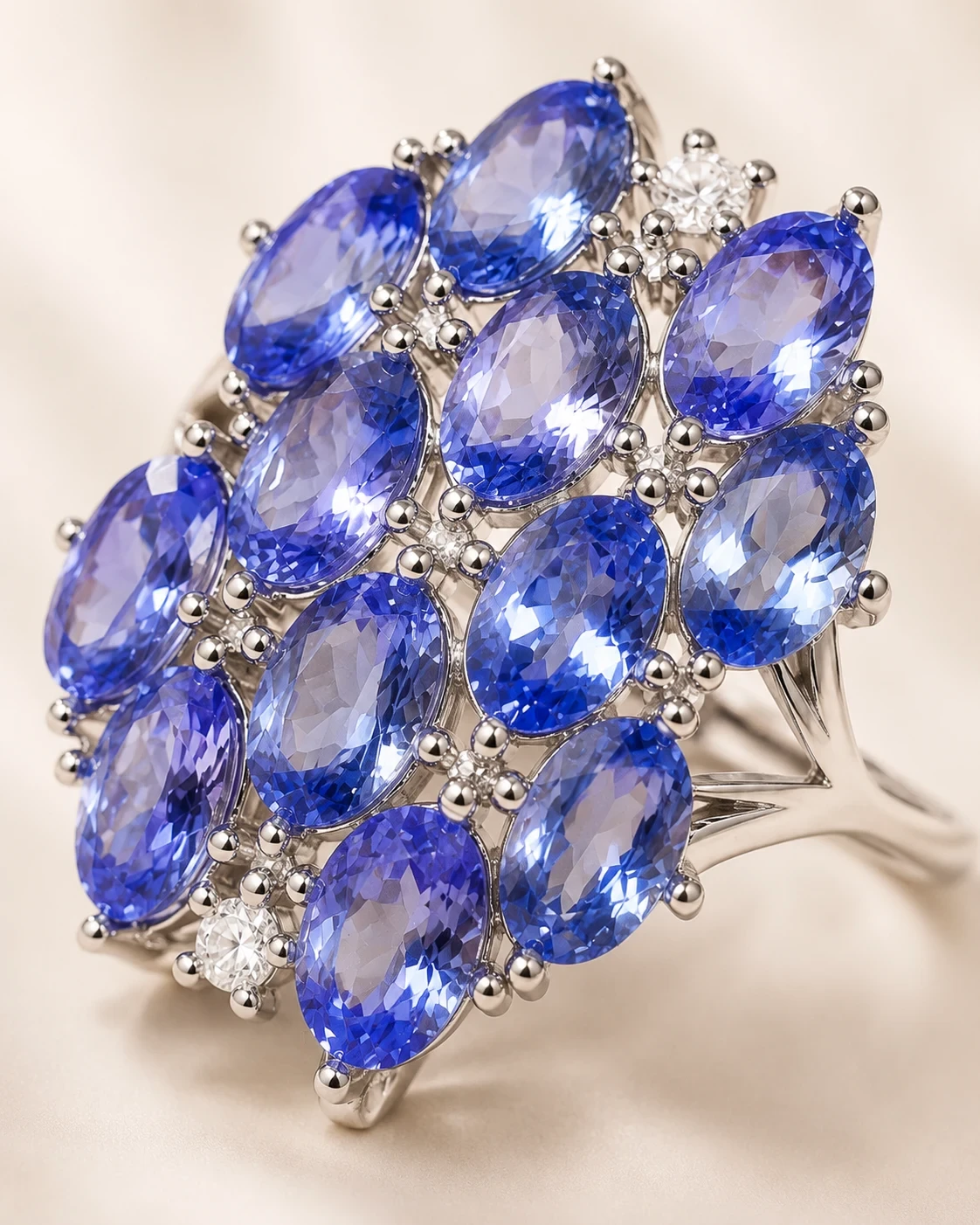
Buy the colour, in the largest size that colour is available in, from somebody who will tell you what has been done to the stone. That is the whole method, and everything below is what each part of it means in a shop.
The complication with tanzanite is that the usual shortcuts do not work. There is no standard quality-grading scale, so a letter on a ticket carries no information you can compare. The stone is trichroic, so its colour is partly a decision the cutter made. And saturation depends on size, so the two things you are judging are not independent. A buyer who understands those three facts is already ahead of most of the market.
Judge colour first, and judge it properly
Colour carries most of the price, and within colour, saturation carries most of the weight.
The stones people want are an intense violetish blue with red flashes of pleochroic colour from within. Read that description carefully: it names a hue with two parts, a saturation, and an effect that only appears as the stone moves. A seller who writes “blue” has told you almost nothing.
Ask which way the stone leans. Violetish blue and bluish violet are different objects at different prices, and the difference is not a matter of opinion: the blue axis is the short one in most crystals, so a blue face-up stone was cut from noticeably more rough than a violet one of the same size. Blue costs more because there is less of it, not because it is better.
Then look at the stone somewhere other than the display case. Tanzanite reads sapphire blue in natural light and violet under fluorescent light, and a shop lit to flatter its stock is doing exactly what it was designed to do. Take the stone to a window. If that is not possible, ask why.
Then size, because size is part of the colour
The two are one judgement, not two in sequence.
Saturation depends on the depth of stone light passes through, so identical material looks weaker in a smaller gem. GIA puts a number on it: stones generally have to be above five carats to reach a deep, saturated violetish blue or bluish violet, and accent stones under two carats are commonly a lighter colour.
This has a consequence that catches people comparing prices. A vivid three carat stone and a pale seven carat stone can sit at the same price, and neither seller is doing anything wrong. The small one is rarer for its size; the large one is more present on a hand. Which is the better buy depends entirely on which you are buying, and nothing about a price tag will tell you.
The other consequence is that the majority of tanzanite mined is light to medium. Pale is the ordinary case rather than a fault, and pastel hues are more plentiful, more affordable, and have a subtle appeal of their own. A pale stone honestly described and honestly priced is a perfectly good purchase. A pale stone sold as vivid is not.
Cut, which decides what you see
Cut is the factor buyers undervalue most and the one with the largest effect on how a stone looks.
Two decisions happen before a single facet is placed. The first is orientation: which of the three pleochroic directions faces up. That choice decides the colour of the finished stone permanently, and a cutter chasing weight rather than colour turns good rough into something flat. The second is proportion, which decides whether light comes back.
You cannot see the orientation decision directly. What you can see is the symptom: the quality of the cut makes a large difference to brilliance, and a well cut stone returns light evenly across its whole face rather than only at the edges. Tilt it. A dark patch under the table that follows the stone as it moves is a window, and it means the stone was cut shallow to keep weight.
Cushions, trillions and ovals are the most common shapes, and that is not fashion. Those outlines let a cutter follow the shape of the crystal rather than fight it, which means less waste and better odds of the colour surviving.
Clarity, which matters less than you think and more than it looks
Close to a pass or a fail, with one exception that is not about clarity at all.
Most faceted tanzanite has no eye-visible inclusions, so anything you can see unaided causes a drop in value. Eye-clean is the expectation rather than an achievement, and inclusions are more obvious in lighter stones because there is less colour to hide them.
The exception is a fracture. A break reaching the surface is recorded as a clarity feature and is really a durability problem: it is a weakness in a stone that already has one direction of perfect cleavage, and it will fail there. Ask specifically whether anything visible is a fracture rather than an inclusion. The answer changes what the stone is worth and whether it belongs in a ring.
The four factors, and what each is actually worth
| Factor | Weight in the price | What to check |
|---|---|---|
| Colour | Most of it | Saturation first. Which way it leans, blue or violet, and whether you saw it in daylight |
| Carat | Large, and tangled with colour | Whether the size is doing the work the colour is being credited for |
| Cut | Larger than people expect | Even return of light across the whole face. No window under the table |
| Clarity | Least, and mostly pass or fail | Eye-clean is normal. Ask whether anything visible is a fracture |
Judge them together and in that order. Judging them in sequence, deciding on colour and then separately on size, produces the classic mistake of paying a vivid-stone price for a stone whose vividness came from being large.
Treatment, paperwork and what a report actually says
Ask, expect the answer to be yes, and be suspicious of a no.
Most gems are heat treated, which removes or reduces the brownish colour and maximises the blue and violet. The result is permanent and creates no additional care requirement. Treatment here is normal rather than a defect, and the question is not whether it happened but whether it was disclosed.
Two things follow that are rarely said aloud. Trade professionals assume the majority of tanzanite on the market has been heated in some way, so there is little effect on pricing. And in many cases it is challenging for gemmological laboratories to determine whether a tanzanite has been heated. A seller charging a premium for guaranteed-unheated tanzanite is selling a certainty the laboratories are careful not to claim.
A laboratory report is still worth asking for, and it is worth knowing what it does. A GIA Colored Stone Identification Report records weight, measurements, shape, cutting style and colour, states whether the stone is natural or laboratory-grown, and names any detectable treatments. It settles identity. It does not grade quality, because there is no scale to grade against.
Identity matters more than people expect. Zoisite is occasionally found in pink, green and yellow, and although some sellers call those tanzanite, GIA calls them zoisite. And while no synthetic tanzanite is known, many simulants do exist: synthetic forsterite, coated glass, blue-violet cubic zirconia.
Loose stone or finished piece
Two different purchases, and the second one hides half of what you are paying for.
A loose stone is the honest version of this transaction. You can see the whole thing, turn it, put it on white paper, take it to a window, and every part of the price is attributable to something you just looked at. If you are buying seriously and have a setting in mind, buy the stone first.
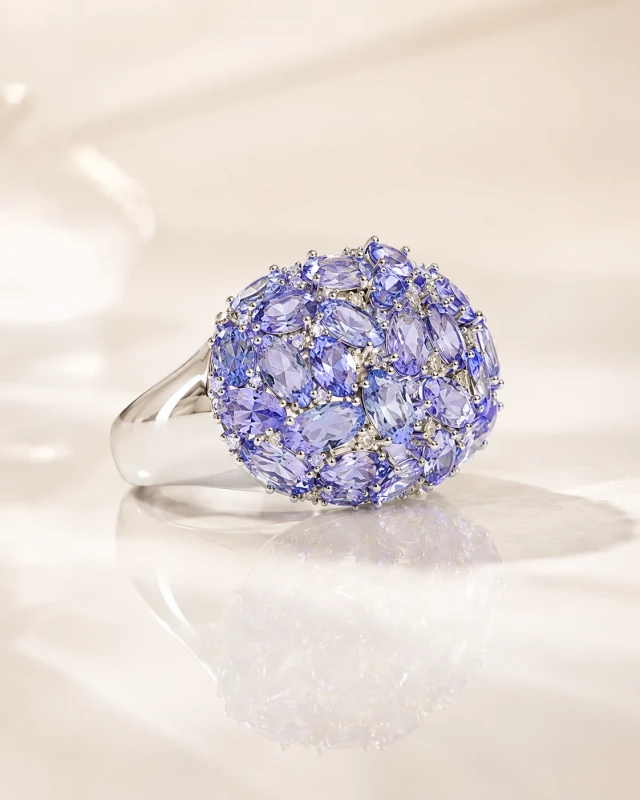
A finished piece is what most people actually buy, and the price then covers a stone, a metal, a setting and the labour that joined them. None of those is visible separately, and a shop can move value between them: an ordinary stone in an elaborate mount, or a very good stone in a plain one, can carry the same ticket. Ask what the stone alone would be, and whether the piece can be seen out of the light that is currently on it.
There is a specific trap in mounted stones. A closed-back or heavily bezelled setting hides the pavilion, which is where a window, a fracture or a repair would show. That is not a reason to avoid protective settings, which are exactly what a stone with a cleavage plane wants. It is a reason to ask for the report rather than relying on your eye, because your eye is being denied half the object.
What a fair price is made of
There is no list price for tanzanite and anybody quoting one is quoting themselves.
What exists instead is a set of factors that move a price, and the useful skill is being able to say which one is doing the work in front of you. Colour saturation, size, the interaction between the two, cut quality, whether anything is eye-visible, whether the stone is certified, and whether it is loose or mounted. Two stones differing by a factor of five in price usually differ on two of those, not seven.
Compare like with like or do not compare. A three carat vivid stone against a three carat pale one is a real comparison. A three carat vivid loose stone against a three carat pale one already set in gold is not a comparison at all, and it is the one most often presented as if it were.
Ask for the price with and without the setting, ask what the same stone would cost one grade of saturation lower, and ask what a comparable stone sold for recently. A seller who can answer all three is a seller who knows their own stock. One who cannot is guessing, and their price is a guess too.
Eight questions worth asking out loud
| Ask this | What a good answer sounds like |
|---|---|
| Which way does the colour lean? | “Violetish blue, and it reads more violet indoors” |
| Where can I see it in daylight? | Somebody walks you to a window |
| Has it been heated? | “Yes, like almost all of it. Here is the report” |
| Is anything visible a fracture? | A specific answer about a specific feature |
| What are the exact dimensions? | Millimetres, not just carats |
| Who assigned that grade? | “We did. There is no standard scale” |
| What is the return policy? | A period, in writing, that starts on delivery |
| Will you service it later? | A yes that includes not putting it in an ultrasonic |
The last two are not gemmology and they matter as much. A stone at this price is a relationship rather than a transaction, and the moment to ask is while you still have leverage.
Buying online, and buying abroad
Both are ordinary now, and both remove the one thing that matters most.
You cannot judge a tanzanite from a photograph. That is not scepticism about online sellers, it is a fact about a trichroic stone: the image shows one of three colours, under one light, at one angle, after whatever the camera and the editor did to it. A listing that says which lighting it was photographed in is being straight with you. A listing that does not is showing you a face and calling it the stone.
What makes an online purchase workable is the return period rather than the photograph. Read it before you read anything else: how long, from what date, who pays the return shipping, and whether a resized or altered piece is still covered. A generous return policy is the seller telling you they expect the stone to survive contact with daylight.
Buying while travelling has a different problem. The stone may well be cheaper, and you will have no recourse. A dispute across a border, in another jurisdiction, with a shop you cannot return to, is not a dispute you will win. If you buy abroad, buy from somewhere that gives you a laboratory report with the stone rather than a promise of one, and understand that the discount is partly the price of giving up the ability to complain.
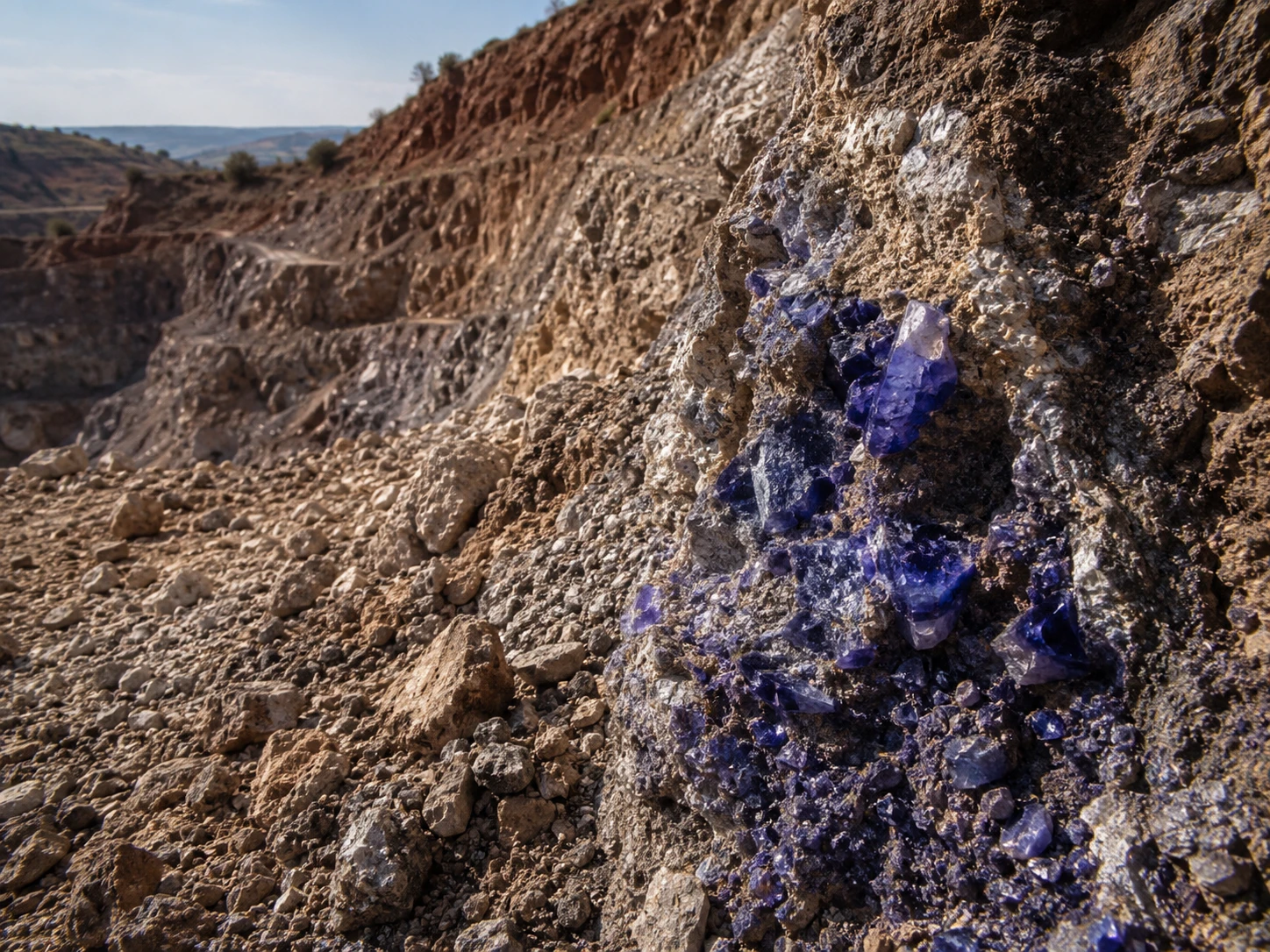
The single origin does not change any of this. Every tanzanite on Earth comes from one area of about eight square miles in northern Tanzania, so proximity to the mine is not a guarantee of anything about a particular stone. It is the same material everywhere, and everything that determines whether a specific stone is worth its price happened after it left the ground.
When not to buy
Four situations where the answer is to walk away, and none of them is about the stone.
The grade is doing the talking. If the conversation keeps returning to a letter and never reaches a description of the colour, the seller is relying on a scale that does not exist. AAA is a description individual companies create for their own goods and two sellers’ AAA are not comparable.
You cannot see it in daylight. Not “they were busy”. If a stone cannot be looked at properly it cannot be judged, and buying it is buying the lighting.
The treatment answer is evasive. “Ours is untreated” without a report is a claim about something laboratories find difficult to determine. Treat it as marketing.
The price is unrelated to everything above. Far below the market is the signature of a simulant, and the cost of finding out is a report you should have asked for anyway.
There is a fifth, and it is about you rather than the seller. If the piece is going onto a hand that will not come off for anything, the honest answer may be a different stone or a different piece: the durability question deserves its own conversation.
Where to start
Colour, in daylight, at the largest size that colour is available in, with the treatment on paper.
If you want the background before you go looking, what tanzanite is and what decides its colour covers the trichroism and the single origin, and why AAA means nothing covers the grading problem in full. If your first question is whether the stone is genuine at all, how to tell if a tanzanite is real covers the safe checks and the ones that will damage it. For the money side of the same decision, what decides the price of a tanzanite sets out which factors move a quote and by how much, and why this house quotes no figures. When you are ready to look at pieces, ours are here, and each one states its metal, the treatment of its stones and what its smaller stones actually are.
COMMON QUESTIONS
What should I look at first when buying tanzanite?
Colour, and within colour, saturation. Vivid stones are the sought-after ones and the description worth hearing names a hue in two parts, such as violetish blue, rather than just blue. Ask which way it leans and look at the stone in daylight rather than under shop lighting.
Is heated tanzanite worth less?
Barely. The trade assumes most tanzanite on the market has been heated, so there is little effect on pricing, and laboratories often find it challenging to determine whether a particular stone was heated at all. Treatment is normal here. What matters is that it is disclosed, not that it happened.
Do I need a certificate for a tanzanite?
It is worth asking for, and worth knowing what it settles. A Colored Stone Identification Report records weight, measurements, shape, cutting style and colour, states whether the stone is natural, and names any detectable treatment. It establishes identity. It does not grade quality, because no standard scale exists for tanzanite.
Is a bigger tanzanite always better?
No, but size and colour cannot be judged separately. Saturation depends on the depth of stone light passes through, so deep colour generally needs a stone above five carats and accent stones under two carats are commonly pale. A vivid small stone and a pale large one can cost the same for opposite reasons.
SOURCES
- Tanzanite Buyer's Guide — GIA No standard grading scale, the five carat saturation threshold, accent stones under two carats, cut and brilliance, common shapes, and what a Colored Stone Identification Report contains.
- Tanzanite Quality Factors — GIA The description of exceptional colour, eye-visible inclusions, and the two statements about heat treatment and pricing.
- Tanzanite Description — GIA Heat treatment is near universal and permanent; pastel hues are more plentiful and affordable.
- Tanzanite Value, Price, and Jewelry Information — International Gem Society How the colour reads under daylight against fluorescent light, and the absence of synthetics alongside the existence of simulants.
- Tanzanite: the blue gemstone from a single source — Geology.com One direction of perfect cleavage, and the eight square mile working area.