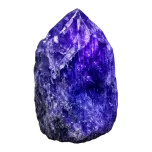
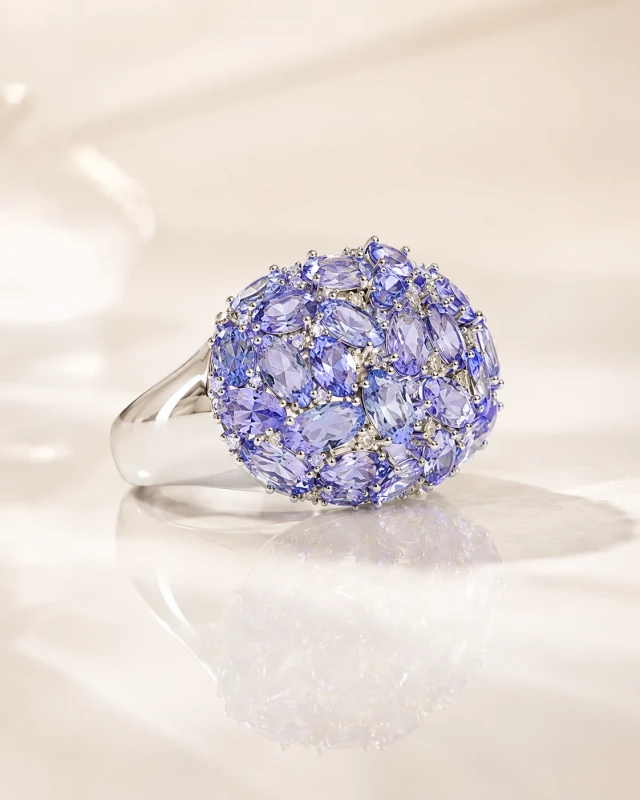
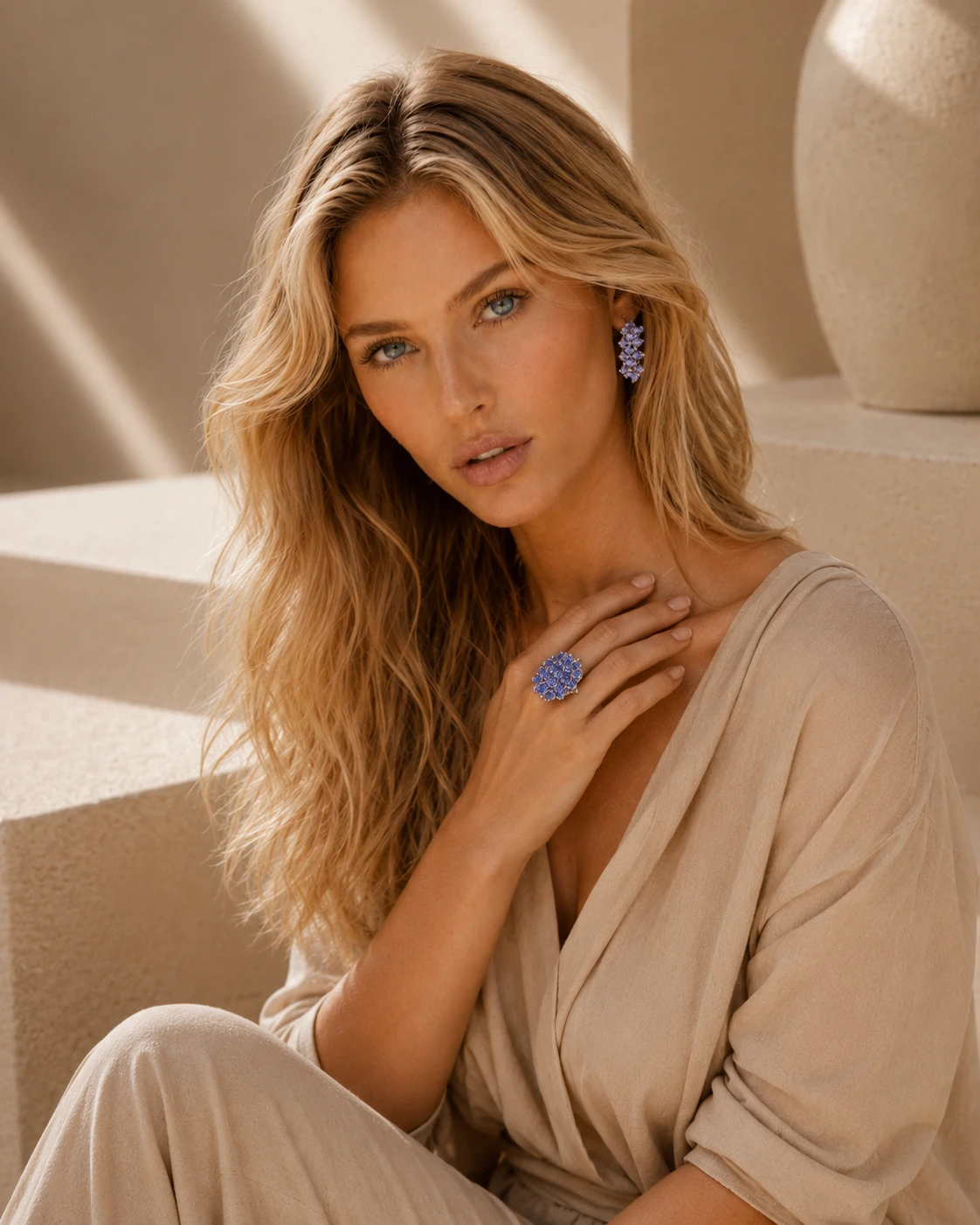
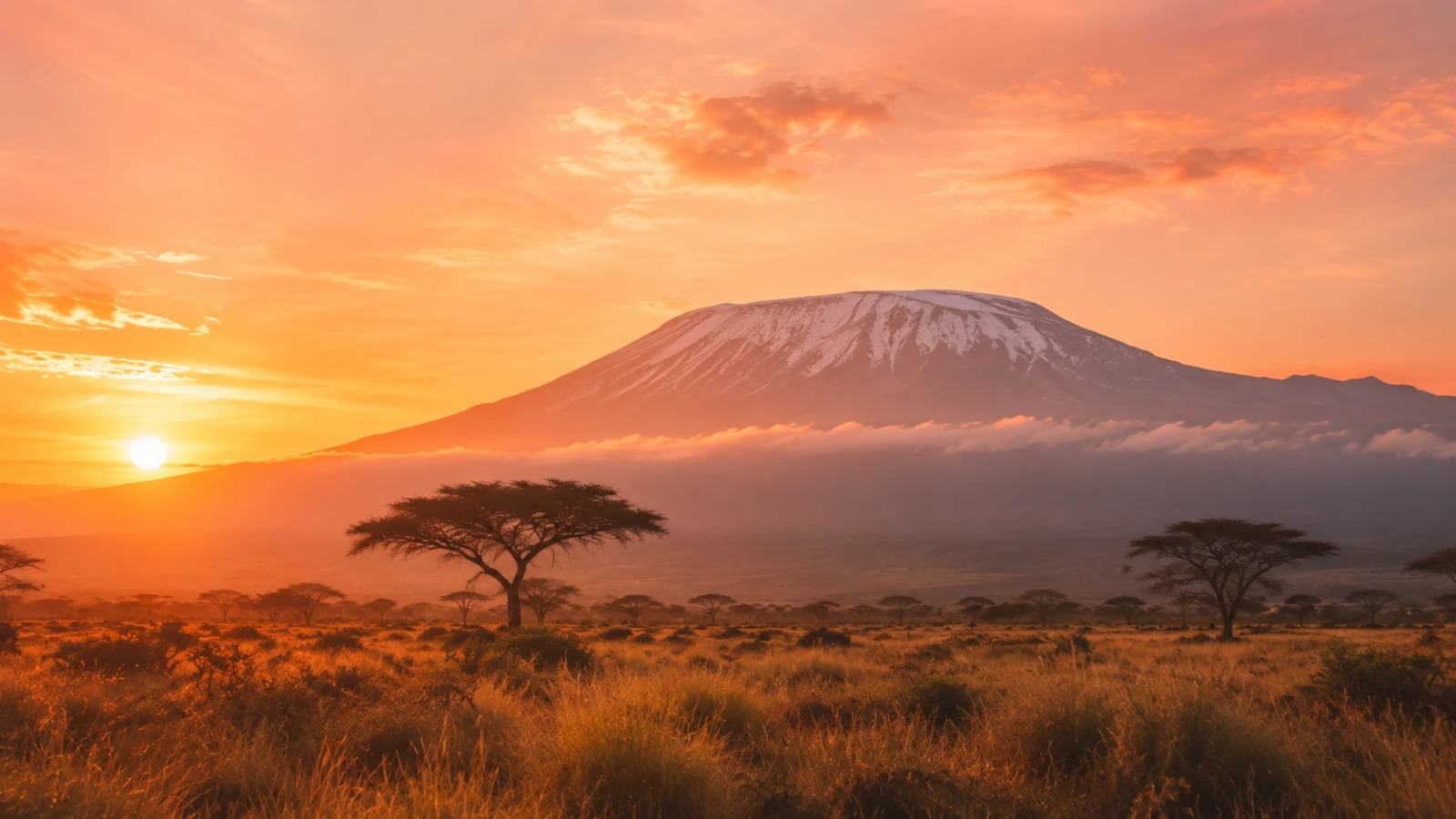
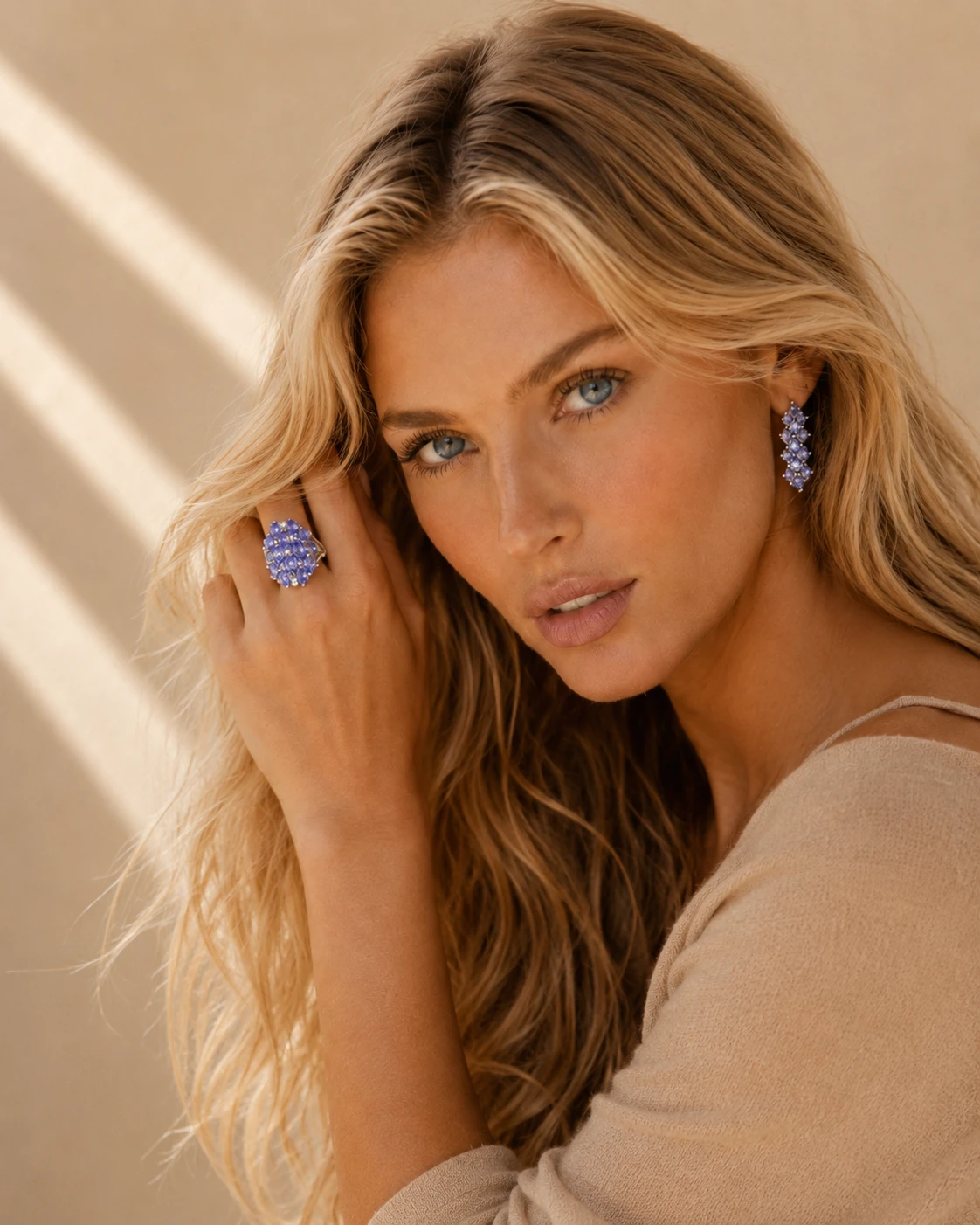
Tanzanite is the violet-blue to blue-violet variety of the mineral zoisite, and it is mined commercially in one area of the world: the Merelani hills of northern Tanzania, which is where the name comes from. It was found there in 1967 and introduced by Tiffany & Co. in 1968, who named it after the country.
That is the short answer. The longer and more useful one is about colour, because tanzanite’s colour is not a fixed property of the stone in the way a sapphire’s is. It is partly a decision somebody made while cutting it, and partly a decision somebody made while heating it. Understanding those two decisions is most of what separates a buyer who knows what they are looking at from one who does not.
Where it comes from, and why that is the whole story
One deposit, and it is small enough to walk across.
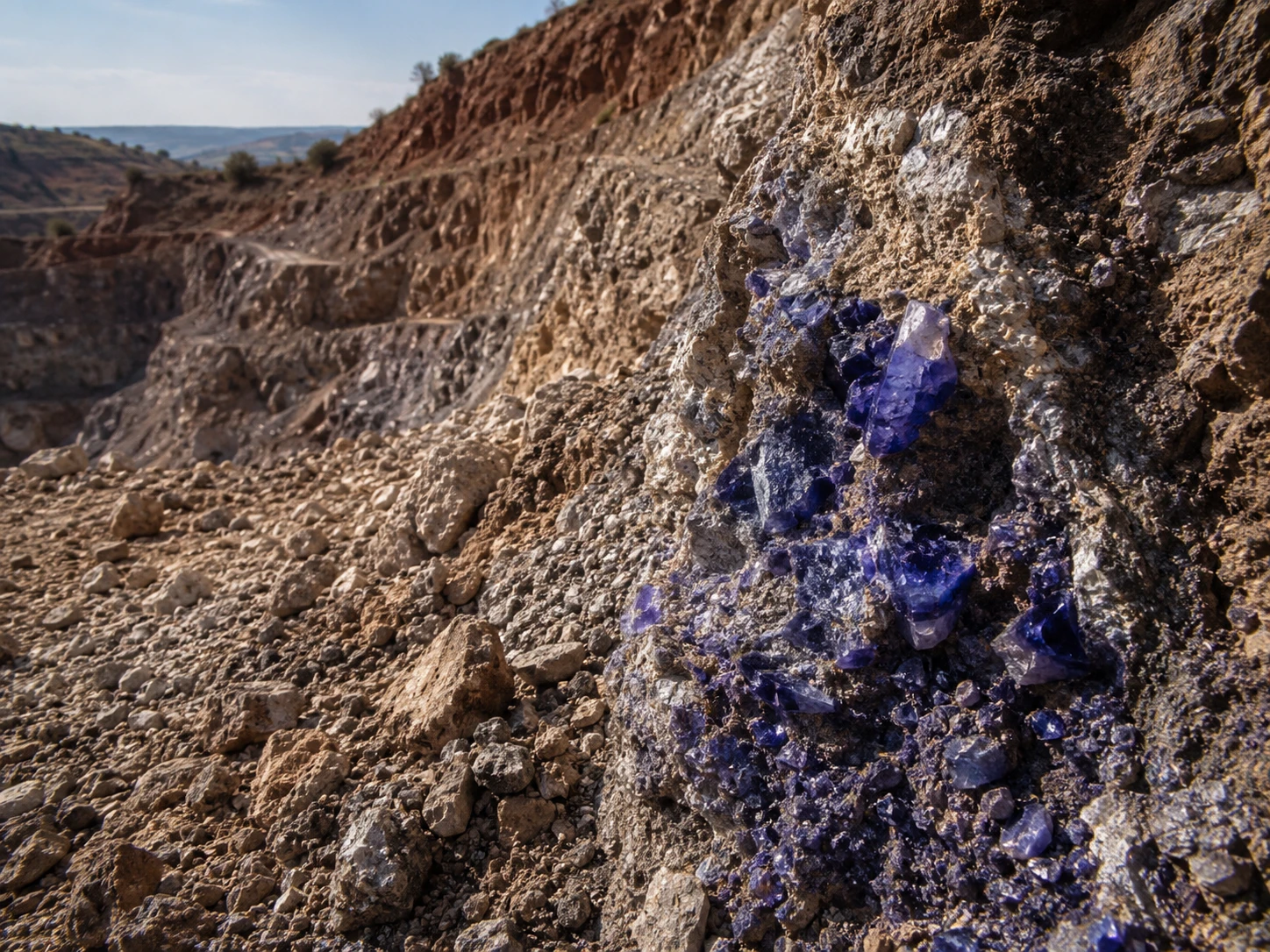
The sole source of tanzanite is the Merelani Hills in the Lelatema Mountains, in the Manyara region of northern Tanzania. The workings sit in an area of about eight square miles near the base of Mount Kilimanjaro. Almost every other coloured stone you can name is found on more than one continent. This one is found in a patch of ground you could cross on foot in an afternoon.
That single origin is the reason the stone exists as a category at all. It is also the reason the trade around it is unusually concentrated, and worth understanding before you buy. The mining area is divided into blocks, and Block C is the largest, accounting for over 50% of the mining area and the only mechanised block. The rest is worked at much smaller scale.
For a buyer, the practical consequence is narrower than the romance suggests. A single origin does not tell you a stone was mined responsibly, or cut well, or described honestly. It tells you where the material started. Everything that determines whether a particular stone is worth its price happened after that, in a cutting house and a setting bench, and none of it is visible from the word “Tanzanian” on a label.
It is also why we say plainly on each piece where the workshop told us the stone came from, and where they did not. A house that sells one stone from one hill has no excuse for being vague about the hill.
Why it is blue, and why it did not start that way
Vanadium, and heat.
The blue in tanzanite comes from small amounts of vanadium within the zoisite mineral structure. Zoisite itself is a common enough mineral and usually not blue at all. The vanadium is the difference, and how that vanadium behaves is the difference between rough that looks brownish and a finished gem that looks violet.
Most tanzanite comes out of the ground carrying a brownish or yellow-green component alongside the blue. Heating changes it. When vanadium-bearing zoisite is heated to a temperature of 600 degrees Celsius for about 30 minutes, the oxidation state of the vanadium is changed, and the unwanted colour goes with it. Other sources put the working range slightly wider, at about 500 to 600 degrees Celsius.
Most gems are heat treated, which removes or reduces the brownish colour and maximises the blue and violet. The result is permanent, it does not fade, and it creates no additional care requirement. Nothing about it is a defect.
What matters is disclosure rather than the treatment itself. Heating is close to universal here, so a seller who presents an untreated stone as a distinguishing feature is making a claim that needs a laboratory report behind it. Ask for the report. If there is not one, treat the claim as marketing rather than fact, and price the stone as heated, because almost all of it is.
Three colours in one crystal
Tanzanite is trichroic, which means it shows a different colour down each of three directions through the crystal.
The three are blue, red-violet, and yellow-green when viewed through each of its three crystal axes. A cut stone is never one of those colours cleanly. It is a blend, and which colour dominates in the finished gem is decided by how the cutter orients the rough before the first facet is placed.
This has a consequence that surprises people. The blue axis is the short one in most crystals. A cutter chasing the strongest blue has to orient the stone to look down that axis, and doing so means cutting away more of the rough and finishing with a smaller gem. Orienting for violet keeps more weight. So a blue face-up tanzanite of a given size started as a noticeably larger piece of rough than a violet one of the same size, and it is priced accordingly.
Neither choice is wrong. A violet stone is not a failed blue one. But it does mean the question “is blue better than violet” has an answer that is about supply rather than beauty: blue is rarer at any given size, so it costs more, and whether you prefer it is a separate matter entirely.
Light changes the balance again. The same stone can read sapphire blue in natural light and violet under fluorescent light. This is worth knowing before you judge a stone in a shop and then find it looks different at home. Nothing has changed except the light, and both readings are the stone.
Size and colour are the same question
Small tanzanites are pale, and not because they are poor quality.
Colour saturation scales with the depth of stone that light passes through, so identical material looks weaker in a smaller gem. GIA is blunt about the threshold: stones generally have to be above five carats to reach a deep, saturated violetish blue or bluish violet, and accent stones under two carats are commonly a lighter colour.
This matters when comparing prices. A pale one-carat tanzanite and a vivid seven-carat one are not the same material at different sizes. The size is part of why the colour is there at all. The majority of tanzanite mined is light to medium purple and blue, and the stone’s reputation rests on the small number of intensely saturated ones.
Lighter stones are not a lesser thing to want. Pastel hues are more plentiful and more affordable, and have a subtle appeal of their own. They are a different purchase, and they should be priced like one. A cluster of small pale stones and one large vivid stone can cost the same and are not remotely the same object.
What the stone is physically
The numbers that matter are hardness, cleavage and density.
| Property | Figure | Why it matters to you |
|---|---|---|
| Mineral species | Zoisite | Tanzanite is a variety name, not a species. A report will say zoisite |
| Mohs hardness | 6 to 7, about 6.5 | Softer than quartz at 7, so ordinary dust can scratch it over time |
| Cleavage | Perfect, in one direction | A sharp knock along that plane can split the stone rather than chip it |
| Trichroism | Blue, red-violet, yellow-green | The cutter chose which one you see |
| Refractive index | 1.692 to 1.700 | Lower than sapphire, so it returns light more softly |
| Specific gravity | 3.35 | A tanzanite feels lighter in the hand than a sapphire of the same size |
Hardness and cleavage are separate ideas and people mix them up constantly. Hardness is resistance to scratching. Cleavage is a plane along which the crystal parts cleanly when struck. A stone can be hard and still fragile, and tanzanite is neither especially hard nor free of cleavage, which is why the setting matters as much as the stone.
How to judge one, in order
Colour first, then cut, then clarity, then size, and never one of them in isolation.
| Factor | What actually matters |
|---|---|
| Colour | Saturation above all. Vivid, strongly coloured stones are the sought-after ones, and blue face-up is rarer than violet |
| Cut | The quality of the cut makes a large difference to brilliance. The stone should return light evenly across the whole face, not only at the edges |
| Clarity | Eye-visible inclusions reduce value, and are more obvious in lighter stones. Fractures matter more than the rest, because they are a durability problem as well as a clarity one |
| Carat | Inseparable from colour. Judge the two together, never in sequence |
None of these four is scored on a standard scale, because no such scale exists for tanzanite. That is worth understanding properly before you compare two sellers’ stock: how tanzanite is graded, and why AAA means nothing.
Cushions, trillions and ovals are the most common shapes, for the same reason the colour question exists. Those outlines let a cutter follow the crystal rather than fight it, and a shape chosen to preserve colour will always beat a shape chosen to preserve weight.
Five things to ask before you pay
Every one of these has an answer, and a seller who cannot give it is telling you something.
What is the treatment, and is it on a report? Heating is normal and expected. The answer you want is “heated, and here is the report”. The answer that should worry you is “ours is untreated” with nothing to show for it, because most gems are heat treated and a genuine exception is a documented exception.
Is that colour the face-up colour? Ask to see the stone away from the display lighting, in daylight if you can. Tanzanite reads sapphire blue in natural light and violet under fluorescent light, and a shop lit to flatter the stock is doing exactly what it was designed to do.
What is the setting protecting? With perfect cleavage in one direction, the girdle and the corners are where a stone gets hurt. A bezel or a recessed setting is worth more here than it would be on a sapphire, and a high four-claw solitaire is the least protective thing you can put a tanzanite in.
Is the price about the colour or about the carats? These are separate questions that get sold as one. A large pale stone and a small vivid one can sit at the same price for opposite reasons, and knowing which you are buying is the difference between a considered purchase and a heavy one.
Who wrote the grade? If there is a letter on the ticket, ask which laboratory assigned it. There is no standard scale for this stone, so the honest answer is always “we did”, and a seller willing to say so is more trustworthy than one who implies otherwise.
What tanzanite is bad at
Being knocked, and being cleaned carelessly.
It ranks 6 to 7 on the Mohs scale, with fair to poor toughness and cleavage, a tendency to break when struck. GIA’s own answer to whether it is tough enough for rings is measured: not as tough as ruby and sapphire, so consider a setting that protects the stone, or choose tanzanite for a ring you do not wear every day. The Gem Society puts it more directly still, advising that you reserve these gems for occasional pieces or use protective settings.
For a stone worn on the hand daily, that question deserves a longer answer than a paragraph, and we have written one: tanzanite engagement rings, and the honest durability answer.
Cleaning is simpler and the rules are absolute. Warm water, a mild detergent and a soft brush, and never an ultrasonic or steam cleaner. Ultrasonic cleaning drives vibration through the stone and tanzanite has a cleavage plane for that vibration to find. Steam adds thermal shock to the same problem. Both are the standard back-of-shop tools, which is why a jeweller who does not ask what your stone is before cleaning it is the wrong jeweller.
Imitations, and the one thing that does not exist
Nobody grows tanzanite in a laboratory, but plenty of things are sold as it.
Synthetic tanzanites are unknown. However, many simulants do exist. The distinction is worth holding on to. A synthetic is the same material made by people, and for tanzanite there is no such thing. A simulant is a different material that looks similar: synthetic forsterite, coated glass, and blue-violet cubic zirconia all turn up under names designed to sound like the real stone.
Anything sold as tanzanite at a price that seems unrelated to the figures above deserves a report from a laboratory rather than a reassurance from a seller. The stone has no standard grade to hide behind, which cuts both ways: it makes honest description harder, and it makes a dishonest one easier.
If you want to see how we describe what we sell, including the fields where a workshop has not answered us yet, the pieces are here: every piece the maison sells.
How much is left, and why we will not tell you it is running out
There is a figure, and it is larger than the sales line suggests.
A 2018 study by Tanzania’s National Bureau of Statistics put total tanzanite reserves at 109 million carats, with Block C alone estimated at about 87.1 million carats. Those are estimates of material in the ground rather than of gem-quality material that will reach a market, and the two are very different numbers.
You will read constantly that tanzanite will be exhausted within a generation. It is the oldest argument this stone has, it is repeated by people with something to sell, and we have not found a gemmological source that supports it as stated. So we do not repeat it. What is true and checkable is the single origin, the small working area and the concentration of production, and those are interesting enough without a countdown attached. The full account of how one hillside came to hold the world’s only deposit is in why tanzanite is found in only one place.
Buy tanzanite because the colour does something no other stone does, and because you understand what you are paying for. Not because somebody told you the clock is running.
If what you are after is what the stone is taken to mean rather than what it is, that is a separate and much more recent story: the birthstone, the symbolism and the astrology.
Three companion pieces go deeper than this one does. For the formula and the crystallography behind the three colours, what tanzanite is made of. For why almost every stone has been through a furnace, is all tanzanite heat treated. And for how it stands against the two stones it is most often weighed against, tanzanite against sapphire and diamond.
More on the stone, its origin and how it is judged: the tanzanite guide.
COMMON QUESTIONS
Is tanzanite a rare stone?
It is mined commercially in one area of the world, the Merelani hills of northern Tanzania. Rarity within tanzanite also varies: the majority mined is light to medium in colour, and intensely saturated stones, particularly blue face-up ones, are a small proportion of the whole.
Why does my tanzanite look different in different rooms?
Because it is pleochroic and the light is doing part of the work. Cool light such as daylight-equivalent fluorescent emphasises the blue; warm incandescent light pushes the same stone towards violet and purple. Nothing is wrong with the stone.
Is blue tanzanite better than violet tanzanite?
Blue face-up stones are rarer, which is not the same as better. The blue lies on the crystal's short axis, so cutting for blue means accepting a smaller gem from the same rough. Which you prefer is a matter of taste; what you pay reflects the cutter's trade-off.
Is all tanzanite heat treated?
Almost all of it. Heating removes or reduces the brownish and yellow-green pleochroic colour and maximises the blue and violet. The change is permanent and needs no special care. The important thing is that the treatment is disclosed and named on a laboratory report.
What size tanzanite should I buy?
Size and colour cannot be judged separately. Stones generally need to be above five carats to reach a deep saturated colour, and accent stones under two carats are commonly lighter. If a vivid colour is what you want, that sets a floor on the size.
Is tanzanite the same as sapphire?
No. Sapphire is corundum; tanzanite is a variety of zoisite. Fine tanzanite can look close to a fine blue sapphire, but sapphire is 9 on the Mohs scale with excellent toughness and no cleavage, while tanzanite is 6 to 7 with fair to poor toughness and does cleave.
Is tanzanite a real gemstone or a synthetic?
It is a natural mineral: the violet-blue variety of zoisite, mined in northern Tanzania. No synthetic tanzanite is known to exist. What does exist is simulants, which are different materials that resemble it, so anything priced far below the market deserves a laboratory report rather than a reassurance.
Where is tanzanite mined?
In one place. The Merelani Hills in the Lelatema Mountains of northern Tanzania, in a working area of roughly eight square miles near the base of Kilimanjaro. No commercial deposit has been found anywhere else.
What makes tanzanite blue?
Small amounts of vanadium in the zoisite structure. Most rough also carries a brownish or yellow-green component, and heating to around 600 degrees Celsius changes the oxidation state of the vanadium and removes it. The result is permanent and close to universal in the trade.
SOURCES
- Tanzanite Description — GIA
- Tanzanite Buyer's Guide — GIA
- Tanzanite History and Lore — GIA
- Tanzanite Care and Cleaning — GIA
- Tanzanite Value, Price, and Jewelry Information — International Gem Society Species, hardness, cleavage, trichroic colours, heat treatment range, refractive index, specific gravity, single source, simulants, care.
- Tanzanite: the blue gemstone from a single source — Geology.com Vanadium as the colour cause, 600 C for 30 minutes, the eight square mile working area, Block C, and the 2018 National Bureau of Statistics reserve figures.