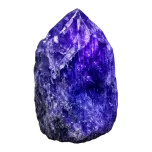
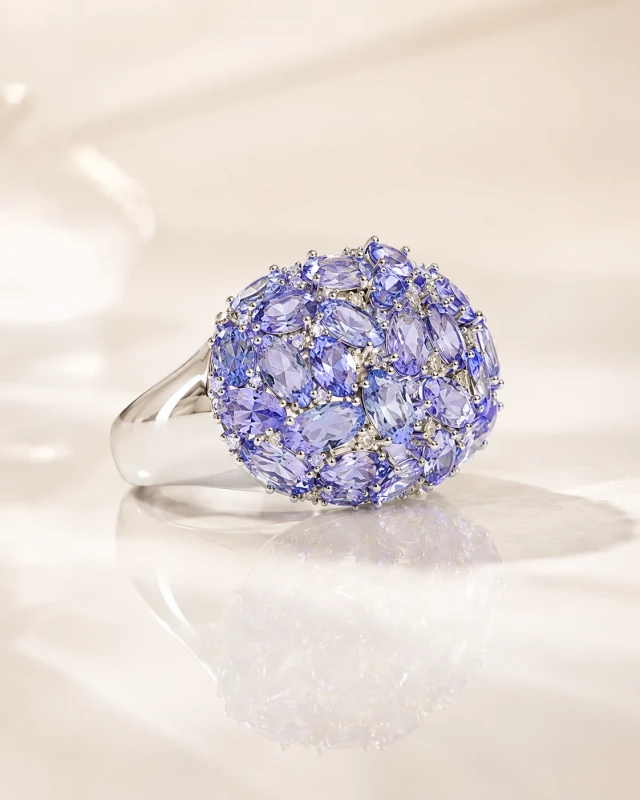
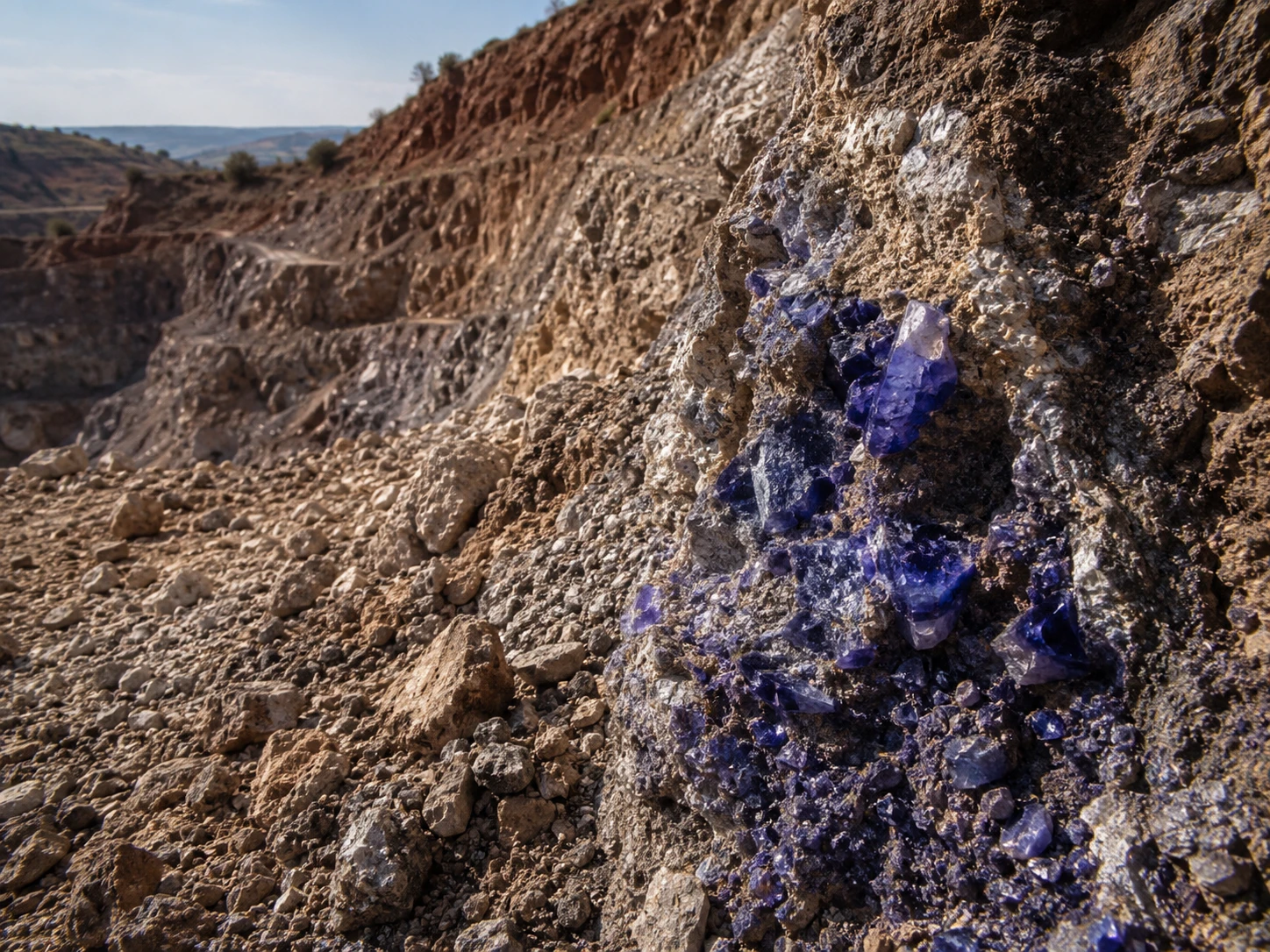



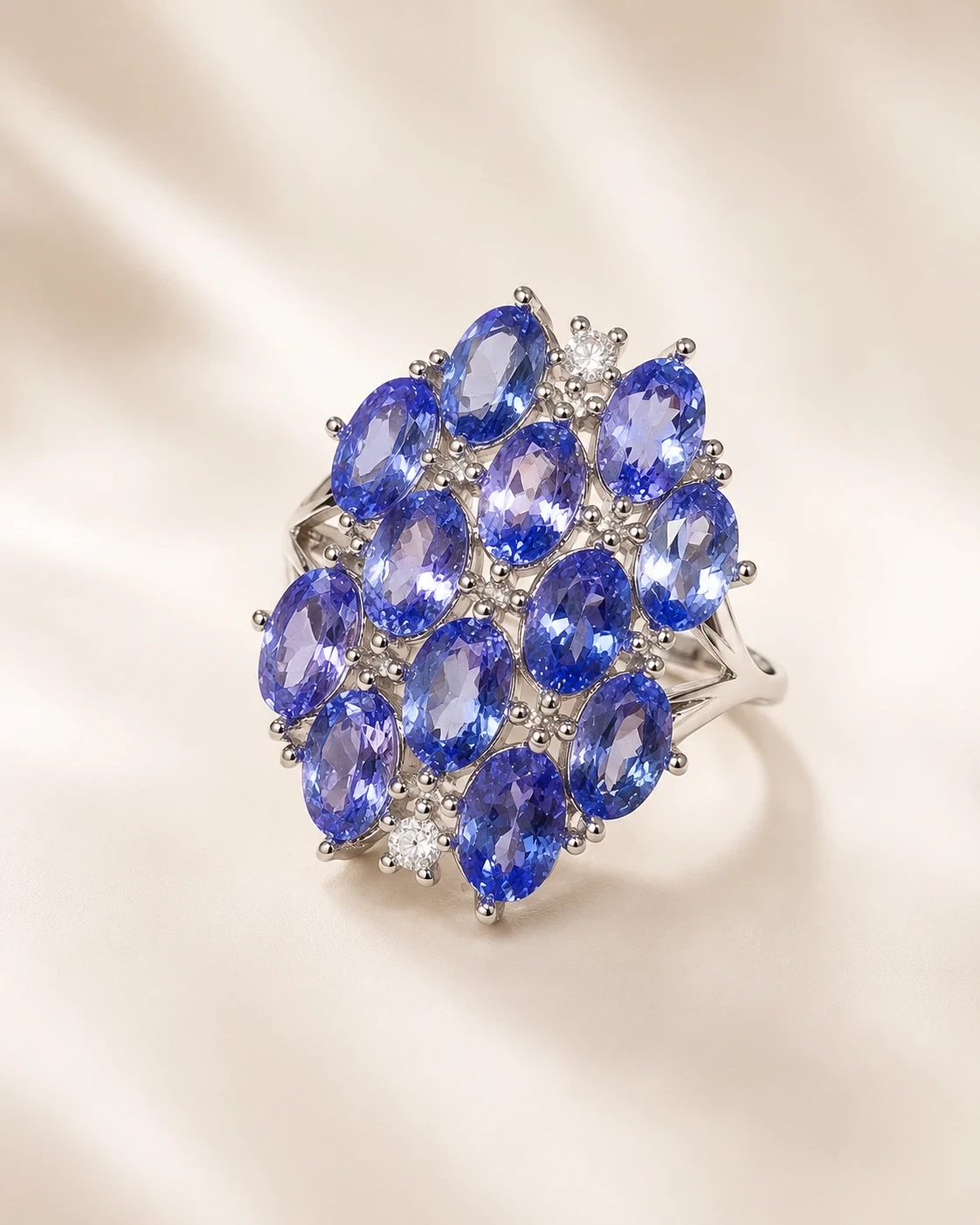
Yes, effectively all tanzanite on the market has been heated. It is normal, it is permanent, it does not make the stone fake, and it barely moves the price. If you own a tanzanite, it was almost certainly brown when it came out of the ground.
That last sentence is the one people find unsettling, and it should not be. Here is what the heating does, why the trade treats it as background rather than as a disclosure, and why a premium for unheated tanzanite is a premium for something nobody can reliably certify.
What the heating actually does
It changes the oxidation state of an element already in the stone.
The blue comes from small amounts of vanadium within the zoisite mineral structure. In most rough that vanadium sits in a state that produces brown or a muddy mix. Heating to about 600 degrees Celsius for thirty minutes changes the vanadium’s oxidation state to produce or enhance the blue coloration, and heating can convert naturally brown or green zoisite into blue zoisite.
Two things follow, and both matter.
Nothing is added. No dye, no glass, no filler, no coating. The vanadium was in the crystal when it formed, hundreds of millions of years ago, and the heat rearranges its electronic state rather than putting anything new into the stone. What you own afterwards is the same mineral with the same chemistry.
And the change is stable. GIA describes the result as permanent: most gems are heat treated, which removes or reduces the brownish colour and maximises the blue and violet. It does not fade, it does not reverse in sunlight, and it creates no additional care requirement beyond what an untreated stone would need.
Why almost all of it is heated
Because most of what comes out of the ground is brown, and because the treatment is cheap, reliable and permanent.
Put those together and the economics are not subtle. A brown crystal that becomes a saleable blue gem after half an hour in a furnace will go into the furnace. There is no market pressure in the other direction, because a brown tanzanite has no constituency waiting for it.
This is why the trade treats heating as the default state of the material rather than as a disclosure event. Trade professionals assume the majority of tanzanite on the market has been heated in some way, so there is little effect on pricing. Nobody is concealing anything by not mentioning it, in the way that failing to mention a fracture filling would be concealment. It is closer to not mentioning that a diamond was cut.
How the treatment is actually done
Less dramatic than the word treatment suggests, and worth picturing because it demystifies the whole subject.
Rough is sorted, then brought up to temperature in a furnace and held there. About 600 degrees Celsius for thirty minutes is the figure usually cited, which is modest as gem treatments go and well below what corundum enhancement requires. The stones are then cooled slowly, because a gem with a cleavage plane does not tolerate thermal shock any better in a furnace than on a workbench.
Where in the chain it happens varies. Some rough is heated before cutting, some after, and cutters often prefer to see how a crystal behaves before committing to an orientation. That has a small consequence for the buyer: a stone may pass through several hands between the furnace and the shop, which is part of why the person selling it frequently cannot tell you first hand whether it was heated. They are not being evasive. They genuinely do not know, and the honest ones say so.
There is nothing exotic in the process, no proprietary chemistry and no secret. It is a kiln, a temperature and a clock.
Is heated tanzanite real tanzanite?
Yes, unambiguously, and it is worth saying flatly because the internet is full of the opposite implication.
A heated tanzanite is natural tanzanite. It formed in the ground at Merelani, it has the chemistry and crystal structure of zoisite, and a laboratory will identify it as natural rather than laboratory-grown. Heat treatment is not synthesis. The distinction that matters gemmologically is natural versus lab-grown, and on that axis tanzanite is unusually clean: to date, synthetic tanzanites are unknown.
Treated material is not fake material. A seller or an article implying otherwise is either confused about the categories or leaning on the confusion to sell something else.
The unheated premium, and why it is mostly a story
Here is the part that costs buyers money.
In many gem species, untreated stones carry a genuine and well established premium, because untreated material is scarce and laboratories can detect the treatment reliably. Sapphire works this way: heat treatment is common, detection is dependable, and an unheated sapphire with a report is a meaningfully different object.
Tanzanite does not work this way, for one specific reason. In many cases it is challenging for gemmological laboratories to determine whether a tanzanite has been heated.
Read that against the pricing observation from the same source, that the trade assumes heating and there is little effect on pricing, and the position becomes clear. A seller charging a premium for guaranteed unheated tanzanite is charging for a certainty the laboratories are careful not to claim. In most cases the honest answer available to anybody is “probably heated, like almost all of it, and not provable either way”.
That is not a reason to distrust sellers generally. It is a reason to decline that particular premium, and to be a little more curious about a seller who charges it confidently.
There is a narrow exception worth acknowledging rather than pretending away. Some tanzanite does occur naturally blue, and a specific stone with credible documentation of its history from the mine onward is a different proposition from a bare assertion. Those are rare, the documentation is the whole of the claim, and the burden sits entirely with the seller. If the evidence is a sentence on a website, there is no evidence.
What a laboratory report cannot settle here
A report is worth having. It is worth knowing precisely what it decides.
A Colored Stone Identification Report records weight, measurements, shape, cutting style and colour, states whether the stone is natural or laboratory-grown, and names any detectable treatments. The operative word is detectable.
| Claim | What the evidence supports |
|---|---|
| “This is natural tanzanite” | A report settles this |
| “This has been heated” | Usually assumed, sometimes detectable, rarely contested |
| “This is certified unheated” | Generally unsupportable. Silence on a report is not a finding of no treatment |
| “This is coated” | Detectable under magnification |
| “This colour proves it was heated” | Never valid. Colour does not establish treatment |
The third row is where money changes hands on a misunderstanding. A report that does not mention heat treatment has not certified the stone unheated; in tanzanite it usually means the question could not be resolved. Anybody presenting that silence as a positive finding has inverted what the document says.
Never infer treatment from colour
This deserves its own heading because it is the most common amateur mistake and it runs in both directions.
A vivid blue stone has not been proven heated. A pale or brownish stone has not been proven unheated. Natural colour variation in tanzanite is enormous, saturation depends heavily on size, and the majority of what is mined is light to medium regardless of what has been done to it. You cannot read a furnace out of a hue.
The same applies to the colour shift people sometimes cite as evidence. Tanzanite reads sapphire blue in natural light and violet under fluorescent light, and that behaviour comes from pleochroism in the crystal, not from treatment. It is present in heated and unheated material alike.
If somebody tells you they can identify heat treatment by eye, they are describing a skill that laboratories with instruments have told us is difficult.
Heating is not the treatment to worry about
There are treatments in this market worth caring about, and heat is not the one.
| Treatment | Permanent? | Disclosure matters? |
|---|---|---|
| Heat | Yes | Assumed by the trade; no premium either way |
| Surface coating | No, it wears | Very much so. A coated stone’s colour is not the stone’s |
| Fracture filling | Variable | Yes, and it affects durability and cleaning |
| Dyeing | No | Yes |
Coating is the real hazard, because it puts colour on the outside of a pale stone and comes off with wear. It concentrates at facet junctions and around the girdle where magnification reveals it, and the buying guides warn about it specifically while treating heat as ordinary.
The proportion of anxiety online is close to inverted. Heating, which is universal, permanent and harmless, generates most of the worry. Coating, which is neither universal nor permanent and genuinely changes what you own, generates far less.
What heating means for wearing and cleaning it
Nothing, which is the practical headline.
Heat treatment in tanzanite creates no additional care requirement. The stone needs the same handling it would have needed untreated, and that handling is dictated by its physical properties rather than by its history: 6 to 7 on the Mohs scale with perfect cleavage.
So the care rules are the ordinary tanzanite rules. Avoid impacts, avoid ultrasonic and steam cleaners, avoid sudden temperature changes, and keep it away from a working hand unless the setting protects it. Those apply to every tanzanite regardless of what was done to it, and the honest care answer covers them properly.
The one exception is a stone you suspect is coated, which should never meet solvents, dips or ultrasonic cleaners, because those can strip the colour. That is another reason coating disclosure matters more than heat disclosure.
Why this bothers people, and why it should not
The discomfort is real and worth addressing directly rather than dismissing, because it comes from a reasonable instinct.
Buyers want the stone to be what nature made. Learning that the colour you chose came out of a furnace feels like learning the thing was manufactured, and no amount of “the trade considers it normal” quite answers that on its own.
What answers it is the chemistry. The vanadium that produces the blue was in the crystal from the beginning. The heat did not add colour; it changed the state of something already present, in a process that also happens geologically. Merelani stones that emerged blue did so because the earth applied heat over a longer timescale. The furnace is doing the same work faster.
So the honest framing is not that the stone was improved artificially, but that a process nature performs unevenly was completed deliberately. That is a different claim, and it is the accurate one.
There is a second reason the discomfort misfires. If heating were prohibited tomorrow, the result would not be a market of honest brown tanzanite. It would be a market with a fraction of the supply at many times the price, and the pale stones most buyers actually take home would largely not exist as gems at all. The treatment is why tanzanite is available to anyone.
What to actually ask a seller
Three questions, and the answers you want are unremarkable.
Ask whether it has been heated. The good answer is “yes, almost certainly, like nearly all tanzanite”, possibly with a note that it cannot be established definitively. An emphatic no without a report is the answer to be sceptical of.
Ask whether anything else has been done to it, naming coating specifically. This is the question that protects you, and it is the one buyers rarely ask because they have spent their attention on heat.
Ask what the return policy is if an independent laboratory disagrees with the description. That converts every answer above from a conversation into a commitment, and it costs a confident seller nothing.
Ask for the report and read what it says rather than what the folder implies. Detectable treatments named, natural or laboratory-grown stated, and nothing about quality, because there is no scale to grade against.
Where to start
Heat treatment is settled background. The questions that decide whether a stone is worth its price are all still open: how to buy tanzanite puts them in order, and what decides the price explains what actually moves a quote.
For the vanadium and the trichroism the heating acts on, what tanzanite is. For separating genuine material from simulants and coated stones without damaging anything, how to tell if a tanzanite is real.
When you want to look at pieces, ours are here. Each states the treatment of its stones, which for tanzanite means saying the ordinary thing plainly rather than implying something rarer.
COMMON QUESTIONS
Are all tanzanites on the market heat treated?
Effectively yes. Most tanzanite is brown or muddy as mined, and heating to around 600 degrees Celsius for thirty minutes changes the oxidation state of vanadium already in the crystal to produce the blue and violet. The trade assumes the majority of tanzanite on the market has been heated in some way, and treats it as the default state of the material rather than as a disclosure event.
Is heated tanzanite still real tanzanite?
Yes, unambiguously. Nothing is added by heating: no dye, filler, glass or coating. The vanadium producing the colour formed in the crystal hundreds of millions of years ago, and the heat only changes its electronic state. A laboratory identifies heated tanzanite as natural rather than laboratory-grown, and to date no synthetic tanzanite is known to exist. Treated is not the same as fake.
Should I pay more for unheated tanzanite?
Generally no. In many cases laboratories find it challenging to determine whether a tanzanite has been heated at all, so a guarantee of unheated is a certainty nobody can reliably supply. Combined with the trade's assumption that most material is heated, this means the premium is usually being charged for an absence of evidence. Some tanzanite does occur naturally blue, but the claim rests entirely on documented history from the mine onward.
Can you tell if a tanzanite has been heated by looking at it?
No, and nobody can. Colour never establishes treatment, in either direction: a vivid stone has not been proven heated and a pale one has not been proven unheated. Natural colour variation is enormous and saturation depends heavily on size. The colour shift between daylight and fluorescent light comes from pleochroism in the crystal and is present in heated and unheated material alike.
Does heat treatment affect how I care for tanzanite?
No. Heating creates no additional care requirement, and the handling rules come from the stone's physical properties rather than its history: 6 to 7 on the Mohs scale with perfect cleavage. Avoid impacts, ultrasonic and steam cleaners and sudden temperature changes. The exception is a stone you suspect is coated, which must never meet solvents, dips or ultrasonic cleaning, because those can strip the colour.
SOURCES
- Tanzanite: A blue gemstone found in only one place on Earth — Geology.com Vanadium as the cause of colour; heating to 600 degrees Celsius for thirty minutes changing the vanadium's oxidation state; heating converting naturally brown or green zoisite into blue zoisite.
- Tanzanite Description — GIA Most gems being heat treated to remove or reduce the brownish colour and maximise blue and violet, and the result being permanent.
- Tanzanite Quality Factors — GIA Trade professionals assuming most tanzanite has been heated so there is little effect on pricing, and laboratories often finding it challenging to determine whether a tanzanite has been heated.
- Tanzanite Buyer's Guide — GIA The contents of a Colored Stone Identification Report and the wording about detectable treatments; the majority of tanzanite mined being light to medium.
- Tanzanite Value, Price, and Jewelry Information — International Gem Society Synthetic tanzanites unknown to date; hardness 6 to 7 with perfect cleavage; sapphire blue in daylight and violet under fluorescent light.
- Sapphire Value, Price, and Jewelry Information — International Gem Society Heat treatment described as common in sapphire, used as the contrast case where detection is dependable and unheated stones carry a real premium.