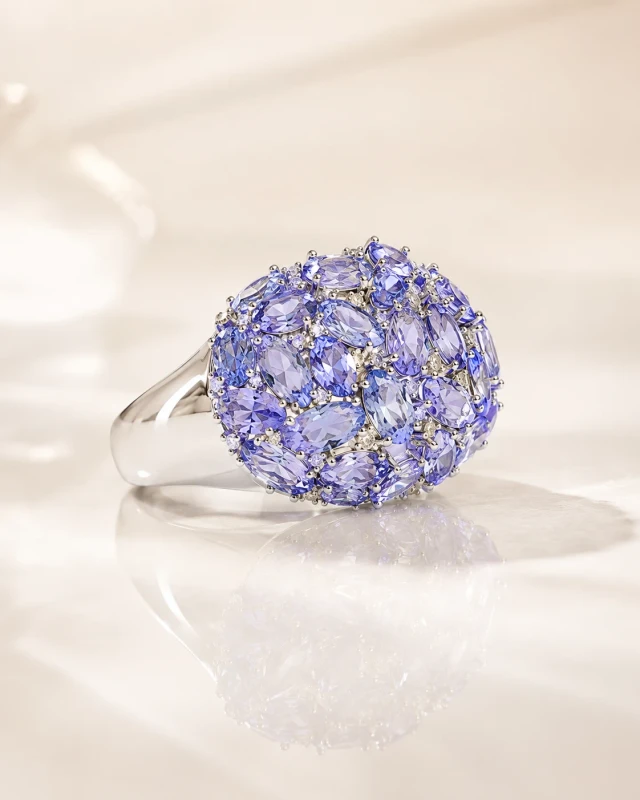



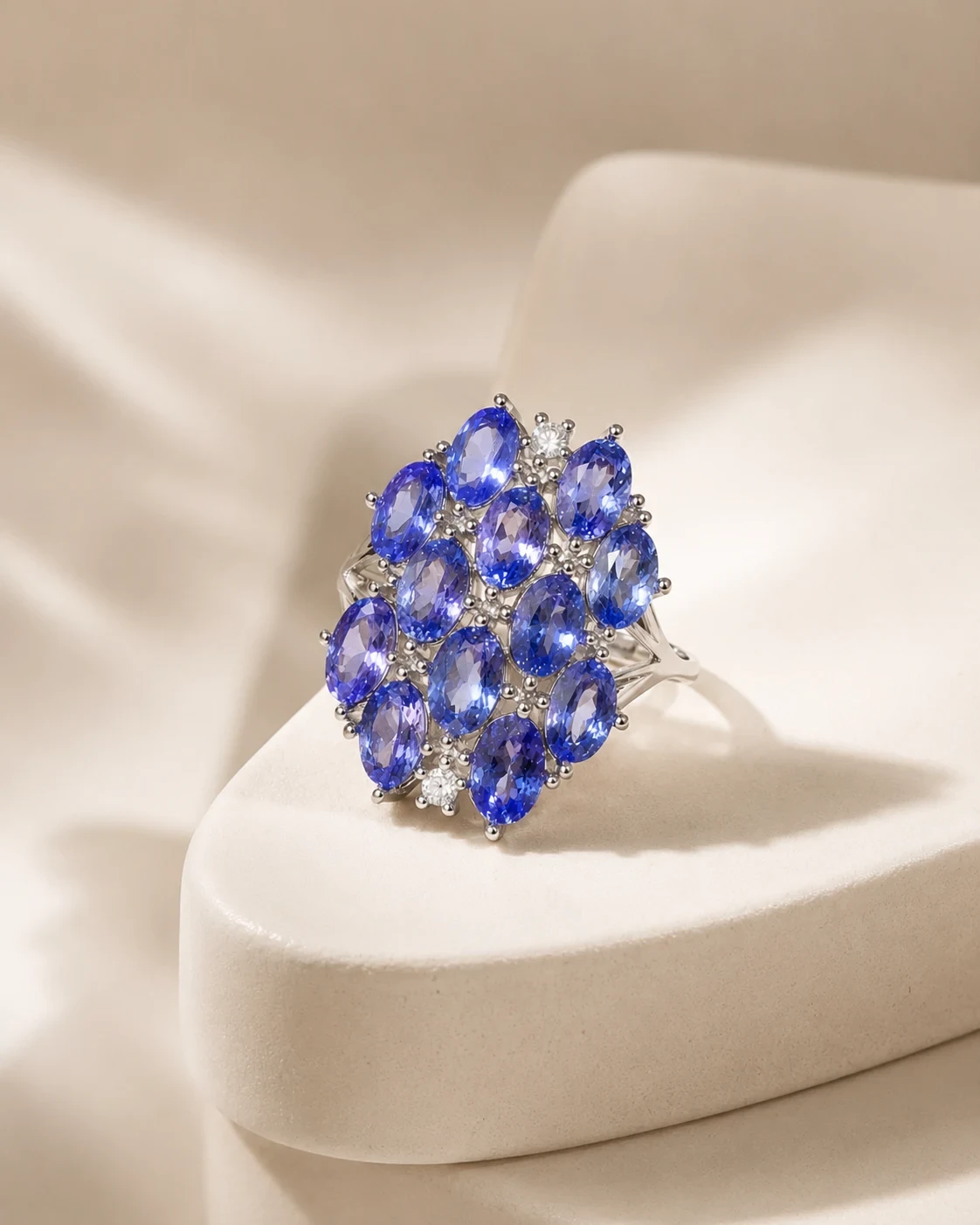
Pre-owned tanzanite jewellery can be very good value, provided you inspect it with the stone’s character in mind. Tanzanite sits at 6 to 7 on the Mohs scale, which means years of wear show more readily than on sapphire or diamond: softened facet edges, fine scratches on the table, small chips at the girdle. None of that has to rule a piece out. It has to be seen, priced in, and weighed against what a repolish or a new setting would cost.
This guide covers what to look for, what can be fixed, what the paperwork should say, and what protections a buyer has.
How old can a tanzanite piece be?
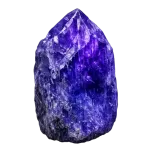
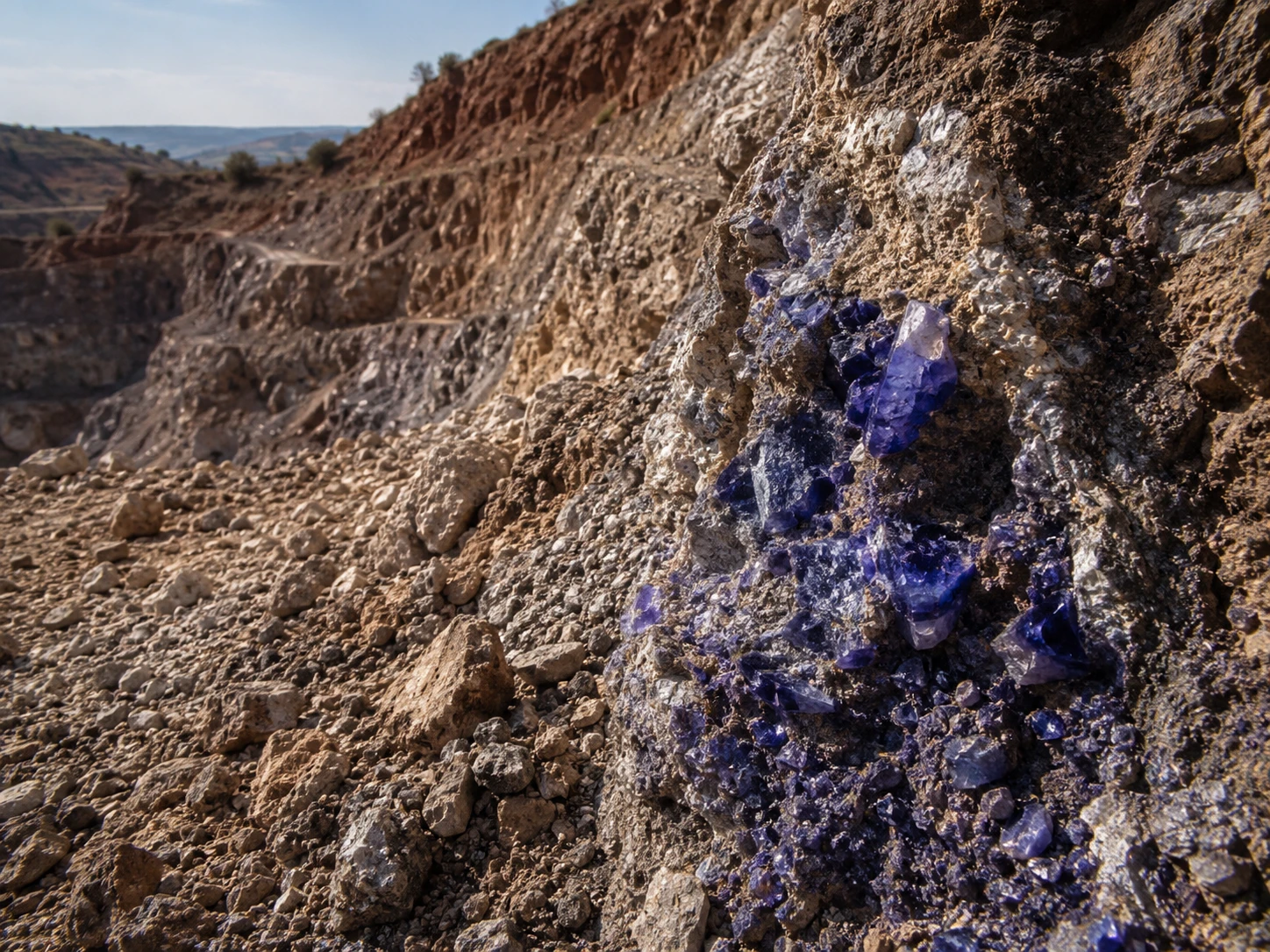
Not very old. Tanzanite was first unearthed in 1967 in the Merelani hills of northern Tanzania, which remain its only source. So the oldest genuine tanzanite jewellery dates from the late 1960s, and most pre-owned pieces on the market are far more recent.
That has a practical consequence. A piece described as Victorian, Edwardian or Art Deco tanzanite is either misdescribed or set with a different stone. Older violet-blue stones in antique settings are often sapphire, iolite, spinel or glass. A description that dates a tanzanite piece before the late 1960s is a reason to question everything else the seller says.
Why wear shows on tanzanite
Every gemstone in daily wear meets materials harder than itself. Hardness measures scratch resistance, and ordinary household dust contains quartz, which sits at 7 on the Mohs scale, harder than tanzanite. Wiping a dusty stone, knocking a ring against stone worktops, or storing pieces loose in a drawer all leave marks over time.
Tanzanite also has cleavage, a direction along which a crystal can split cleanly when struck. A hard knock on an exposed edge can leave a chip or, rarely, a crack along that plane. Pre-owned rings, which take the most knocks, show this most often; earrings and pendants usually arrive in much better condition.
What to inspect, in order
A short, systematic inspection catches most problems. A loupe or the magnifier on a phone camera helps.
| What to look at | What good condition looks like | What wear looks like |
|---|---|---|
| Facet edges | Sharp, crisp lines between facets | Rounded, soft or frosted edges |
| Table (top facet) | Clean, glassy surface | Fine scratches catching the light |
| Girdle (outer edge) | Even, unbroken | Small chips, especially near claws |
| Claws or bezel | Even thickness, tight against the stone | Thin, bent or lifted claws |
| Shank (ring band) | Even thickness, round | Thin at the base, misshapen |
| Overall colour | Even across the face | Unexpected dark or pale patches |
Start with the setting, because a loose stone is the most urgent problem. Gently press each claw with a fingernail; none should move. Look for claws worn thin at the tips, which happens after years of contact, and check that the stone does not rattle when the piece is shaken next to your ear.
Then turn to the stone. Tilt it under a good light and look along the facet edges. Crisp edges mean light wear; edges that look rounded or slightly white mean the stone has been worn hard for years. Fine scratches on the table show as thin lines when the light catches them.
What can be fixed, and what it costs
| Problem | Usual remedy | Effect on the stone | Relative cost |
|---|---|---|---|
| Worn facet edges, fine scratches | Repolish by a cutter | Small loss of weight | Moderate |
| Small girdle chip | Recut or repolish around it | Some loss of weight | Moderate to high |
| Thin or bent claws | Retip or rebuild claws | None | Low to moderate |
| Loose stone | Tighten or reset | None if done carefully | Low |
| Worn shank | Replace the lower shank | None | Moderate |
| Dated or unsuitable setting | Reset in a new mount | None | Varies widely |
Repolishing restores crisp edges and a clean table, at the cost of a little weight. For a worn stone, a skilled repolish can make a dramatic difference to brightness, and it is often the best investment a buyer of a pre-owned piece can make. The guide to tanzanite damage and repair explains what a cutter can and cannot fix.
Setting repairs are usually simpler and cheaper. Retipping or rebuilding claws is routine work for a jeweller, though tanzanite’s sensitivity to heat means the stone is normally removed before any soldering and reset afterwards.
Treatment and disclosure
Assume that a pre-owned tanzanite has been heat treated. Almost all tanzanite receives heat treatment to develop its blue to violet colour, and the treatment is stable and permanent, so it does not affect how the stone ages. It does need to be disclosed. In the United States, the Federal Trade Commission’s jewellery guides include a section on disclosure of treatments to gemstones, and reputable sellers elsewhere follow the same principle.
More important for a pre-owned stone is whether it is tanzanite at all. Violet-blue stones are easy to confuse, and older pieces may have been misidentified long before the current seller. A stone with no documentation, at a price that seems too good, deserves an independent check. The guide to tanzanite authenticity and certification covers how identification works.
Papers, receipts and history
Good paperwork adds confidence and value. Useful documents include an original receipt, a laboratory identification report, a valuation for insurance, and any record of repairs. A report is particularly valuable for larger stones, because it confirms identity and often describes colour and treatment.
Missing paperwork is common with pre-owned pieces and is not a reason to walk away on its own. It means the buyer carries more of the risk, which should be reflected in the price, and that an independent identification is worth considering before or shortly after purchase. The guide to insurance and valuation explains which records are worth keeping once the piece is yours.
Where to buy pre-owned tanzanite
Pre-owned pieces come through jewellers with second-hand stock, auction houses, specialist resale platforms and private sales. They differ mainly in how much protection and information the buyer gets.
A professional seller usually inspects pieces, describes condition and stands behind the description. In the European Union, second-hand goods bought from a professional seller are covered by the legal guarantee, although some countries allow a shorter period to be agreed for second-hand items. Auction houses describe lots but often sell as seen, with buyer’s premiums added to the hammer price. Private sales are the riskiest: prices can be lower, but there is little recourse if the stone is not what was described.
The general checks in the guide to buying tanzanite apply to pre-owned stones too. Whoever the seller, ask for the condition in writing, ask whether the stone has been repaired or repolished, and ask whether you can have the piece checked by an independent jeweller.
Is pre-owned tanzanite good value?
It can be, for two reasons. Jewellery loses value when it is resold, so a pre-owned piece usually costs less than the same piece new. And the stone itself does not age: a repolished tanzanite in a refurbished setting can look as good as new.
The value case weakens when significant work is needed. A piece needing a repolish, new claws and a new shank may end up costing close to a new piece once the work is done. Add up the likely repairs before deciding, and compare the total with new alternatives. The broader question of tanzanite price and value covers why resale prices are usually well below retail.
Which pre-owned pieces are the safest buys?
Earrings and pendants are usually the safest pre-owned tanzanite purchases. They take few knocks in wear, so the stones are more likely to arrive with crisp edges and intact girdles. Rings are where most wear concentrates, especially rings that were worn daily, and they deserve the closest inspection. Bracelets fall in between: line bracelets in particular expose many stones to knocks against desks and door frames.
Designer and signed pieces are a separate category. A known maker’s mark can add value, and well-made pieces from established houses often use better settings. Check that the mark is genuine and that the stone is original to the piece, since stones are sometimes replaced during repairs. A signed piece with a replacement stone is worth less than one with its original.
Inherited tanzanite
Many pre-owned tanzanites are not bought at all but inherited. The same inspection applies: check the setting, then the stone, and have both looked at by a jeweller before the piece goes back into regular wear. Inherited pieces were often stored loose for years, and settings may have loosened without anyone noticing. Before any work, photograph the piece as it is, since an inherited piece carries memories as well as value, and a record of its original state is worth having.
If the setting does not suit the new owner, resetting the stone keeps the part with the most meaning while giving it a design they will wear. Families often divide an inherited piece this way, using one stone in a new ring and matching others into earrings or a pendant.
Questions to ask before buying
A few questions, asked plainly, reveal a lot. Has the stone been repolished or recut? Has the setting been repaired, and when? Is the stone original to the piece? Is there any documentation of identity or treatment? Can the piece be checked by an independent jeweller before the sale is final? A seller who answers clearly, and who accepts an independent check, is selling with confidence. One who resists the check is telling you something too.
Online versus in person
Buying pre-owned online is common and convenient, but photographs make condition harder to judge than colour. Fine scratches, worn facet edges and thin claws rarely show in standard product images. Ask for close-up photographs of the setting from several angles and of the stone under a bright light at an angle, and check the return policy before paying. In person, a loupe and a few minutes reveal far more than any listing. The guide to buying tanzanite online covers the wider checks for online purchases.
What does a fair price look like?
There is no fixed discount for pre-owned tanzanite, but a fair price reflects three things: what the stone would cost new in comparable quality, the work needed to bring the piece back to good condition, and the risk the buyer carries when documentation is missing. A useful exercise is to price the stone alone, as if loose, then add a realistic setting value, then subtract the expected repairs. If the asking price sits well above that total, the seller is charging for the piece’s story rather than its substance.
Remember that the metal in a setting has a value of its own, sometimes a significant one in heavier gold pieces, and that sellers of second-hand jewellery often price with the metal in mind. A light setting with a good stone and a heavy setting with a weak stone can carry similar prices for very different reasons.
Insuring a pre-owned piece
Once bought, a significant piece is worth insuring, and insurers usually want a recent valuation and a description of the stone. A pre-owned piece without paperwork benefits from both an identification and a valuation at this point, which also gives the new owner a record of its condition. Update the valuation after any major repair or resetting.
Keep photographs of the piece from several angles with the valuation, since they help both a claim and any later repair.
Bringing a pre-owned piece back to life
Once bought, a pre-owned piece benefits from a short programme of care. Have a jeweller check and tighten the setting. Consider a professional clean and, if the edges are worn, a repolish. Then treat it as you would a new piece: store it on its own, clean it gently with warm water and mild soap, and take rings off for anything involving knocks or abrasive materials. The guide to storing tanzanite covers the details.
If the original setting is dated, unsuitable for daily wear, or too worn to repair economically, resetting the stone in a new mount is common. A stone from a high claw setting moved into a protective bezel can turn an occasion piece into one that suits everyday wear.
When is pre-owned the wrong choice?
When the stone is significantly damaged, when the seller cannot or will not describe its condition, or when the total of purchase price and repairs approaches the cost of new. It is also the wrong choice if the buyer wants certainty about identity and treatment without paying for an independent check. In those cases, a new stone from a seller who documents it properly is usually the better route.
The short version
Pre-owned tanzanite can be good value, but its modest hardness and cleavage mean wear shows. Inspect the setting first, then the facet edges, table and girdle, and price in any repolish or repair. Assume heat treatment, confirm identity when the price seems too good, and remember that no genuine tanzanite piece predates the late 1960s. Buy from a professional seller where possible, keep every document, and give the piece a check and a clean before wearing it regularly.
COMMON QUESTIONS
Is it worth buying second-hand tanzanite jewellery?
It can be, if the stone is in good condition and the price reflects any wear or repair needed. Tanzanite wears more visibly than harder gems, so condition matters more than age. A careful inspection, and ideally a jeweller's opinion, separates a good buy from a stone that will need work.
How can I tell if a pre-owned tanzanite is worn?
Look at the facet edges under magnification: sharp, crisp edges mean little wear, while rounded or frosted edges and fine scratches on the table show years of contact. Check the girdle for small chips, especially in rings. A worn stone can often be repolished, with a small loss of weight.
Is vintage tanzanite jewellery older than the 1960s?
No. Tanzanite was discovered in 1967, so no genuine tanzanite piece is older than that. A piece described as Victorian or Edwardian tanzanite is either misdescribed or set with a different stone, and the description should be questioned.
Do I have any rights when buying second-hand jewellery?
From a professional seller in the EU, yes: second-hand goods are covered by the legal guarantee, although sellers may agree a shorter period in some countries. Private sales carry far fewer protections. Keep the receipt and the description, since they set what the seller promised.
SOURCES
- Tanzanite — GIA Tanzanite first unearthed in 1967 in the Merelani hills, its only source.
- Tanzanite (Zoisite) Value, Price, and Jewelry Information — International Gem Society Almost all tanzanite heat treated to achieve its blue to violet colour; Mohs 6 to 7.
- Gemstone Hardness and Wearability — International Gem Society Hardness as scratch resistance; everyday dust and harder materials abrade softer stones.
- Cleavage and Parting in Gemstones — International Gem Society Cleavage planes making stones vulnerable to splitting, relevant to chips and damage on worn stones.
- 16 CFR Part 23, Guides for the Jewelry, Precious Metals, and Pewter Industries — U.S. Federal Trade Commission, via eCFR Section 23.24 on disclosure of treatments to gemstones.
- Guarantees and returns — Your Europe, European Union Second-hand goods bought from a professional seller covered by the minimum legal guarantee.