


You can buy tanzanite online safely, but only if you treat the photograph as a claim to be checked rather than as the stone. Tanzanite is harder to judge on a screen than almost any other gem, because its colour changes with the light and with the angle, and a photograph fixes one light and one angle, often the most flattering ones. The protections that matter are therefore practical: video in more than one light, a written description of colour and treatment, a gemmological report for any significant stone, and a return window long enough to see the stone in your own daylight. In the European Union, most online purchases from a business come with a legal 14-day right to withdraw, with an important exception for pieces made to order.
This entry sets out why screens mislead with this stone in particular, what to ask a seller for before paying, how returns work, and when buying online is the wrong way to buy.
Why a photograph misleads more with tanzanite
Every gemstone photograph involves choices about light, background and angle. With most stones those choices shift the look a little. With tanzanite they can shift it a great deal, for two reasons that come from the stone itself.
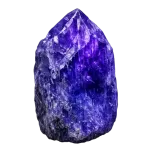
The first is pleochroism. The International Gem Society describes tanzanite as naturally trichroic, showing blue, red-violet and yellow-green along its three crystal axes. A face-up photograph taken at a slight tilt, or a crystal shot from the side, can show colours the stone will never show on a hand.
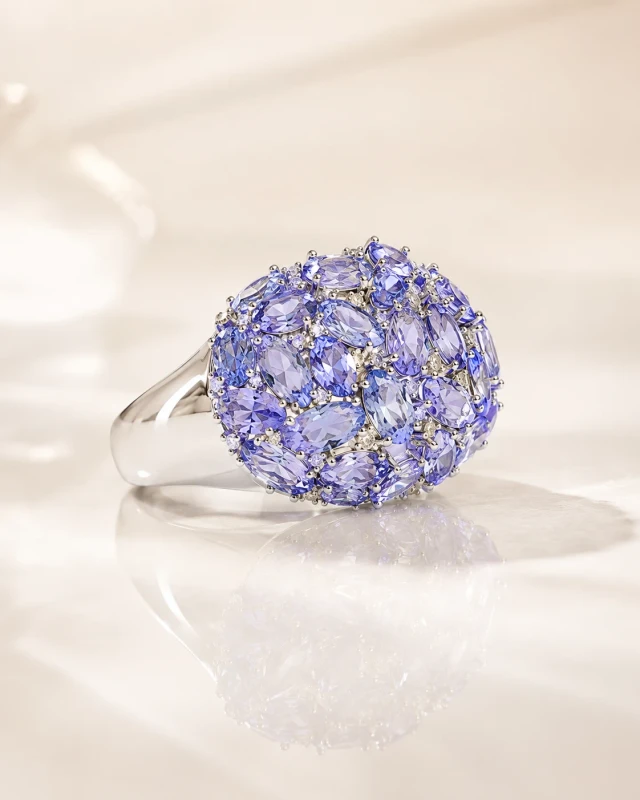
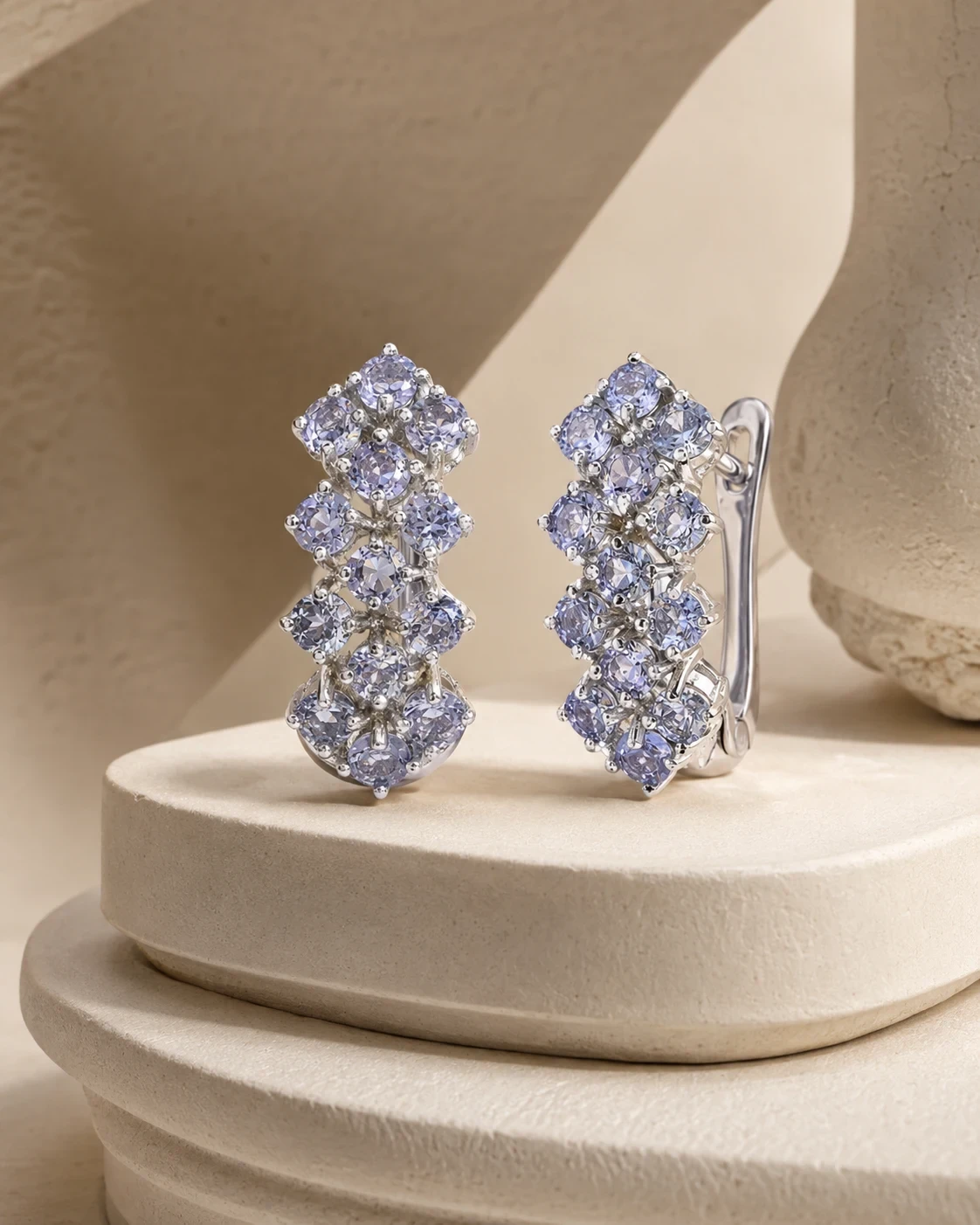
The second is its response to light. The same source notes that in natural light tanzanite can appear an almost sapphire blue, while in fluorescent light it may look more violet. A seller who photographs under one kind of light shows you one version of the stone. Neither version is false, but only one of them may match the room you will wear it in.
On top of the stone’s own behaviour sit the usual screen problems: colour correction in editing, a phone display with its own calibration, and a white background that makes the stone look more saturated by contrast. None of this requires bad faith. It does mean that a photograph alone is not enough evidence to buy a tanzanite of any real value.
What to ask a seller for before paying
A serious seller will be used to these requests and will not mind them. If a seller resists all of them, that is itself useful information.
| Ask for | Why it helps | What a good answer looks like |
|---|---|---|
| Video of the stone rotating, face-up | Shows how colour shifts as it moves | Unedited, continuous, in focus |
| The same stone in daylight and indoor light | Shows the two versions you will actually see | Two clips or photos, lighting stated |
| A photo beside a white card or a known object | Gives a reference for colour and scale | Card or ruler visible in the frame |
| Exact weight and dimensions in millimetres | Size face-up is what you see, not carat alone | Weight to two decimals, three dimensions |
| A written treatment disclosure | Almost all tanzanite is heated; say so plainly | “Heated”, or a lab’s statement |
| A gemmological report for significant stones | Confirms identity and describes the stone | Named laboratory, report number you can verify |
| The return terms in writing | Decides what happens if it disappoints | Period, condition, who pays postage |
Two items deserve emphasis. Dimensions matter because two stones of the same carat weight can present very different faces depending on depth; a deep stone hides weight below the girdle. And treatment disclosure matters not because heat treatment is a defect, it is the norm, but because a seller who will not state it clearly is unlikely to be reliable about anything else. GIA notes that the majority of tanzanite on the market has been heated in some way, and a straightforward seller says so.
For identity, the only proof is testing. No synthetic tanzanite is known, but simulants exist, and a report from a recognised laboratory is the reliable way to know what you are buying. What those reports can and cannot tell you is set out in how to tell if a tanzanite is real.
Judging colour from video, as well as it can be judged
Watch the video on the best screen you have, at full brightness, and ideally on two devices. You are not trying to fix the exact hue; you are checking three things a camera cannot easily fake.
First, whether the colour holds as the stone turns. A stone that flashes between blue and grey as it rotates may have a window, an area where light passes straight through, or a cut that sacrifices colour for weight. A stone that keeps its colour across the face is using its size well.
Second, whether the colour is even. Look for a saturated centre with pale ends, or a band of lighter colour, which a still photo taken at the perfect angle can hide.
Third, how different the daylight and indoor clips look. Some difference is normal and is part of the stone’s charm. A dramatic difference means you should be sure you like both versions, since you will live with both.
If you are weighing a smaller stone of better colour against a larger paler one, the reasoning in carat or colour in tanzanite applies with extra force online: pale stones look better on a bright white background than they will on a hand.
Returns and your legal rights
In the European Union, buying from a business at a distance, online or by phone, normally gives you a right of withdrawal. The EU’s Your Europe guidance explains that you can cancel within 14 days without giving any reason, counted for goods from the day of delivery. Within that cooling-off period, you are responsible for the cost of return postage, unless the seller offers to pay or failed to tell you about that cost before you bought; the cost of returning a defective product falls on the trader.
The exceptions matter for jewellery. The same guidance lists goods made to order or clearly personalised among the items not covered by the right of withdrawal. A ring made to your size and design, a stone set to your specification, or an engraved piece may therefore not be returnable by law, only by the seller’s own policy. Goods bought from a private individual are not covered either, which is worth checking on marketplaces where private and professional sellers sit side by side.
| Situation | Legal 14-day withdrawal in the EU | What to check |
|---|---|---|
| Finished piece bought from a business online | Usually yes | Who pays return postage, how to return safely |
| Loose stone bought from a business online | Usually yes | Return packaging and insurance in transit |
| Piece made to order or personalised | Usually no | The seller’s own policy, in writing, before ordering |
| Item bought from a private seller | No | Treat as final; inspect evidence before paying |
| Faulty or misdescribed item | Separate rights apply | Keep the listing, messages and report |
Outside the EU the rules differ, so read the seller’s terms and the law of the country you are buying in. Wherever you buy, a return window is only useful if you use it well: inspect the stone in daylight at home on the day it arrives, compare it with the listing, and have it checked by an independent jeweller or laboratory within the window if the value justifies it.
Reading a listing: the words that tell you something
Listings carry a vocabulary, and some of it is more informative than the rest. Learning to read it saves time before you ever ask for a video.
Letter grades such as AAA or AAAA are the first to treat with care. They are seller-assigned, with no shared standard behind them, so one shop’s top grade can be another’s middle. They tell you how the seller wishes to position the stone, not how it compares with stones elsewhere. Our entry on how tanzanite is graded explains why those letters mean so little, and what to look at instead.
Be precise about the word tanzanite itself. The trade name belongs to the blue to violet variety of the mineral zoisite. The International Gem Society warns that zoisites of other colours, green, yellow and pink, are sometimes sold as “fancy colour tanzanites”, because the name carries more weight with buyers. Those stones can be attractive and rare, but they are a different purchase, and the listing should say what they are.
Treat “untreated” or “natural colour” claims on blue or violet stones with particular caution. Heating is so widespread, and so hard for laboratories to detect in many cases, that such a claim needs a laboratory statement behind it. A description that simply asserts it, with no report, is asking for trust it has not earned.
Finally, “certified” on its own means little. Certified by whom, and saying what? A useful listing names the laboratory, gives a report number you can check with that laboratory, and states what the report covers: identity, treatment, measurements. A certificate issued by the seller’s own business is a description, not an independent check.
Marketplaces, auctions and second-hand pieces
Online marketplaces and auction sites add a layer of uncertainty that specialist shops do not. The first question is who you are actually buying from. As the EU guidance above notes, a purchase from a private individual carries no statutory right of withdrawal, and on many platforms private and professional sellers look almost identical. Check the seller’s status before bidding, not after.
Second-hand tanzanite has its own checks. A stone that has been worn for years may show abrasion along facet edges and on the table, the soft rounding and fine scratches that come from daily contact with harder materials. Ask for close-up photos of the facet junctions in raking light; wear shows there first. Ask whether the stone has been reset or repolished, and whether the ring has been resized, since resizing a tanzanite ring usually means removing the stone, a point covered in what can be repaired.
Auction descriptions are often brief and sold as seen. Where a lot is significant, request the condition report, check whether any laboratory report is included or merely mentioned, and factor in the buyer’s premium and shipping when comparing prices. A low hammer price on a stone you cannot inspect and cannot return is only a bargain if it turns out to be what it appeared to be.
Shipping, insurance and the first day
A tanzanite in the post is a fragile, valuable object in someone else’s hands. Ask how the item will be packed and whether the shipment is insured to its full value until it is signed for. Check who carries the risk while it is in transit, and what happens if it arrives damaged. Given the stone’s cleavage and moderate hardness, GIA’s care guide places it at 6 to 7 on the Mohs scale with fair to poor toughness, and a loose stone rattling in a box can chip.
When it arrives, open the parcel on camera if the value is significant. It takes a minute and settles any later question about condition. Then look at the stone in the light you will wear it in, compare its measurements with the listing, and keep every document together: listing, messages, invoice, report and return terms. If you intend to insure the piece, the paperwork needed is described in insuring and valuing a tanzanite.
When buying online is the wrong way to buy
Online buying works well for pieces where colour tolerance is wide and the price is modest, and for sellers who give you video, clear terms and a genuine return window. It works less well in several situations, and it is better to say so plainly.
It is a poor way to buy a major stone that you cannot return. If a piece will be made to order and is excluded from withdrawal, and the stone is significant, see it in person or have it inspected by someone you trust before the order is final.
It is a poor way to match a pair or complete a set. Matching two stones by eye is difficult even in person; on a screen, with each stone photographed separately, it is guesswork.
It is a poor way to buy from sellers who cannot or will not answer the questions above. Low prices from a seller without video, reports or return terms are not a bargain; they are a risk with no way to recover.
And it cannot tell you how a piece will feel to wear, how high a stone sits, how it catches on clothing, how it looks next to a ring you already own. For engagement pieces in particular, where fit and daily wear matter, the considerations in proposing with a tanzanite are easier to judge with the ring in your hand.
Where to start
Start with the seller, not the stone: clear contact details, stated return terms, and a willingness to send video and reports. Then judge the stone from moving images in two kinds of light, check its dimensions and treatment disclosure, and confirm identity with a laboratory report for anything significant. Use your return window deliberately, looking at the stone in your own daylight on the day it arrives. For made-to-order pieces, remember that the legal right to withdraw usually does not apply, and get the seller’s terms in writing first. The broader order of decisions for any purchase is in how to buy tanzanite.
COMMON QUESTIONS
Is it safe to buy tanzanite online?
It can be, if you check rather than trust the photograph. Ask for video in daylight and indoor light, exact dimensions, a written treatment disclosure and a laboratory report for any significant stone, and buy from a seller with clear return terms.
Why does tanzanite look different in photos?
Tanzanite is trichroic and changes appearance with the light: the International Gem Society notes it can look almost sapphire blue in natural light and more violet under fluorescent light. A photo fixes one light and one angle, often the most flattering.
Can I return tanzanite jewellery bought online in the EU?
Usually yes, within 14 days of delivery when you buy from a business at a distance. Goods made to order or clearly personalised are normally excluded, and purchases from private individuals are not covered.
Who pays return postage on an online jewellery purchase?
Within the EU cooling-off period you normally pay, unless the seller offers to or did not tell you about the cost before you bought. Returning a defective item is at the trader's cost.
SOURCES
- Tanzanite Value, Price, and Jewelry Information — International Gem Society Trichroism; appearance in natural versus fluorescent light; synthetic tanzanite unknown, simulants exist.
- Tanzanite Quality Factors — GIA Majority of tanzanite on the market heated.
- Tanzanite Care and Cleaning Guide — GIA Mohs 6 to 7, fair to poor toughness, cleavage.
- Guarantees and returns: cancelling a purchase — Your Europe, European Union 14-day right of withdrawal from delivery; made-to-order and personalised goods excluded; private sellers not covered; return postage rules.