

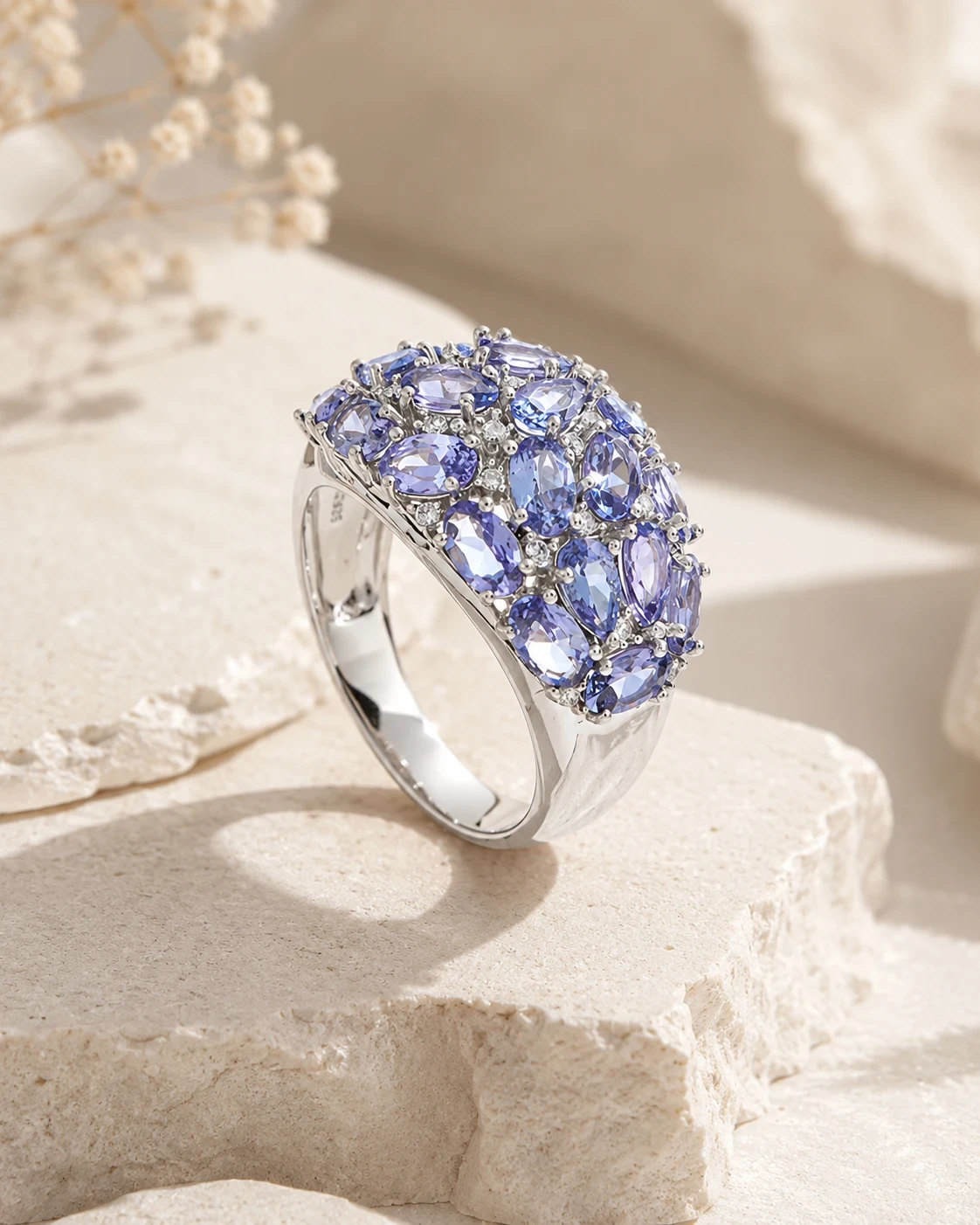
If you are proposing with a tanzanite, get the ring size right the first time. That advice applies to any engagement ring and it applies harder here, because resizing a tanzanite ring is a real operation rather than a routine one, and the usual reassurance that it can be sorted out afterwards is weaker than the person saying it realises.
Everything else about proposing with this stone is ordinary. This is the part that is not.
Why size matters more with this stone
Resizing a ring means cutting the band, adding or removing metal, joining it and finishing it. That involves heat and mechanical stress applied to a mount holding a gemstone.
For a diamond or a sapphire that is routine. For tanzanite it is not, because the stone is 6 to 7 on the Mohs scale with perfect cleavage and has one direction of perfect cleavage running through it. Heat near a cleavable stone is a risk, and so is the pressure of setting it a second time.
The safe procedure is to remove the stone before resizing and reset it afterwards. That is more work, it costs more, and it introduces a second setting operation on a stone that does not enjoy them. A jeweller who offers to resize a tanzanite ring quickly with the stone in place is offering a saving that is not worth taking.
So the calculus changes. With a harder stone, a size error is an inconvenience. With tanzanite it is an inconvenience plus a small risk to the gem, repeated every time it happens.
Finding the size without asking
| Method | How reliable | Notes |
|---|---|---|
| Borrow a ring they already wear | High | Only if you know which finger it is worn on. Sizes differ across fingers |
| Trace the inside of an existing ring | Moderate | Better than nothing. Bands of different widths fit differently |
| Ask a close friend or family member | High | The most underused method, and the most discreet |
| A ring sizer ordered online | High, if they try it | Requires either their involvement or a reason to hand it to them |
| Guessing from photographs of their hands | Low | Not a method |
| String or paper around a sleeping finger | Low, and unwise | Fingers swell at night. It is also how people get caught |
The first and third rows are the ones that actually work. If the plan is a genuine surprise, a friend who can ask a casual question is worth more than any measuring trick, and this is one of the few situations where involving somebody else improves the secrecy rather than threatening it.
A borrowed ring is the strongest method and it has one trap: people wear different sizes on different fingers, and the ring you can reach may not be from the finger you need. If you borrow, note which hand and which finger it came from, and tell the jeweller. A left ring finger and a right middle finger can differ by more than a size.
One thing worth knowing whichever method you use: fingers change size with heat, cold, salt, exercise and time of day, by enough to cross a size. A measurement taken once, at one moment, is a snapshot. Two measurements on different days are considerably better.
Wider bands and how they fit
A detail that surprises people and causes a proportion of the resizing that happens.
A wide band fits more tightly than a narrow one at the same nominal size, because it covers more of the finger and has less room to pass the knuckle. If you size from a thin band they already wear and buy a substantially wider ring, it may not go on, and the reverse produces a ring that spins.
If the ring you are buying is noticeably wider or narrower than whatever you sized from, say so to the jeweller and let them adjust. This is a routine allowance and they will make it if asked. It is also invisible if you do not ask, which is how it catches people.
Metal, which changes the resizing question too
The band is not a neutral part of this, and it decides how easy the fix is if the size is wrong.
Softer metals are easier to work and easier to resize, and they also wear and loosen sooner. Gold is alloyed precisely because pure gold wears out easily, and different alloys sit in different places on that scale. Platinum is more resistant to scratching than gold and holds gemstones securely for a very long time, which is excellent for the stone and means resizing is a more specialised job.
There is one cosmetic consequence worth anticipating. White gold is usually rhodium plated, and that plating can rub off over time, resulting in minor discoloration and a reduction of shine. A resize involves polishing and replating the affected area, so a resized white gold ring may come back looking subtly newer in one place than another until it evens out.
None of this should decide the metal. It is worth knowing so that the jeweller’s estimate for a resize makes sense when you hear it.
Buying the stone and the setting separately
Worth considering if the size is genuinely unknown, because it decouples the two decisions.
Buying a loose stone first means you can have it set once, into a ring made to the right size, rather than setting it and then resizing. For a gem that dislikes being set twice, that is a real advantage rather than a technicality.
It also lets the stone be judged properly. A loose stone can be turned, taken to a window and laid on white paper, and every part of the price is attributable to something you looked at. A mounted stone hides its pavilion, which is where a window or a fracture would show.
The cost is time, and the fact that you cannot propose with the finished object unless you plan far enough ahead. Some people propose with the loose stone in its box, which sidesteps the size problem entirely and is a perfectly good answer.
What to do if you get it wrong
Take the pressure out of the moment first. A ring that does not fit is not a failed proposal, and it is the most common outcome that nobody mentions afterwards.
Practically, the order is: do not force it on, do not have it resized immediately, and do not let anybody put it in an ultrasonic cleaner to “clean it up” before the appointment. Wear it on a chain, or on another finger, or not at all, until it has been dealt with properly.
Then have the conversation with the jeweller you bought it from, and ask specifically whether the stone will be removed for the resizing. If the answer is no, ask why, and be prepared to go elsewhere. This is the single question that protects the gem.
If the error is small, there are alternatives to cutting the band at all. Sizing beads, a sizing bar or a fitted insert adjust the effective size from inside the shank without touching the setting, and for a stone like this they are worth asking about before a full resize.
Settings that leave you room
| Setting | How forgiving of a size change |
|---|---|
| Plain shank, stone at the top | Most forgiving. The band can be worked away from the stone |
| Bezel with a plain shank | Forgiving, and protects the stone in daily wear |
| Stones set part-way down the band | Limited. Resizing may have to remove set stones |
| Full eternity or all-round setting | Effectively unresizable. It is remade rather than resized |
| Very thin or intricate shank | Awkward. Little metal to work with |
The row that catches people is the fourth. A band set all the way round cannot be cut and rejoined without destroying the pattern, so the answer to a size error there is a new ring rather than an adjustment. If a surprise proposal is the plan and the size is uncertain, an all-round setting is the highest-stakes choice available.
The first two rows are also the two that suit tanzanite best for other reasons, since a bezel is the setting that best protects a stone with a cleavage plane. That is a rare case where the practical answer and the contingency answer agree.
Choosing the stone when they cannot be there
The hard part of a surprise proposal with tanzanite is not the size. It is that the person who will wear it cannot look at the stone.
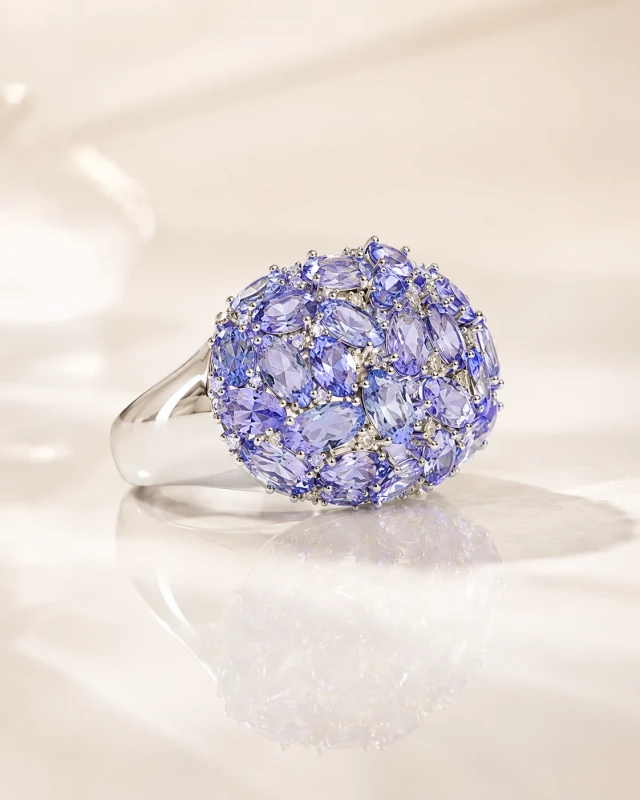
Tanzanite is very strongly pleochroic and reads sapphire blue in natural light and violet under fluorescent light. Which way a particular stone leans is a matter of taste, and you are making a taste decision on somebody else’s behalf, in a shop, under lighting designed to sell.
Two things help. Look at candidate stones in daylight, at a window, and pick the one you would defend rather than the one that dazzled you under a spotlight. And find out what they already wear: somebody whose jewellery is all cool-toned white metal has told you something, and somebody who wears warm gold has told you something else.
The other honest option is to propose with a simpler ring and choose the stone together afterwards. That is increasingly common, it removes both the size problem and the taste problem, and nobody except you will know it was the pragmatic choice.
What not to do
Do not have it engraved before you are sure. Engraving is personalisation, and personalised goods are commonly excluded from return rights. Confirm the fit and the choice first.
Do not buy on a deadline that forces a rushed decision. The stone deserves daylight and a second look, and a proposal date is a self-imposed constraint that sellers can read as easily as you can.
Do not accept “we can resize it later” as a reason to skip the sizing work. For this stone it is a weaker promise than for any other engagement gem.
Do not clean it before the moment. Not with an ultrasonic, not with steam, not with a dip. Fingerprints wipe off with a soft dry cloth.
Telling them what it is
A small thing that improves the moment rather than complicating it.
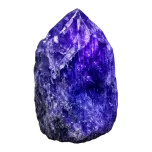
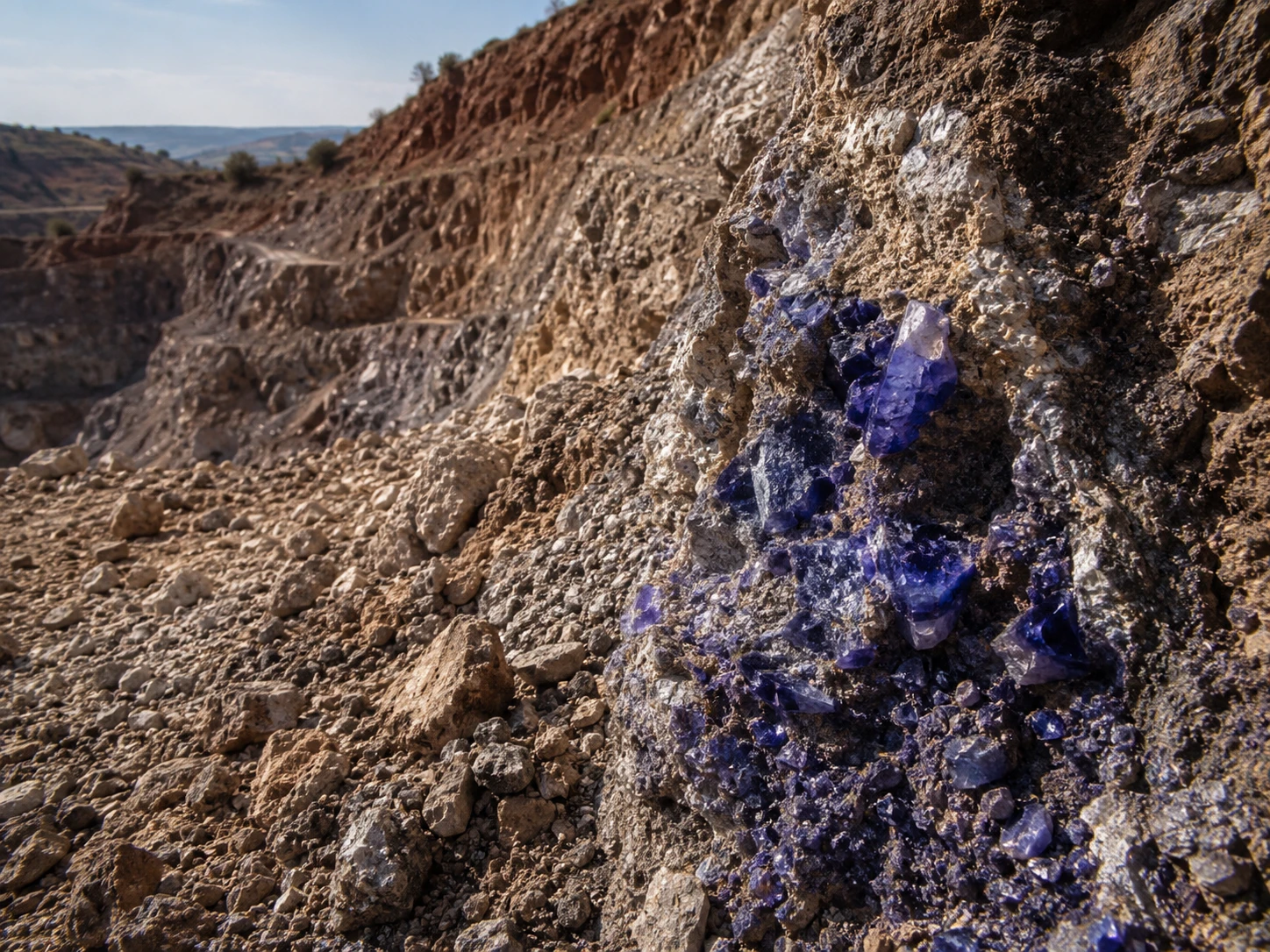
Tanzanite carries facts most people do not know, and they are genuinely interesting: it comes from one hillside in northern Tanzania and nowhere else, it was unknown before 1967, and it shows different colours down different axes so it reads blue by day and violet by lamplight. That is a better story than any rarity pitch, and it is true.
Two things are worth saying plainly at some point, not necessarily in the moment. The stone has almost certainly been heated, which is normal for the species and permanent, and pastel hues are more plentiful, more affordable, and have a subtle appeal of their own if the stone you chose is a lighter one. Neither is a confession. Both are the kind of thing that is much better said by you first than discovered later.
And say that it needs slightly gentler habits than a diamond would. Somebody who knows that from day one will still have the stone in thirty years.
Returns, exchanges and the conversation after
Ask about the return and exchange terms before buying, in writing, and ask three specific questions: how long the window is, whether it starts at purchase or at collection, and whether a resizing voids it.
That last one matters. Some sellers treat a resized ring as altered and therefore non-returnable, which means an early resize can quietly close the exchange option before the wearer has decided they like the stone at all. If the plan involves any uncertainty about taste, resolve the exchange question before the resize.
And if the answer turns out to be that they would have chosen differently, that is a normal thing that happens and a good seller expects it. A generous exchange policy on a piece like this is worth more than a small discount, because it is the seller saying they expect the stone to be liked on inspection.
Buying it in advance and keeping it safe
Rings bought weeks or months ahead need somewhere to live, and a sock drawer is the traditional answer and a poor one.
Keep it boxed, on its own, away from other jewellery. A tanzanite stored loose against harder pieces gets abraded before it is ever worn, and household dust contains quartz at 7 on the Mohs scale, which is harder than this stone. Somewhere dry and stable in temperature is better than somewhere merely hidden.
If it is insured, check whether cover has actually started, since a policy on an item you own but have not declared may not respond. And photograph it before it is given, in daylight, because that image is the record of its condition at handover and takes two minutes.
The other reason not to hide it too well is mundane. People lose rings they have concealed carefully from themselves, and a box in a known safe place beats an inspired hiding spot that has to be remembered under pressure.
Where to start
Get the size from a friend or a borrowed ring, choose a setting with room to adjust, and see the stone in daylight before you commit.
For whether tanzanite belongs in an engagement ring at all, tanzanite engagement rings, and when the answer is no. For what happens once a wedding band joins it, wearing a tanzanite ring with a wedding band. For judging the stone itself, how to buy tanzanite, and for the habits that follow, the honest care answer.
When you want to look at pieces, ours are here.
COMMON QUESTIONS
Can a tanzanite engagement ring be resized?
Yes, but it is a real operation rather than a routine one. Resizing applies heat and mechanical stress to a mount holding a stone with a cleavage plane, so the safe procedure is to remove the stone first and reset it afterwards. That costs more and involves a second setting operation. A jeweller offering to resize a tanzanite ring quickly with the stone in place is offering a saving that is not worth taking.
How do I find their ring size without asking?
Borrow a ring they already wear, noting which hand and finger it came from, or ask a close friend or family member to find out casually. Those two methods work; most of the others do not. Avoid measuring a sleeping finger, which is both unreliable because fingers swell and the most likely way to get caught. Fingers also change size with heat, cold and time of day, so two measurements beat one.
What if the ring does not fit?
Do not force it on, do not rush it to a resize, and do not let anyone clean it in an ultrasonic. Ask the seller specifically whether the stone will be removed for the resizing, and go elsewhere if the answer is no. For a small error, sizing beads, a sizing bar or a fitted insert adjust the fit from inside the shank without touching the setting, which is worth asking about first.
Which settings are easiest to resize?
A plain shank with the stone at the top is the most forgiving, and a bezel on a plain shank is nearly as good while also protecting the stone. Bands with stones set part-way down are limited, and a full eternity setting is effectively unresizable: it gets remade rather than adjusted. If the size is uncertain and the proposal is a surprise, an all-round setting is the highest-stakes choice available.
Should I choose the stone myself or together?
Either is fine, and proposing with a simpler ring and choosing the stone together afterwards is increasingly common. It removes both the size problem and the taste problem. Tanzanite is strongly pleochroic and reads blue in daylight but violet under fluorescent light, so which way a stone leans is a genuine matter of taste that you would otherwise be deciding on someone else's behalf under shop lighting.
SOURCES
- Tanzanite Value, Price, and Jewelry Information — International Gem Society Hardness 6 to 7 with perfect cleavage; very strong pleochroism; sapphire blue in natural light and violet under fluorescent light.
- Tanzanite: A blue gemstone found in only one place on Earth — Geology.com One direction of perfect cleavage, which is why resizing with the stone set is a risk.
- Platinum vs. White Gold: How to Choose — International Gem Society Platinum being more resistant to scratching than gold and holding stones securely; rhodium plating rubbing off and needing reapplication after work on the band.
- Jewelry Metals 101: Gold, Silver, and Platinum — International Gem Society Gold's softness as the reason it is alloyed, underlying how resizable different bands are.
- Tanzanite Description — GIA Pastel hues being more plentiful, more affordable and having a subtle appeal of their own; heat treatment being permanent.
- Gemstone Hardness and Wearability — International Gem Society Hardness measuring scratch resistance rather than toughness, underlying the storage advice about abrasion from harder pieces and dust.