
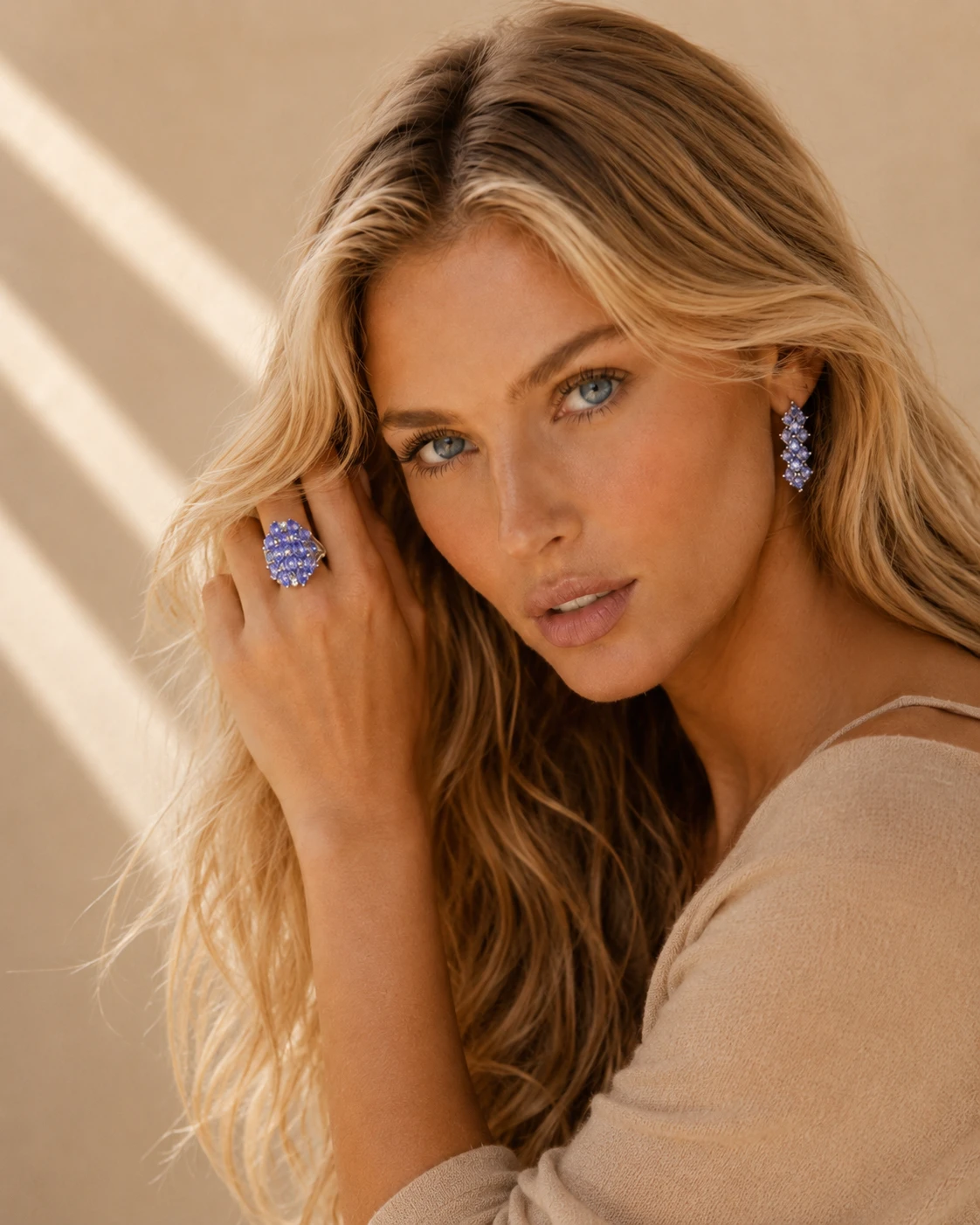
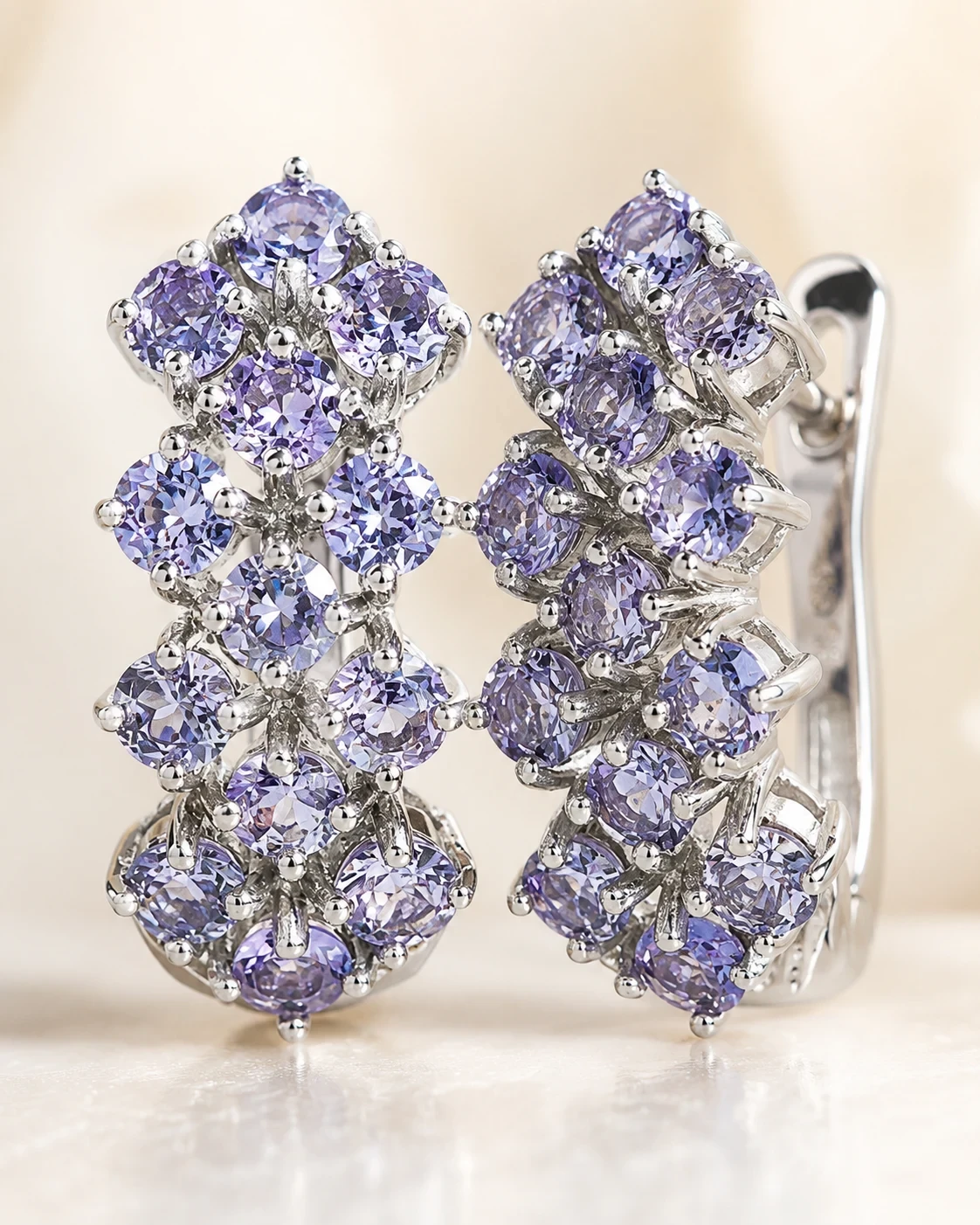
A matched pair of tanzanites is two stones that look like a single decision: the same colour, the same depth of tone, the same brightness, and close enough in size and shape that nobody notices a difference when they are worn. Matching carat weight and outline is the easy part. With tanzanite the difficult part is colour, because the crystals show different colours depending on the viewing direction, and two stones of identical weight can face up noticeably different if their rough was oriented differently when they were cut.
That is why matched pairs are judged by eye, side by side, rather than by a list of measurements.
Why tanzanite is harder to match than most stones
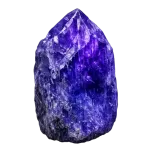
Most gems vary in colour from stone to stone, but tanzanite adds a complication. It is trichroic, a term defined with the rest of the trade vocabulary in the tanzanite glossary: pleochroic gems show different colours along different crystal directions, and in tanzanite the three directions show blue, violet and a third, browner or yellowish tone. A cutter chooses which direction faces up, and that choice largely decides whether the finished stone reads blue or violet.
So two stones can be the same weight, the same shape, the same clarity and still not belong together. One faces up a cool blue, the other a warmer violet, and side by side the difference is obvious. The process behind that choice is described in the guide to how a tanzanite is cut and set.
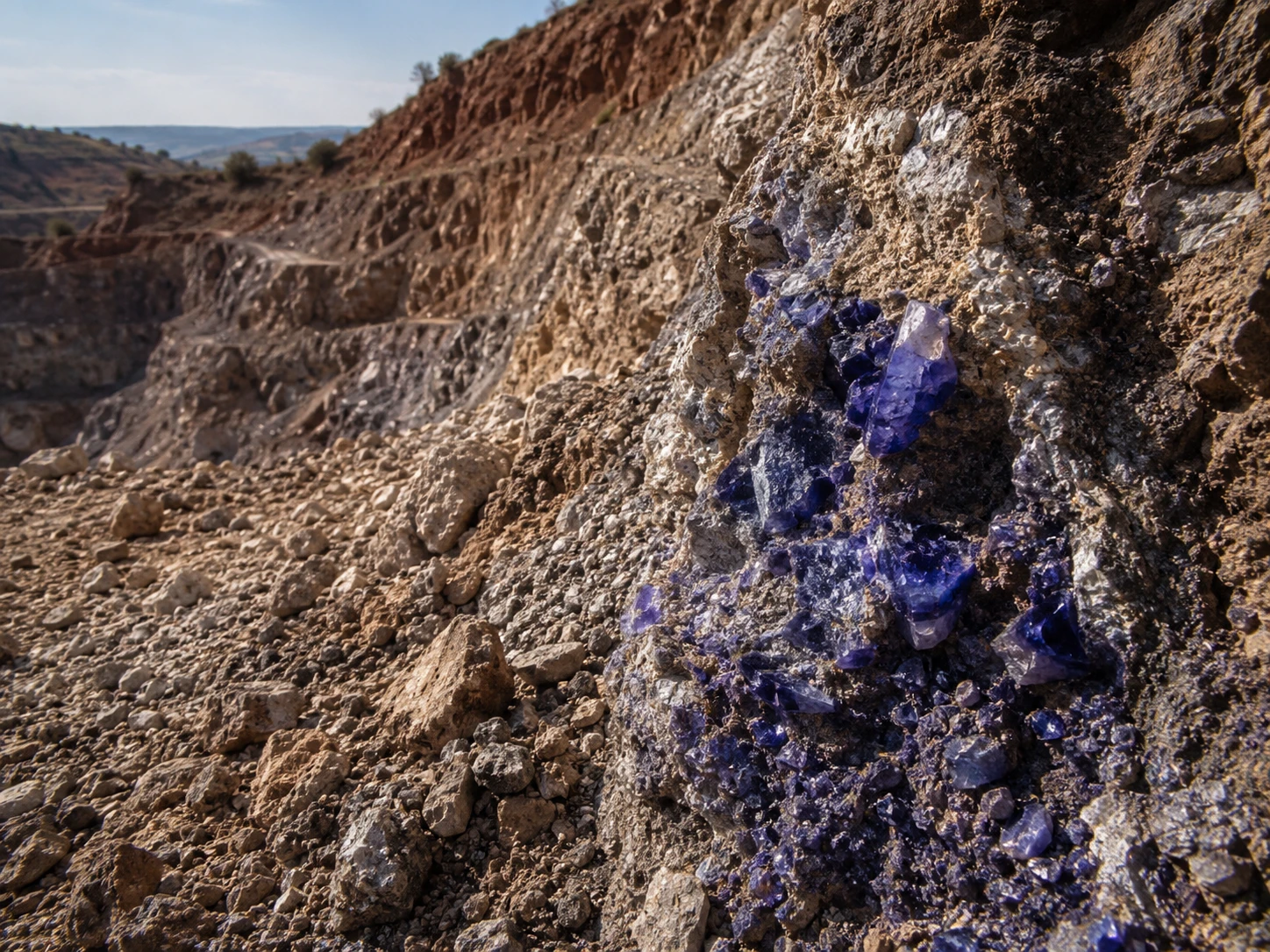
Heat treatment adds another layer. Almost all tanzanite on the market has been heated to produce its blue to violet colour, and the response to heating varies from crystal to crystal. Two stones cut from different pieces of rough can end up with slightly different saturation even when oriented the same way.
What has to agree in a matched pair
Several qualities have to line up, and they are not equally important.
| Quality | Why it matters for a pair | How closely it must match |
|---|---|---|
| Hue (blue versus violet) | The first difference anyone notices | Very closely |
| Tone (light versus dark) | A lighter stone looks smaller and weaker | Very closely |
| Saturation (vivid versus greyish) | Changes how alive each stone looks | Closely |
| Shape and outline | Different outlines are visible at a glance | Closely |
| Face-up size in millimetres | Matters more than carat weight | Closely |
| Carat weight | Follows from size and depth | Approximately |
| Clarity | Rarely visible in earrings at wearing distance | Approximately |
Two points stand out. Face-up size matters more than carat weight, because a deeper stone carries more weight under the same visible area; the relationship is explained in carat versus colour. And clarity, which matters a great deal for a single centre stone, is usually the least important quality in a pair of earrings, which are seen from further away and in motion.
How pairs are judged
Matching is a visual task, and a few habits make it reliable.
Side by side, face up
The stones are placed next to each other, face up, the way they will be seen when worn. Judging them one at a time, or by looking through the side of the stone, is misleading, because tanzanite’s colour changes with the viewing direction.
In more than one light
Tanzanite tends to look bluer in daylight and more violet under warm indoor light. A pair should match in both. Two stones that agree in a jeweller’s daylight lamp can drift apart under the warm light of a restaurant or a living room, if one carries more violet than the other.
At the wearing angle and distance
Earrings are seen from the side and from a conversational distance, cufflinks at the wrist, often at an angle. Holding the pair at the angle and distance they will be worn shows whether small differences matter. Many slight differences visible under magnification disappear at arm’s length; a difference in tone does not.
Pairs, suites and graduated sets
Matching becomes more demanding as the number of stones grows.
A pair needs two stones that agree. A suite, such as earrings and a pendant, needs three or more stones that read as one family, though the pendant stone can be slightly larger. A graduated set, such as a line of stones in a bracelet or a column of stones in a drop earring, needs a smooth progression in size with consistent colour throughout, which is the hardest of all, because any single stone that drifts in colour breaks the line.
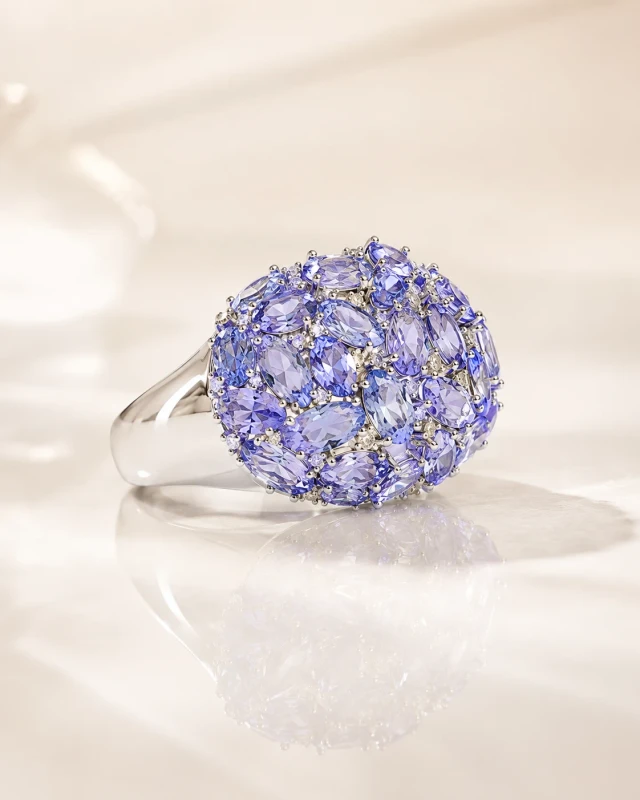
Small stones in clusters and lines are often matched in batches: many stones of similar size are sorted by colour, and each piece is built from one colour group. That is how cluster earrings achieve their even look, even though no two small stones are identical.
Earrings: studs, drops and the angle problem
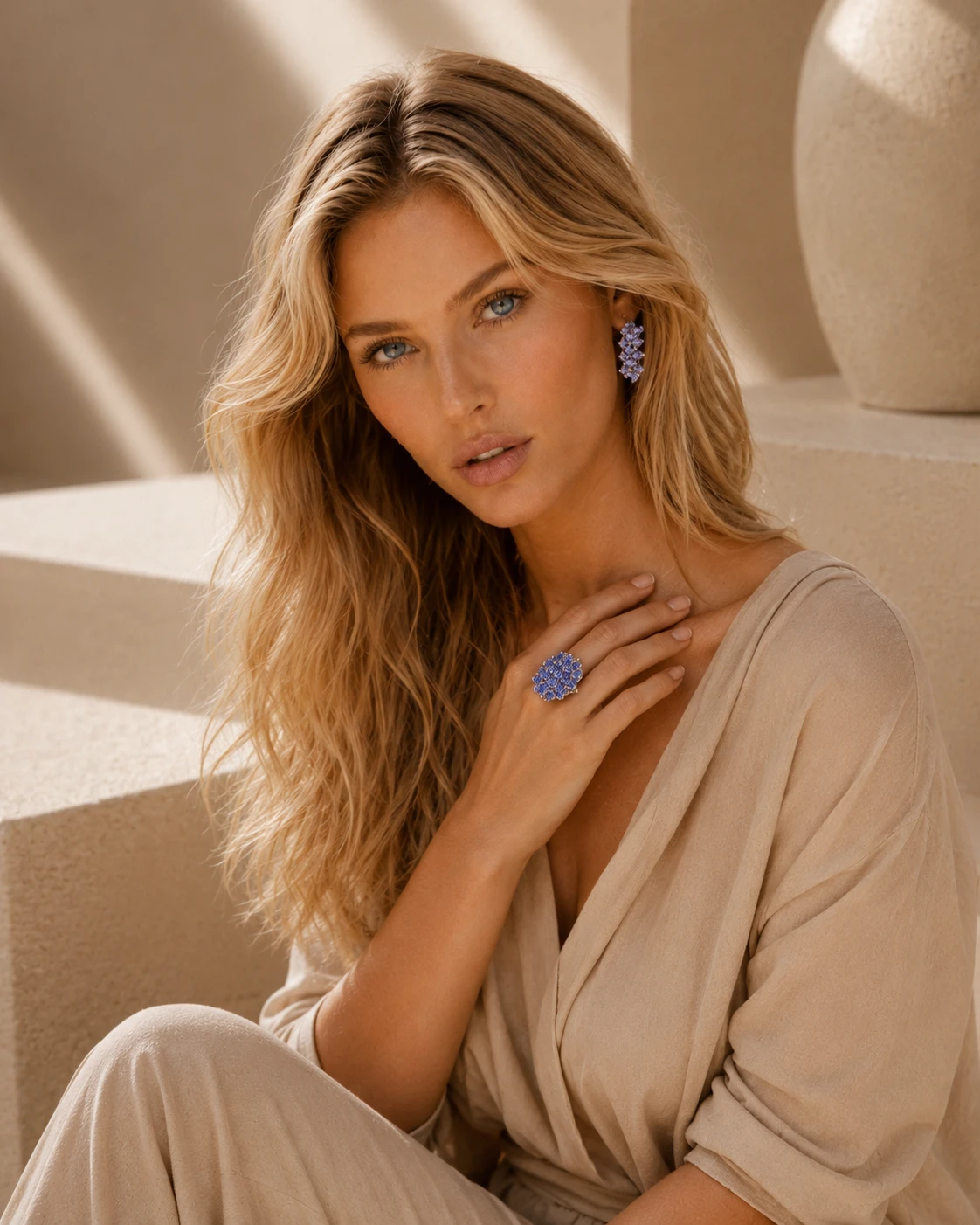
Earrings are the most common matched pair, and the style changes how closely the stones must match. Studs sit flat against the ear and are seen mostly face up, so face-up colour and size are what matter. Drops and hoops move, catch the light from changing angles, and are seen from the side more often than from the front.
That movement matters with a trichroic stone. As a drop earring turns, the viewer sees the stone from slightly different directions, and its colour can shift between blue and violet. Two drops cut with the same orientation shift together; two cut differently can look matched at rest and different in motion. For drops, it is worth watching the pair move, not only looking at them still.
Size also behaves differently. Studs are judged at close range, so small size differences can show. Drops are judged at a distance and in motion, so tone and colour matter more than a slight difference in millimetres.
Cufflinks: matching for the wrist
Cufflinks are seen at the wrists, at an angle, often in mixed light at dinners and events. They are also seen together less often than earrings, since the wrists are rarely side by side. That makes cufflinks a little more forgiving of tiny differences, but a difference in tone still shows when the hands come together, on a table or in a photograph. The same matching standard applies, and the guide to tanzanite jewellery for men covers which settings protect stones in cufflinks.
Larger stones are harder to match
The larger the stones, the harder the match. Colour looks more saturated in a larger stone because light travels further through it, so two large stones show differences in tone more clearly than two small ones. And large clean tanzanites are scarcer to begin with, so there are fewer candidates to match. A pair of large tanzanites that agree closely is a genuinely uncommon thing, and its price reflects that.
At small sizes, the opposite holds. Small stones are plentiful, their colour differences are subtler, and they can be sorted into colour groups in large numbers. That is why cluster earrings and lines of small stones can achieve an even colour across many stones at a lower cost per stone.
Judging pairs from photographs
Many pairs are now bought online, and photographs of tanzanite are unreliable for matching. Cameras and screens handle blue and violet differently, and the lighting in a photograph may favour one stone over the other simply because of the angle. If a pair is bought from images, ask for photographs of both stones together in daylight and under warm indoor light, and ideally a short video of the pair being tilted. The guide to buying tanzanite online covers the wider checks, and GIA’s note that tanzanite shows different colours depending on the viewing direction is the reason a single photograph is never enough.
Questions to ask the seller
A few questions reveal how carefully a pair was matched. Were the two stones cut from the same rough, or matched afterwards from different stones? Were they compared in more than one kind of light? Are the face-up sizes, not only the weights, the same? And, for set pieces, are both settings the same height, so the stones sit at the same level? Clear answers suggest a pair matched with care; vague ones suggest two stones that were simply available at the same time.
Gifting a pair
Earrings and cufflinks are among the most popular tanzanite gifts, partly because they avoid the sizing question a ring raises. For a gift, a well matched pair in a protective setting is the safer choice than a larger pair with a visible mismatch, since the recipient will see the pair every time they wear it. The guide to giving tanzanite as a gift covers the practical side.
Matching a pair to an existing piece
Sometimes a pair is chosen to go with something already owned, such as earrings to match a ring or a pendant. The same rules apply, with the existing stone as the fixed reference. Take the existing piece along, compare candidates beside it in more than one light, and accept a small difference in size before a difference in colour, since colour is what people notice across a face or a table.
Why matched pairs cost more
Finding two stones that agree closely takes more material and more time than selling two stones separately. A cutter or dealer may need to look through many stones of a given size to find two that match well, and at larger sizes the pool is small, because large clean tanzanites are scarcer to begin with. The premium for a well matched pair reflects that search, not any extra quality in either stone individually.
For buyers, the practical consequence is that a pair costs more than twice the price of one stone of the same size and quality, and the premium grows with size. It is usually worth paying for earrings and cufflinks, where a mismatch is visible every time they are worn.
Wear differences over time
A matched pair can drift apart with wear, especially in pieces that are not worn evenly. Tanzanite sits at 6 to 7 on the Mohs scale, and hardness measures scratch resistance, so a stone exposed to more contact gradually loses the crispness of its facet edges. One cufflink that takes more knocks than the other, or an earring that is regularly dropped, can end up looking slightly duller than its partner.
Storing pairs together but apart from harder stones, cleaning them the same way and checking settings on both at the same time keeps them consistent. If one stone is damaged, replacing it means matching a new stone to the survivor, which is harder than matching two new stones, so protecting both from the start is worth the effort.
What to check when buying a pair
| Check | How to do it | What a good pair shows |
|---|---|---|
| Colour in daylight | Side by side by a window | Same hue and depth |
| Colour in warm light | Under ordinary indoor lighting | Both shift the same way |
| Face-up size | Look straight down, or measure | Same visible size |
| Brightness | Tilt both together | Similar sparkle, no dark centre in one |
| Settings | Inspect both settings closely | Same height and same protection |
If the pair is already set, ask to see both pieces held together at the same angle, and look from a little further away than feels natural. Most buyers judge from too close and focus on differences no one else will see, or miss a tone difference that shows at a distance.
Matching a replacement stone
Sometimes one stone of a pair is lost or broken, and a replacement has to be matched to the survivor. This is the hardest matching job, because the target is fixed. A good jeweller will look at several candidate stones next to the surviving one, in more than one light, and may suggest slightly adjusting expectations on size to get a closer colour match, since colour is what the eye notices first.
It helps to keep a record of the original pair: photographs in daylight and indoor light, and any grading or measurement details. The guide to insurance and valuation covers what records are worth keeping for any significant piece.
When a perfect match is not the point
Not every pair needs to match exactly. Some designs deliberately pair a blue stone with a violet one, playing on the stone’s trichroism, or combine tanzanite with a different gem entirely, a choice discussed in pairing tanzanite with other gemstones. Asymmetric earrings and mismatched pairs are a recognised style. The point of matching is not uniformity for its own sake; it is that the result looks intentional. A pair that differs by design reads as a choice. A pair that differs by accident reads as a compromise.
The short version
A matched pair of tanzanites must agree in hue, tone and saturation as seen face up, and closely in face-up size and shape. Because tanzanite is trichroic and responds differently to heating, two stones of the same weight can look different, so pairs are judged side by side, in daylight and warm light, at the angle and distance they will be worn. Matched pairs cost more than single stones because they take longer to find, and they stay matched when both stones are protected, cleaned and stored the same way.
COMMON QUESTIONS
What makes two tanzanites a matched pair?
They agree in colour, tone and saturation as seen face up, and closely in size, shape and cut, so that worn side by side they read as one decision. Matching carat weight alone is not enough, because two stones of the same weight can show different colours.
Why can two tanzanites of the same weight look different?
Tanzanite is trichroic, showing different colours along different crystal directions. If the two stones were cut from rough oriented differently, one may face up bluer and the other more violet. Differences in tone, saturation and cut proportions add to it.
Do matched pairs of tanzanite cost more?
Usually, yes. Finding two stones that agree closely takes more rough, more sorting and more time than selling single stones, and well matched pairs are scarcer at larger sizes. The premium reflects that work and that scarcity rather than any difference in the stones' individual quality.
How should I check a pair before buying?
Look at the stones side by side, face up, in daylight and in warmer indoor light, and at the angle they will be worn. Then look at them from a little further away. A pair that matches at arm's length in two kinds of light will match on the ear.
SOURCES
- Tanzanite — GIA Tanzanite named by Tiffany & Co for Tanzania; crystals show different colours depending on viewing direction, and cutters choose orientation accordingly.
- Gemstone Pleochroism — International Gem Society Pleochroic and trichroic gems showing different colours along different crystal directions.
- Tanzanite (Zoisite) Value, Price, and Jewelry Information — International Gem Society Heat treatment producing the blue to violet colour, and the stone's 6 to 7 Mohs hardness.
- Gemstone Hardness and Wearability — International Gem Society Hardness as scratch resistance, used for wear differences between the two pieces of a pair.