
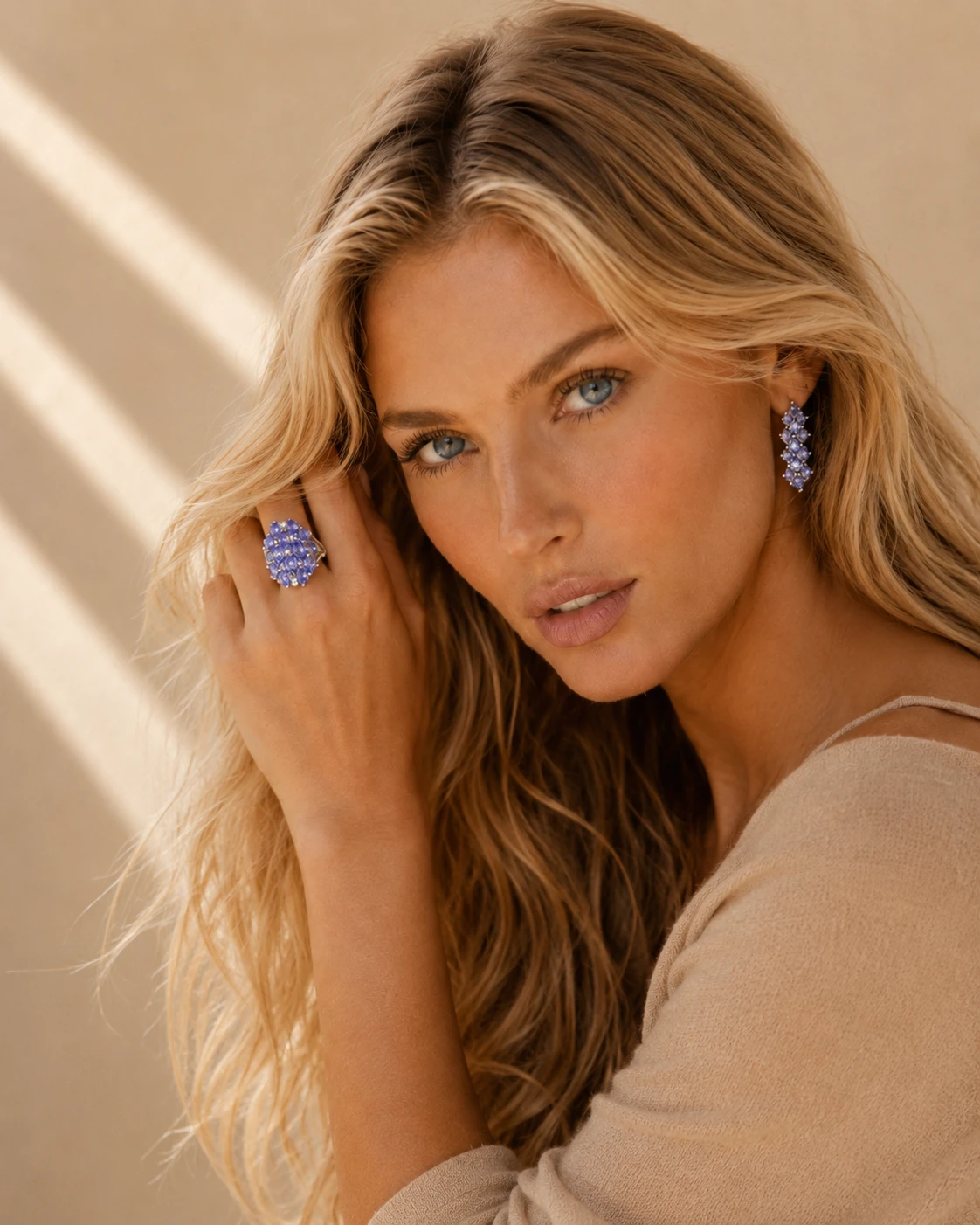
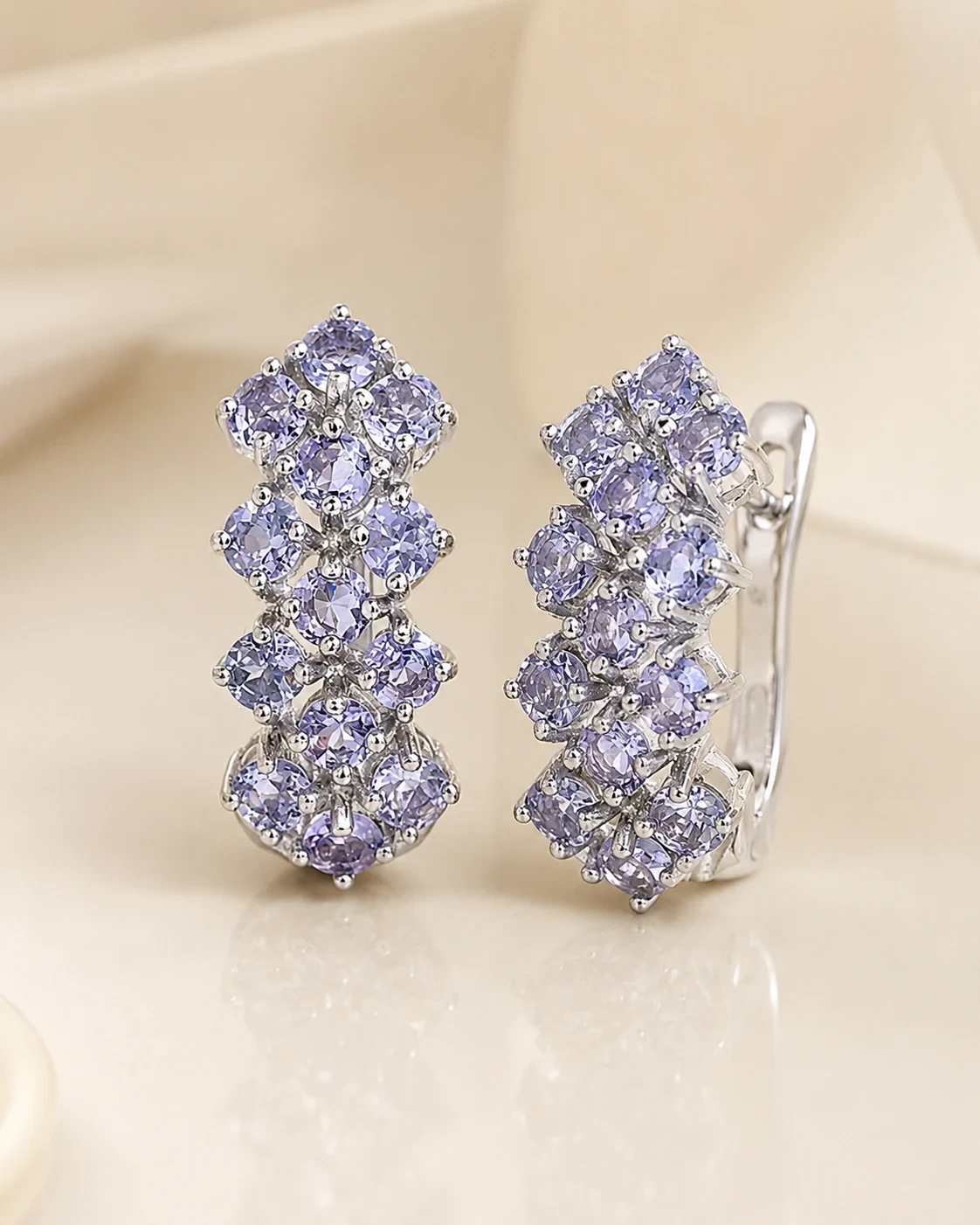
December has four birthstones, which is more than any December baby needs, and the honest headline is that every one of them is treated. Turquoise, blue zircon, blue topaz and tanzanite all reach the market having been altered in some way, and in three of the four cases the alteration is close to universal.
That is not a scandal. It is the ordinary condition of coloured gemstones, and knowing it turns a confusing choice into a straightforward one. Here is how the four actually differ, on the things that decide whether you will still like the piece in ten years.
The four, side by side
| Stone | Hardness | Cleavage | Treatment |
|---|---|---|---|
| Turquoise | 5 to 6 | None in massive material | Most on the market has received some treatment |
| Blue zircon | 6 to 7.5 | Imperfect | Almost all blue zircons have been heat treated |
| Tanzanite | 6 to 7 | Perfect, one direction | Near universal heating |
| Blue topaz | 8 | Perfect basal, one direction | Irradiated, then heated |
Two things in that table are worth noticing before anything else. The hardest of the four still has a plane of perfect cleavage. And the softest has no cleavage at all. Hardness alone will not rank these stones for you.
Turquoise, the only one with real history
Turquoise is the traditional December birthstone, and it is the only one of the four that people have worn for millennia. If continuity with something old is what you want from a birthstone, this is the answer and the other three are not.
It is also the most demanding to own. Turquoise is porous in a way no other gem here is: stones average 18 to 20% water content, which makes it vulnerable to oils, cosmetics and solvents rather than just to impacts. Its wearability is rated poor, and the guidance is to use protective settings, especially for rings, avoid mechanical cleaning methods such as ultrasonic or steam systems, and never clean it with soap, detergents, or cleaning solutions.
That last instruction surprises people, because soapy water is the standard advice for almost every other gem including tanzanite. Turquoise is the exception, and treating it like the others is how a good stone goes patchy.
Treatment here is not a footnote either. Most turquoise on today’s market has received some treatment or enhancement, typically stabilisation that fills the pores and makes otherwise unusable material wearable. Stabilised turquoise is a legitimate product and it is more durable than untreated material, which is an unusual case of a treatment improving a stone practically rather than only cosmetically.
Blue zircon, and the name problem
Blue zircon is the one most often misunderstood, and the misunderstanding is about the name rather than the stone.
Zircon and cubic zirconia are completely different gemstones. Zircon is a natural mineral, ZrSiO4, forming in the tetragonal system. Cubic zirconia is laboratory-made, chemically different, and worth a fraction as much. A shopper told “zircon” and hearing “zirconia” is being confused by an accident of vocabulary rather than by anybody’s dishonesty, though the confusion is occasionally useful to a seller.
The stone itself has a genuine virtue the other three lack: fire. Zircon’s dispersion is 0.039, which is high, and it produces flashes of spectral colour that tanzanite at 0.019 simply cannot. If sparkle is what you are after, zircon is the December stone that delivers it.
The cost is fragility of a specific kind. Zircon is very brittle, lower in tenacity than most gemstones, which means its facet edges tend to chip and wear easily. It does not break in half; it wears away at the edges, and a zircon that has been worn hard for a decade often looks tired around the girdle. Its hardness range is wide, 6 to 7.5, because it varies with internal radiation damage.
And the treatment is total: almost all colourless and blue zircons have been heat treated, and this procedure is undetectable. Undetectable is the operative word. Nobody can sell you a certified unheated blue zircon, because nobody can certify it.
Blue topaz, the hardest and the cheapest
Blue topaz is 8 on the Mohs scale with a very good wearability rating, which makes it the most practical stone on this list by a wide margin. It is also the least expensive, and those two facts are connected in a way worth understanding.
Natural blue topaz is genuinely rare. Almost all of the blue topaz sold is made blue: first the rough is irradiated, turning it brown, then the brown stone is heated to achieve a stable, blue colour. Before that process was developed in the 1960s, natural light blue topaz was rare and valuable. Afterwards, blue topaz became among the least expensive gems available.
The treatment is undetectable for the same reason tanzanite’s often is: the process so nearly duplicates what happens in the Earth, a treated stone cannot be distinguished from a natural.
One caveat balances the hardness. Topaz has perfect basal cleavage in one direction, so despite sitting at 8 it can split on a sharp knock in the wrong direction. Hard is not the same as unbreakable.
Tanzanite, the newest of the four
Tanzanite officially joined the December lineup in 2002, which makes it younger as a birthstone than most people reading this. It has no ancient history and does not need one.
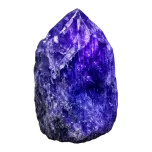
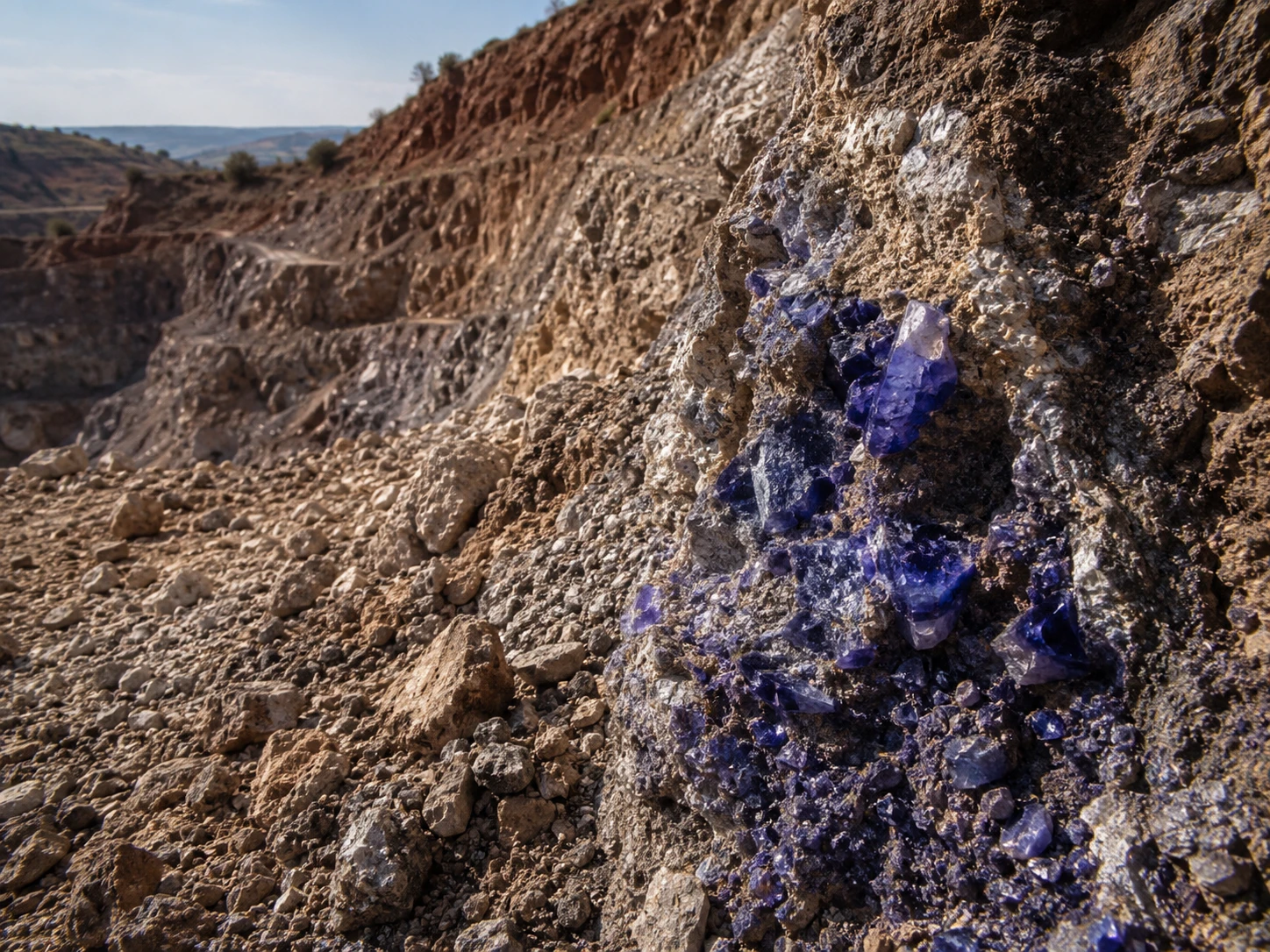
What it has instead is two facts nothing else here can match. It comes from one small area in northern Tanzania and nowhere else on Earth. And it is strongly pleochroic, showing blue, red-violet and yellow-green down its three crystal axes, reading sapphire blue in natural light and violet under fluorescent light. No other December stone changes as it moves.
Its treatment is heating, near universal and permanent, and it barely affects price because the trade assumes it. The full account is in is all tanzanite heat treated, and what the stone is taken to mean is in the birthstone, the symbolism and the astrology.
Every one of them is treated, and that is fine
Line the four up and the pattern is unmistakable. Turquoise is stabilised. Zircon is heated, undetectably. Topaz is irradiated and heated, undetectably. Tanzanite is heated, near universally.
There is no untreated option on this list in any practical sense, which means “untreated” is not a useful axis for choosing a December birthstone. Anybody charging a premium for untreated material in three of these four species is charging for something that cannot be verified.
What matters instead is disclosure and permanence. All four treatments here are stable and none creates an ongoing hazard, with the partial exception of stabilised turquoise, where the stabilising material is part of what you are buying and should be described. A treated stone is not a fake stone, and a seller implying otherwise about a rival’s material is selling against a fact that applies to their own.
Care differs more than the stones do
This is the part most gift buyers never hear, and it is where the four separate most sharply in daily life.
Three of them tolerate the standard advice: warm water, a drop of mild soap, a soft brush, dry thoroughly. Tanzanite, topaz and zircon are all fine with that, and all three should be kept out of ultrasonic and steam cleaners because each has either a cleavage plane or brittle edges.
Turquoise is the exception and it is a sharp one. It should never be cleaned with soap, detergents, or cleaning solutions, because a stone that is 18 to 20% water and porous absorbs whatever it is washed in. The guidance is to wipe jewellery with a damp cloth after wearing to remove skin oils and cosmetic residues and dry it immediately.
So if you are buying for somebody who cleans their jewellery casually, or who owns an ultrasonic machine, turquoise is the stone most likely to be quietly ruined by kindness. That is a better reason to choose or avoid it than anything about its hardness.
The others have one shared instruction worth repeating: take rings off before anything physical. That single habit does more for all four than any cleaning routine.
Buying one of these as a gift
A few practical things, since December birthstones are overwhelmingly bought for somebody else.
Ask what they already wear. Metal preference is the strongest signal available and the easiest to get wrong, and a stone in a metal somebody never wears sits in a drawer regardless of how good it is.
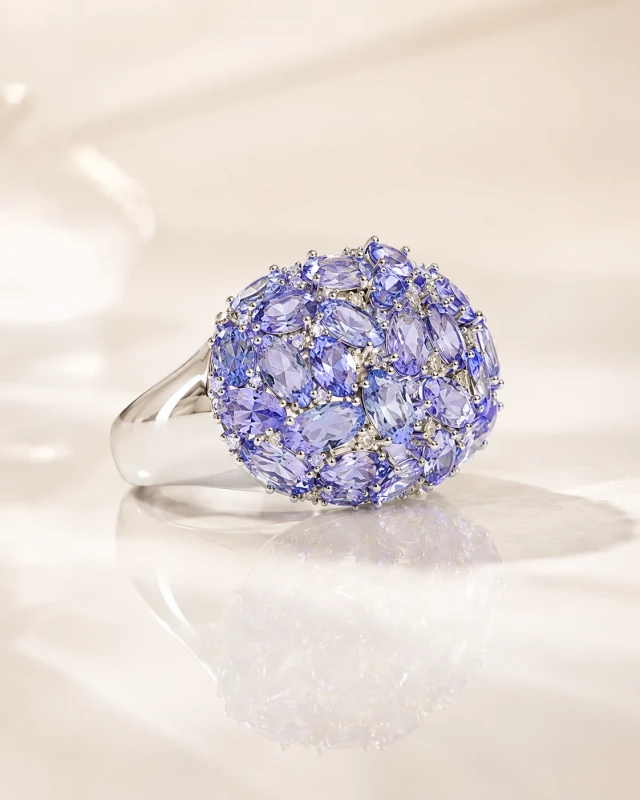
Choose the format before the stone. A pendant or earrings sidestep every durability concern in this article, which means the choice becomes purely about colour and budget. A ring narrows the field immediately, and for a hard-worn hand it narrows it to topaz or to one of the others in a protective setting.
Do not lead with the treatment conversation. Every stone here is treated, none of it is a defect, and opening a gift with a disclaimer about irradiation does nobody any favours. Keep the paperwork, mention it if asked, and let the piece be the piece.
And be careful with rarity language. Tanzanite genuinely comes from one place, and pastel hues of it are more plentiful, more affordable, and have a subtle appeal of their own. Blue topaz is abundant precisely because it is treatable. Neither fact makes a gift better or worse, and repeating a scarcity story you have not checked is how a nice present acquires a false claim attached to it.
Durability, which is where they genuinely separate
| If the piece is | Best choice | Worst choice |
|---|---|---|
| A ring worn every day | Blue topaz, in a protective setting | Turquoise |
| A ring worn occasionally | Any of the four | None disqualified |
| Earrings or a pendant | Any of the four | None disqualified |
| For someone hard on jewellery | Blue topaz | Turquoise, then zircon |
| Chosen for sparkle | Blue zircon | Turquoise |
| Chosen for colour that shifts | Tanzanite | The other three |
| Chosen for history | Turquoise | Tanzanite |
Read that table by row rather than by column. There is no overall winner, and each stone tops at least one row, which is a fair summary of why December ended up with four.
Why December has four at all
A fair question, and the answer is about trade history rather than tradition.
Birthstone lists are commercial conventions. The modern American list was standardised in 1912 by the National Association of Jewelers, combining various customs while ensuring the stones they chose would be practical for American jewelers to sell and promote in large quantities. The Jewelry Industry Council of America modified the list again in 1952, adding zircon among others, and tanzanite arrived in 2002.
So December accumulated stones the way a list does when the people maintaining it are also the people selling: turquoise from the old tradition, zircon and topaz added as blue stones that could be supplied reliably, tanzanite added once it had become popular enough to matter.
That is not a criticism. A shared convention is a genuinely useful thing for gifts to run on, and it works whether or not its origins are ancient. It simply means nobody should feel they are betraying a tradition by preferring one of the four over another. There is no older claim being violated, except in turquoise’s case, and even there the tradition is about the stone rather than about the month.
Where each one is the wrong choice
Turquoise is wrong for a daily ring on an active hand, and wrong for anybody who will clean jewellery without thinking, because the usual soapy water is specifically contraindicated.
Blue zircon is wrong where facet edges will take constant contact, because brittleness shows there first, and wrong for anybody who will be upset to learn the stone was heated, since it always was.
Blue topaz is wrong if you want rarity or a stone with a story, because the process that makes it blue also made it abundant.
Tanzanite is wrong for a hard-worn ring without a protective setting, and wrong for anybody buying on the promise that the supply is about to run out. It is right if the colour is the point, and the honest care answer covers what living with it involves.
Choosing between them
Decide what the piece is before deciding which stone, because the durability rows above answer the question faster than any preference will.
For a daily ring, blue topaz is the pragmatic answer and nobody should feel talked down to for taking it. For a gift with genuine history, turquoise. For fire, zircon. For a stone that does something no other stone does, tanzanite.
And if the recipient was born in December, all four are legitimately theirs. Birthstone lists are trade conventions rather than inheritances, which means there is no wrong answer among them, only a better fit.
Where to start
For how tanzanite stands against the stones outside this list, tanzanite against sapphire and diamond. For what the stone actually is, what tanzanite is.
When you want to look at pieces, ours are here. We sell one of these four, which is why the rest of this page is written the way it is.
COMMON QUESTIONS
What are December's birthstones?
Four: turquoise, blue zircon, blue topaz and tanzanite. Turquoise is the traditional one and the only with millennia of history. Zircon was added to the modern list in 1952 and tanzanite in 2002. Birthstone lists are trade conventions rather than ancient inheritances, so all four are legitimately a December birthstone and none has a stronger claim than the others.
Which December birthstone is most durable?
Blue topaz, at Mohs 8 with a very good wearability rating, though it does have perfect basal cleavage in one direction so it can still split on a sharp knock. Turquoise is the least durable, rated poor for wearability and porous with 18 to 20% water content. Tanzanite at 6 to 7 has a cleavage plane, and blue zircon is very brittle so its facet edges chip and wear easily.
Are December birthstones treated?
All four, and in three cases undetectably. Most turquoise on the market has been stabilised or otherwise enhanced. Almost all blue zircon has been heat treated by a procedure that is undetectable. Blue topaz is irradiated then heated, and because the process so nearly duplicates what happens in the Earth, a treated stone cannot be distinguished from a natural one. Tanzanite is heated near universally. None of this makes any of them fake.
Is zircon the same as cubic zirconia?
No, they are completely different gemstones and only the names are similar. Zircon is a natural mineral, ZrSiO4, forming in the tetragonal system, with high dispersion of 0.039 that gives it genuine fire. Cubic zirconia is laboratory-made, chemically different, and worth a small fraction as much. A shopper hearing one and understanding the other is being confused by vocabulary.
How should I clean a turquoise piece?
Not the way you would clean the other three. Turquoise should never be cleaned with soap, detergents or cleaning solutions, because it is porous and roughly a fifth water by content, so it absorbs whatever it is washed in. Wipe it with a damp cloth after wearing to remove skin oils and cosmetic residues, then dry it immediately. Never use ultrasonic or steam cleaning.
SOURCES
- December Birthstones — International Gem Society The four December stones; turquoise as the traditional one; tanzanite officially joining the lineup in 2002.
- Turquoise Value, Price, and Jewelry Information — International Gem Society Hardness 5 to 6; no cleavage in massive material; poor wearability; 18 to 20% water content; most market turquoise having received treatment; protective settings for rings; no ultrasonic or steam; never soap, detergents or cleaning solutions; wiping with a damp cloth after wear.
- Zircon Value, Price, and Jewelry Information — International Gem Society Hardness 6 to 7.5 varying with radiation damage; very brittle tenacity with facet edges that chip and wear easily; dispersion 0.039; ZrSiO4 and the tetragonal system; zircon and cubic zirconia being completely different; almost all colourless and blue zircons heat treated by an undetectable procedure.
- Topaz Value, Price, and Jewelry Information — International Gem Society Hardness 8; perfect basal cleavage in one direction; very good wearability; blue topaz produced by irradiation then heating; the process so nearly duplicating nature that treated cannot be distinguished from natural; blue topaz becoming among the least expensive gems available.
- Tanzanite Value, Price, and Jewelry Information — International Gem Society Hardness 6 to 7 with perfect cleavage; pleochroism showing blue, red-violet and yellow-green; sapphire blue in daylight and violet under fluorescent light.
- History of Birthstones — International Gem Society The 1912 National Association of Jewelers standardisation and its commercial framing; the 1952 Jewelry Industry Council modifications adding zircon.
- Tanzanite Description — GIA Pastel hues being more plentiful, more affordable and having a subtle appeal of their own.