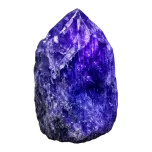
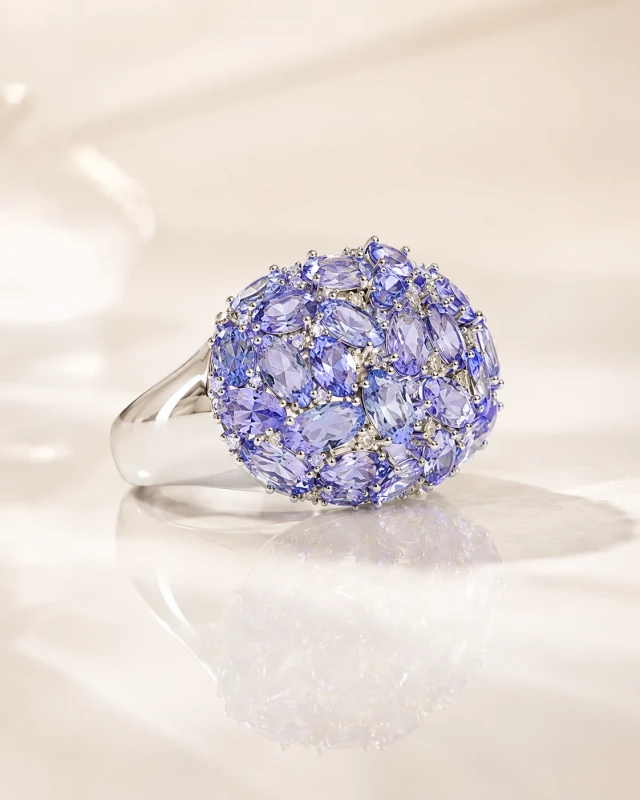
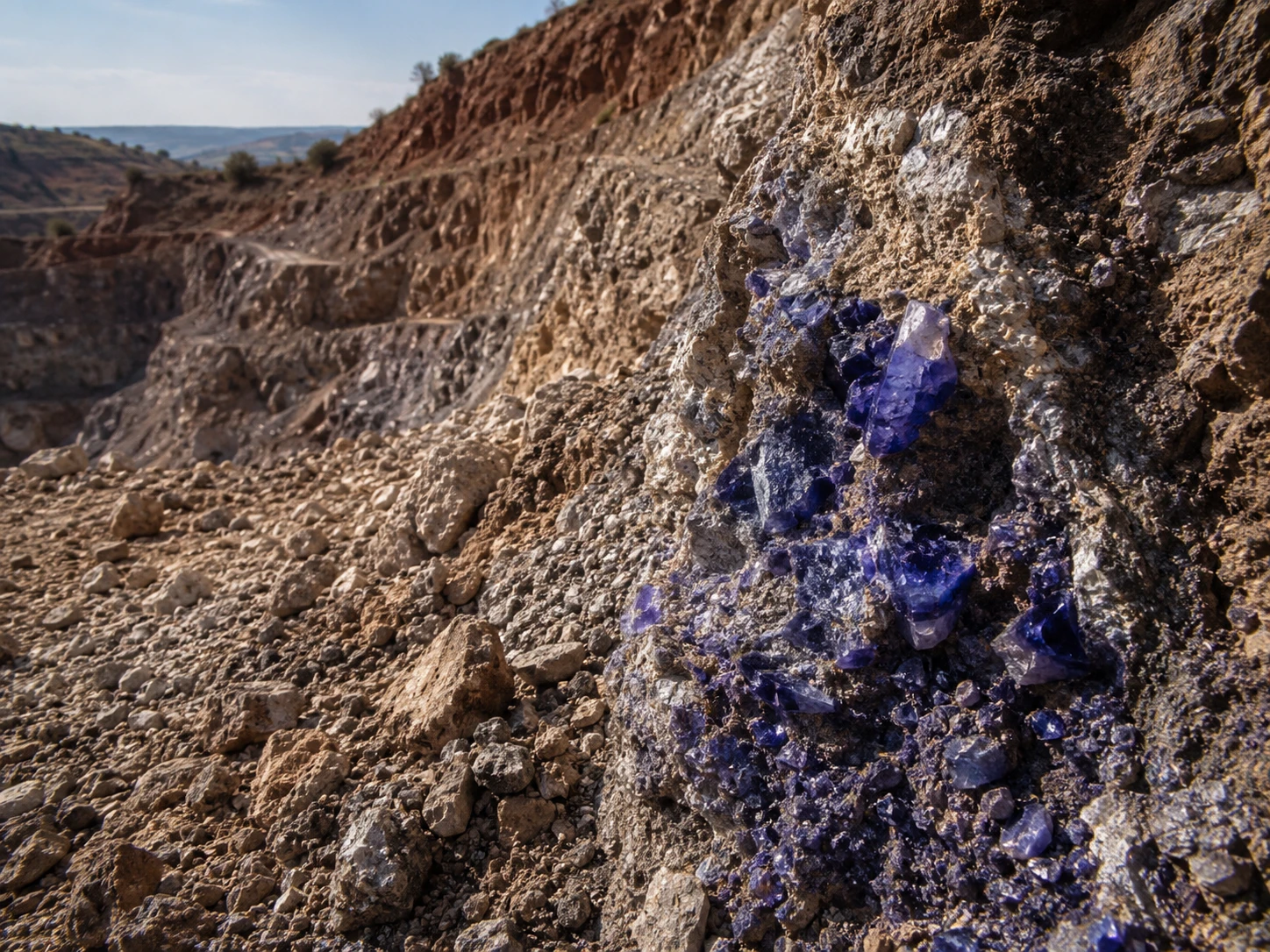



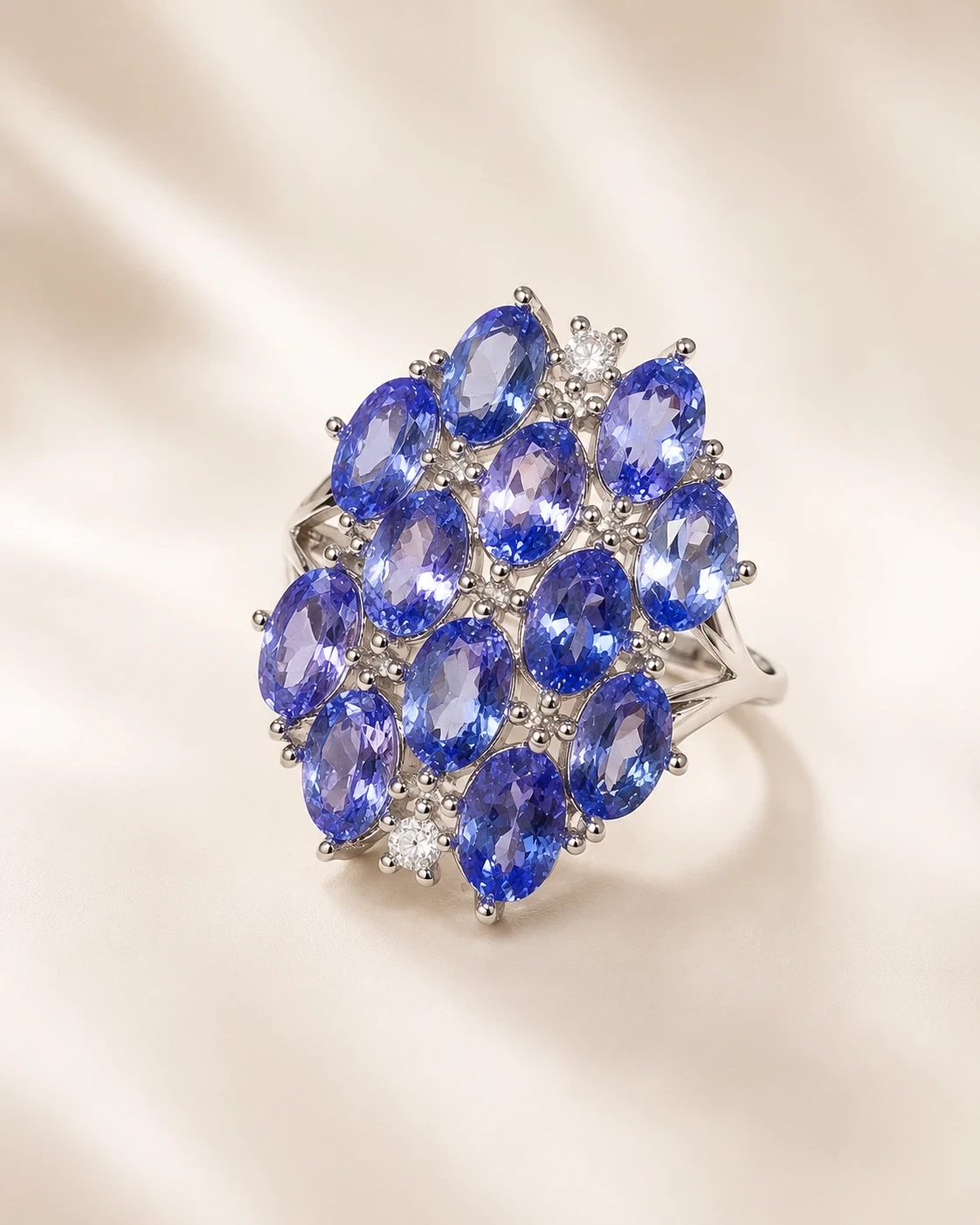
Buying a loose tanzanite and having it set is the better route for this stone, and the reason is narrow and specific: every setting operation puts pressure on a gem with a plane it can split along, so the fewer times it happens, the better. Buying a finished piece and then altering it means setting the stone twice. Buying loose and commissioning means setting it once.
That is the whole argument. Everything below is how to do it without the process going wrong.
Why setting once matters here
Tanzanite is 6 to 7 on the Mohs scale with perfect cleavage, and it has one direction of perfect cleavage running through every stone ever cut. Cleavage defines how a gemstone breaks when struck, and it relates to how strongly the molecules of a gemstone bind to each other, much like grain in wood.
Setting a stone means closing metal onto it under controlled pressure. Done well it is safe. Done repeatedly it is a series of opportunities for something to go wrong, and each one is small until it is not.
The common path most buyers take is the opposite of ideal: buy a finished ring, discover the size is wrong or the setting is too exposed, then have the stone removed, the band worked and the stone reset. That is two settings and a removal, on a gem that would rather have had one.
There is a second reason, and it is about information. A loose stone can be turned, taken to a window, laid on white paper and looked at from behind. A mounted stone hides its pavilion, which is exactly where a window, a fracture or an old repair would show.
Choosing the stone first
Judge the gem before thinking about the metal, because a good setting cannot rescue a poor stone and a plain setting cannot spoil a good one.
The order that matters is colour first and saturation above all, then size, because the two are connected: deep colour generally requires a stone above five carats and accent stones under two carats are commonly a lighter colour. Then cut, since the quality of the cut makes a large difference to brilliance. Then clarity, which is close to pass or fail.
Two things belong in the purchase itself. Get the exact dimensions in millimetres alongside the carat weight, because the setter needs them and a seller who cannot supply them has not examined the stone closely. And get an identification report, which records weight, measurements, shape, cutting style and colour, states whether the stone is natural or laboratory-grown, and names any detectable treatments.
The full method is in how to buy tanzanite. The only addition for a commission is the millimetres, and they matter more than people expect.
Finding somebody who has set one before
Ask directly whether they have worked with tanzanite, and listen for whether the cleavage plane comes up unprompted.
A bench that mostly sets diamonds and sapphires is not disqualified, but those stones forgive things this one does not. The answer you want mentions removing the stone for any heat work, avoiding ultrasonic cleaning at every stage, and choosing a setting style that does not require excessive prong pressure.
Ask what they would recommend and why. A setter who proposes a bezel or a half bezel for a stone like this is thinking about the gem; one who proposes fine raised prongs because it will look impressive is thinking about the photograph. Neither answer is wrong, but the reasoning tells you what you are buying.
And ask who does the work. Some shops design in-house and send the bench work out, which is normal, and it changes who you are actually trusting with the stone.
Settings that suit a cleavable stone
Worth deciding early, because it shapes everything downstream.
A bezel surrounds the girdle with metal. It is the most protective option, it takes a knock instead of the stone, and it hides the pavilion, which is a real trade rather than a free win. A half bezel protects the two directions most likely to meet a doorframe while leaving light in from the sides.
Prongs are the default and the least protective. More prongs spread the load and each one bears less, which is gentler than four heavy ones. What matters more is how high the stone sits: a raised setting is exposed, and a low one puts the gem inside the profile of the hand.
Channel and flush settings put the stone below the metal surface entirely. They suit smaller stones and they are the most protective of all, at the cost of showing less of the gem.
The choice interacts with metal. Gold is alloyed because pure gold wears out easily, and different alloys close differently under the setter’s tool, while platinum is more resistant to scratching than gold and holds gemstones securely for a very long time. A bench with a preference here usually has a reason, and it is worth asking what it is.
Resetting a stone you already own
The other common commission, and it deserves saying plainly: this is a second setting, which is what the whole article argues against.
That does not make it wrong. Inherited stones, damaged mounts and pieces that no longer suit are all good reasons, and a stone sitting unworn in a drawer is not being preserved by staying there. It means the risk is real and should be acknowledged rather than glossed over.
Two things reduce it. Have the stone examined before any work begins, because an existing fracture changes the odds considerably and is better found by a gemmologist than by a setter under pressure. And choose a more protective setting than the one it came out of, so the second setting is also the last.
If the original mount has sentimental value, ask whether it can be kept alongside rather than reworked. A mount preserved in a box and a stone set safely elsewhere is often the answer that satisfies everybody.
What to specify in writing
| Specify | Why it matters |
|---|---|
| The stone’s exact millimetre dimensions | The mount is built to them. A guess means adjustment later |
| Setting style, named | Bezel, half bezel, prong count, whether the stone sits high or low |
| Metal and alloy | Decides hardness at the moment of setting and wear afterwards |
| Ring size, and how it was determined | So a resize is not the first thing that happens |
| What the accent stones actually are | Not “accent stones”. Name the species |
| Who bears the risk during setting | The question nobody asks. See below |
| What happens if the stone is damaged | Replacement, refund, or nothing |
| Expected completion, and what delays it | So a deadline is a shared assumption rather than yours alone |
The value of writing these down is not distrust. It is that a commission is a conversation over weeks, and memory of a conversation is not a specification. A bench that produces a written summary unprompted is telling you they have done this before.
Who is liable if the stone breaks
The question people avoid, and the one worth asking in the first meeting.
Setting a cleavable stone carries a small but real risk, and somebody bears it. Practice varies: some benches accept liability, some explicitly do not, some carry insurance that covers customer material, and some ask you to sign an acknowledgement. All of those are legitimate positions. What is not acceptable is not knowing which one applies.
Ask plainly: if the stone is damaged during setting, what happens? A professional will have a ready answer, because they have been asked before. Hesitation is itself informative.
If the stone is valuable or irreplaceable, ask whether your own insurance covers it while it is in somebody else’s hands, since many policies treat that differently from loss at home. Insuring and valuing a tanzanite covers the documents that make any of this arguable afterwards.
Photograph the stone before handing it over, in daylight, from several angles, and get a written receipt describing it. That takes ten minutes and it is the entire basis of any later conversation.
The approval stages
| Stage | What you are approving | What to check |
|---|---|---|
| Design sketch or CAD | Proportions and style | How high the stone sits, and how much metal protects it |
| Wax or resin model | The physical object at size | Try it on. Screens flatter; wax does not |
| Metal, before setting | The finished mount, empty | Seat depth, prong alignment, finish inside the shank |
| After setting | The completed piece | Stone seated flat, prongs even, no movement |
The third row is the one most often skipped and the most useful. Seeing the mount before the stone goes in is the last moment when a change is cheap, and it is the only chance to check the seat the stone will sit in.
At the final stage, look at the piece in daylight and turn it. You are checking that the stone faces up the colour you chose, because a stone set slightly off can shift which pleochroic direction dominates. Tanzanite is very strongly pleochroic, and orientation in the mount is a smaller version of the decision the cutter made: how a tanzanite is cut and set.
What tends to go wrong
The mount is built to a guessed dimension. Then the stone does not seat properly and the setter compensates with pressure, which is the situation you were trying to avoid.
The design is approved from a render. CAD images make everything look elegant and give no sense of height or weight. A wax model takes a day and prevents this.
Nobody discussed the finish. Rhodium plating on white gold is a finish rather than the metal, and it can rub off over time, resulting in minor discoloration and a reduction of shine. Knowing that at the start prevents a disappointment in year three.
The piece is cleaned in an ultrasonic before handover. It is a courtesy in most shops and a hazard with this stone. Say so, in writing, early.
The deadline was never shared. A commission is not a purchase, and benches work to their own queue. If a date matters, it belongs in the specification rather than in your head.
The accent stones were never named. A quote saying “with accent stones” can mean diamond, white sapphire, topaz, zircon or cubic zirconia, which differ enormously in cost and durability. Naming them is the difference between a specification and a description.
Buying the stone and the setter in the wrong order
A sequencing mistake worth naming, because it is easy to make and awkward to undo.
If you find the bench first and let them source the stone, you get convenience and you give up the ability to compare. If you buy the stone first from a specialist dealer and then find a bench, you get a better stone and you carry the risk of matching it to somebody who will work with customer material at all.
Not every bench will. Some decline to set stones they did not supply, for reasons that are entirely reasonable from their side: they cannot vouch for the material, and if it breaks the conversation is unpleasant regardless of who was at fault. Establishing that a bench accepts customer stones is a question to ask before buying a gem, not after.
The workable order is therefore: find a bench that takes customer material and has handled tanzanite, agree the liability position, then buy the stone to the dimensions and style you have discussed. That sounds fussy and it removes the single most common failure in commissioning, which is arriving with a stone nobody wants to touch.
Time, cost and the honest trade-off
A commission takes longer than buying finished, and the time is mostly waiting rather than working.
The cost sits in three places: the stone, the metal, and the labour, and only the first two have anything like a market price. Labour varies enormously by who does it, and a quote that does not separate the stone from the work has hidden the part you are actually choosing between benches on. Ask for it itemised.
What you get in return is a piece built around one specific gem, set once, with a mount chosen for how the stone will be worn rather than for how a display case looks. For a stone that dislikes being reset, that is not a luxury. It is the configuration that gives the gem the longest life.
The honest counterpoint: if you want something now, or you are not confident judging a loose stone, buying finished from somebody who will tell you what is in it is a perfectly good decision. Commissioning suits people who have a specific stone or a specific idea, not everybody.
Where to start
Buy the stone loose, in daylight, with its millimetre dimensions and a report. Then find a bench that mentions the cleavage plane before you do.
For judging the gem, how to buy tanzanite. For what the cutter already decided and you cannot change, how a tanzanite is cut and set. For the metal decision, what does tanzanite go with, and for the habits after it is finished, the honest care answer.
When you would rather look at finished pieces, ours are here.
COMMON QUESTIONS
Is it better to buy a loose tanzanite and have it set?
For this stone, usually yes. Tanzanite has one direction of perfect cleavage, so every setting operation carries a small real risk, and buying a finished piece then altering it means setting the stone twice. Buying loose means setting it once. A loose stone can also be turned, taken to a window and inspected from behind, where a mount hides the pavilion and any window, fracture or old repair in it.
What should I ask a jeweller before they set my tanzanite?
Whether they have set tanzanite before, and listen for whether the cleavage plane comes up unprompted. Then ask who bears the risk if the stone is damaged during setting, because practice varies legitimately and the unacceptable answer is not knowing. Also ask whether they accept customer material at all, since some benches decline stones they did not supply, and establishing that before buying a gem saves an awkward situation.
What should be written down in a commission?
The stone's exact millimetre dimensions, the setting style named specifically, the metal and alloy, the ring size and how it was determined, what the accent stones actually are, who bears the risk during setting, what happens if the stone is damaged, and the expected completion. A commission is a conversation over weeks, and memory of a conversation is not a specification.
Which setting is best for a tanzanite?
A bezel is the most protective, surrounding the girdle with metal that takes a knock instead of the stone, at the cost of hiding the pavilion. A half bezel protects the directions most likely to meet a doorframe while letting light in from the sides. Prongs are the default and least protective, and how high the stone sits matters more than the prong count.
Can I have an inherited tanzanite reset?
Yes, and it is worth acknowledging that this is a second setting, which carries the risk this article is about. Two things reduce it: have the stone examined before any work begins, because an existing fracture changes the odds and is better found by a gemmologist than by a setter under pressure, and choose a more protective setting than the one it came out of so the second setting is also the last.
SOURCES
- Tanzanite Value, Price, and Jewelry Information — International Gem Society Hardness 6 to 7 with perfect cleavage, and very strong pleochroism affecting how the stone is oriented in its mount.
- Tanzanite: A blue gemstone found in only one place on Earth — Geology.com One direction of perfect cleavage running through every tanzanite.
- Gemstone Hardness and Wearability — International Gem Society Cleavage defining how a gem breaks when struck, much like grain in wood.
- Tanzanite Buyer's Guide — GIA Deep colour generally requiring above five carats; accent stones under two carats commonly lighter; cut quality making a large difference to brilliance; the contents of a Colored Stone Identification Report.
- Platinum vs. White Gold: How to Choose — International Gem Society Platinum being more resistant to scratching than gold and holding gemstones securely; rhodium plating rubbing off over time with reduced shine.
- Jewelry Metals 101: Gold, Silver, and Platinum — International Gem Society Gold's softness as the reason it is alloyed, which affects how metal closes under a setter's tool.